
Politics, People, Passion, and Purpose: Reclaiming the Heart of Education
Why educational leaders must prioritize people and purpose over political agendas.
Trying to take politics out of education is pointless.
Politics and economics have long shaped Western education systems. It is not simply a matter of whether one agrees with this reality. History provides ample evidence that political power, economic priorities, and educational institutions have influenced one another for generations.
But here is where things become interesting.
The people making educational decisions range from the poorly intentioned to the purpose-driven and passionate. Their motivations, priorities, and decisions shape the educational experiences of millions of scholars, educators, and families.
And then there is the purpose of education.
Well, that depends on whom you ask, and perhaps even what their financial portfolio looks like.
For some, education is about workforce preparation and economic productivity. For others, it is about social mobility, citizenship, intellectual development, or personal advancement.
And then there are the educators who drank the Kool-Aid.
Like myself.
Those of us who genuinely believe in providing every scholar with the opportunity to read, write, listen, and speak with confidence, competence, heart, and soul.
Educators who sometimes spend more than they can reasonably afford to ensure that scholars experience quality learning opportunities regardless of socioeconomic status, race, religion, cultural background, or demographic characteristics.
Educators who understand that behind every assessment score, attendance report, and academic intervention plan is a human being with unique abilities, aspirations, experiences, and possibilities.
And then there are the leaders.
Oh, the educational leaders!
From the presidential level to the pulpit, from legislative chambers to district offices, decisions are made that influence what happens in classrooms every day.
Some of those decisions are purposeful and informed. Others appear disconnected from the lived realities of the educators and scholars expected to experience their consequences.
And sometimes, the people most affected seem to have the least influence over the decisions being made.
At what point did the politics of education become more important than the people education is intended to serve?
What exactly are we witnessing when superintendents, principals, and teachers conclude that remaining in their positions is no longer professionally, financially, or personally sustainable?
What happens to institutional knowledge, school culture, community trust, and educational continuity when experienced educators and leaders leave?
And what are we communicating to families when educational opportunities are increasingly discussed in terms of supposedly better schools rather than our collective responsibility to make every school better?
Certainly, families should be empowered to pursue the best educational opportunities available to their children.
But why should a scholar's opportunities be so profoundly influenced by where that child lives, what their family earns, or which school they attend?
Why are we still struggling to recognize the unique cultures, languages, experiences, and qualities that scholars and their families bring into our schoolyards?
And why do we so often approach those differences as problems to overcome rather than golden assets to embrace?
Imagine what could happen if educational leaders consistently viewed every scholar and family as a valuable contributor to our nation's sustainable growth and development.
Imagine schools where the first question is not "What is wrong with these children and their families?" but rather, "What strengths, experiences, and untapped potential do they bring, and how can we build upon them?"
Now, let us remember something important.
You are a leader in the district office just as much as you are in the principal's or assistant principal's office, the front office, the instructional support departments, and the classroom.
We are all educational leaders.
Leadership is not confined to a title, an office, a salary grade, or an organizational chart.
It is demonstrated through the decisions we make, the expectations we establish, the relationships we cultivate, and the opportunities we create.
And yes, scholars of all levels sit at our feet daily, expecting us to give them our best.
Not our personal prejudices.
Not our institutional rivalries.
Not our political frustrations.
Our best.
We are the pathways between what the present is and what the future can be.
What an extraordinary responsibility!
We cannot erase the historical foundations of educational systems that have, at various times, reinforced political power, economic divisions, and social inequalities.
We cannot ignore the persistent disparities between the haves and have-nots that shape the resources available in our schools.
And we cannot make every person who enters the profession embrace education with the same passion or sense of purpose.
But we have options.
We can leave when a position no longer serves our professional purpose or personal well-being, hopefully in a manner that protects continuity of learning.
We can speak up, if we dare, against injustices and practices that undermine educational opportunities.
We can become more intentional about what happens in our administrative offices, instructional support departments, and classrooms.
We can find the good and celebrate it in ways that speak to our scholars' and their families' potential, dignity, and future purpose.
We can build meaningful relationships with communities and stakeholders willing to help fill gaps in human and financial resources.
And we can stop approaching parents and families from a deficit-based vantage point tied to their socioeconomic circumstances.
Families are not problems to be managed.
They are among our most valuable educational partners.
They bring knowledge, experiences, cultural traditions, aspirations, and perspectives that no standardized assessment can fully capture.
And perhaps, if we listened more attentively, we would discover that some of the solutions we are searching for already exist within the communities we serve.
Where has the positivity gone?
Where is the excitement about the possibilities of education?
Where is the joy that comes from watching a struggling reader finally discover meaning in a passage?
Where is the celebration of a scholar who finds the courage to speak, a family that becomes an active learning partner, or an educator whose innovative approach changes a child's educational trajectory?
Have we become so consumed with political disagreements, financial constraints, institutional competition, and professional frustrations that we are losing sight of why we entered education in the first place?
I am not naive.
I understand that educational improvement requires funding, competent leadership, effective governance, professional accountability, and difficult decisions.
I understand that passion without professional competence is insufficient.
And I understand that positivity alone cannot eliminate structural inequalities.
But I also know that no amount of funding, policy reform, or institutional restructuring can substitute for the human commitment required to make education meaningful.
For me, education has never been merely a profession.
It has been a lifelong commitment that has shaped my decisions, challenged my convictions, and demanded personal sacrifices, some of which I continue to reflect upon with both gratitude and regret.
But those experiences have only strengthened my determination to question, learn, advocate, and contribute to educational systems that recognize the dignity and potential of every scholar.
I do not believe we can remove politics or economics from education.
But I refuse to believe that politics and economics must eclipse the people, passion, and purpose that give education its meaning.
I dare to believe that despite the politics and economics that inform education, there remain people with the passion and purpose to provide a platform for our scholars to realize their potential and perform at the highest level.
And yes, pun intended.
Sail On. Soar Above. Be Magnificent.
© Michelle K. Agard | The Magnificence Framework™
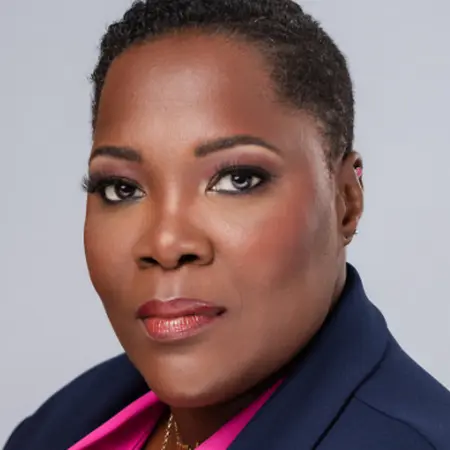
Michelle K. Agard, M.A. Ed, is an educational leader, consultant, and entrepreneur with more than 36 years of experience spanning teaching, educational leadership, curriculum development, educational policy, and strategic planning across the United States and the Caribbean. She is the CEO & Educational Consultant for Brevard Academic Consulting Group and Founder & CEO of KB BEST Educational Services, the foundation…