Raising Money While Silencing Truth: Leadership in Today’s Philanthropic Landscape
Navigating the Intersection of Mission, Fundraising, and Black Women's Leadership in Philanthropy

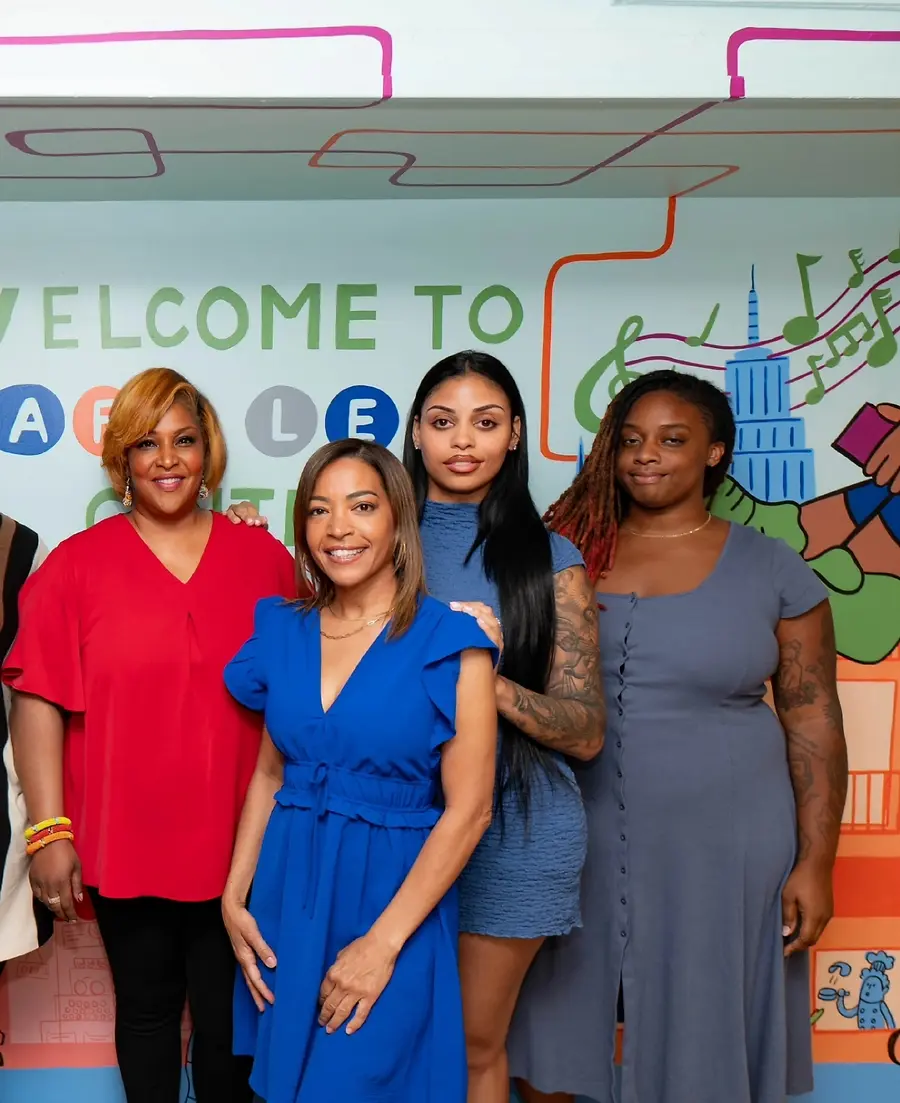
Raising Money While Silencing Truth: Leadership in Today’s Philanthropic Landscape
When I first joined Avenues for Justice (AFJ), I wore many hats, like so many people working in mission-driven organizations. I moved across roles supporting programs, communications, operations, and fundraising. From the very beginning, I was deeply committed to supporting young people navigating the criminal legal system and the structures surrounding it. I understood that resources were limited and our team was small, so I rolled up my sleeves and dove into learning as much as possible in order to be of service.
Along the way, I had the opportunity to participate in a cohort program—Preparing the Next Generation—led by Sonya Shields at Cause Effective. That program sharpened my understanding of fundraising, philanthropy, communications, and what it means to lead an organization. It reinforced that credibility in this work is not just about position. It is about values, integrity, and lived experience. It is also about the ability to translate that experience into vision, strategy, and a clear understanding of why this work matters now.
Fundraising became a central part of that journey as an extension of leadership itself. And yet, for many people—especially those coming from programmatic roles—fundraising remains one of the most misunderstood aspects of leadership.
Black Women and the Legacy of Fundraising
There is a long-standing narrative in the nonprofit sector about who fundraises and how leadership develops. Too often, it assumes that fundraising is a specialized skill set, disconnected from history, community, and lived experience. But that narrative does not hold when we look more closely, because Black women have always been fundraisers.
Long before development departments existed, Black women were mobilizing resources to sustain movements, build institutions, and support their communities. Ida B. Wells raised funds internationally to support anti-lynching campaigns. Madam C.J. Walker used her wealth to invest in Black communities and social causes. Mary McLeod Bethune built institutions through relentless fundraising and relationship-building. Septima Clark helped mobilize resources for civil rights education. These are just a few examples.
Across generations, Black women’s groups in churches created some of the earliest and most consistent philanthropic networks in the United States. This history matters because it reframes how we understand fundraising today. Fundraising is not simply about asking for money. It is about organizing resources in service of a shared vision. It is about trust, relationships, and the ability to move people toward collective action.
Black women have been doing this work for centuries, and too often without recognition. The reality is that Black women raise millions of dollars—often without access to the same institutional power structures that define leadership today. Therefore, when we talk about who is “ready” to lead or who is “equipped” to raise funds, we must be honest about what we are measuring and what we are overlooking.
The Reality of Fundraising Today
At the same time, the landscape of philanthropy is shifting in ways that introduce new complexities and contradictions. On one hand, organizations are being asked to demonstrate impact in increasingly specific ways. For example, funders want to see clear outcomes tied to workforce development, education, mental health, and long-term stability.
At Avenues for Justice, we partner with Black and Brown participants navigating real systemic barriers that we help them overcome. In order to raise awareness, deepen engagement, and secure funding, we must be able to share the lived experiences of those young people, because that is the reality of New York City and the country we are living in. Yet, there is increasing pressure to use language that feels “safe” and avoids directly naming race, identity, and the systemic factors that shape our participants’ experiences.
This creates a real tension. How do we accurately describe the work if we are asked to remove the identities of the young people we serve? How do we tell the truth about systemic inequities while navigating a funding environment that sometimes encourages us to soften or reframe that truth?
As leaders, we are asked to hold both. We are expected to raise resources while also navigating constraints around narrative. We are expected to remain grounded in our mission while adapting to shifting funding priorities. And we are expected to do this in a way that ensures long-term sustainability.
This is the reality of fundraising today. It is not transactional. It is deeply strategic. And it requires us to operate in a space where we are asked to raise resources for work grounded in systemic inequities while also being encouraged to soften or avoid naming them.
Leadership in This Moment
As the Executive Director of Avenues for Justice, leadership, at its core, is about responsibility. It is about ensuring that the organization remains strong, sustainable, and aligned with its purpose. It is about making decisions that balance immediate needs with long-term financial sustainability.
For Black women in leadership, there is an added layer. Decisions are questioned in ways that go beyond accountability. Expertise is challenged in ways that reflect deeper assumptions about who holds authority and whose leadership is trusted.
This is not new. But it is something that must be named. Black women leaders need partners who understand the weight of the responsibility they carry and who are willing to support that work in meaningful ways.
Leadership also requires adaptation. Funders are increasingly looking for organizations to demonstrate impact beyond traditional metrics. In our case, that means articulating impact that includes not only reducing recidivism, but also supporting stability, economic mobility, and the growth of participants as leaders and advocates in this work.
Leadership requires partnership and trust. It requires a shared understanding that the role of leadership is not to operate in isolation, but to guide, build, and move an organization forward.
Philanthropic Mobilization
In moments of uncertainty, there is also opportunity. As funding priorities shift and institutional expectations evolve, there is an opening to think more expansively about how this work is sustained. Philanthropy cannot rest solely on large institutions or a small group of funders. It must also be understood as a broader form of civic participation that invites individuals, communities, and networks to actively support the work they believe in.
For organizations like Avenues for Justice, this has always been true. Our work has been strengthened by people who understand its importance and choose to invest—financially, through advocacy, and through connection with our participants.
What feels different now is the urgency. There is a growing need to expand who sees themselves as part of this work. That means creating clearer pathways for engagement, helping people understand the direct impact of their support, and reinforcing the idea that philanthropy is not reserved for a select few. It is a shared responsibility.
Philanthropic mobilization, in this sense, is not just about raising more resources. It is about building a stronger and more resilient ecosystem of support that reflects the values of the work itself.
Calling In
The work of organizations like Avenues for Justice has always relied on partnership, and that has not changed. What has changed is the level of intention required to sustain and grow that partnership in a more complex and shifting environment.
This moment calls for deeper engagement from individuals, communities, and institutions. It calls for a willingness to move beyond surface-level support and to invest in the long-term success of organizations that are doing the work of creating opportunity, stability, and justice.
It also calls for a broader understanding of leadership. Fundraising is not a separate function that sits alongside leadership. It is a core responsibility of being an Executive Director. For those who have built their careers in programmatic roles, this is an important shift in perspective. Leadership is not only about delivering services or managing programs. It is also about ensuring that those programs have the resources they need to continue, evolve, and expand.
At the same time, there must be recognition of what it means to lead in this moment. Leadership should not require constant justification. It should not require navigating unnecessary barriers to trust or credibility. Strong leadership is strengthened by partnership.
There is a long history of Black women building and sustaining institutions under conditions that required both resilience and innovation. That history is directly connected to this moment we are experiencing in leadership and philanthropy. Understanding that history allows us to move forward with greater clarity about what leadership looks like, what it requires, and how it should be supported.
Ultimately, the path forward is not about returning to previous ways of operating. It is about continuing to build more intentionally, more inclusively, and with a clearer understanding of the role that leadership, fundraising, and partnership all play in this critical work.


