Redefining What’s Possible: My Journey from the Frontlines to Healthcare Leadership
How a first-generation healthcare leader is redefining success and breaking barriers in healthcare administration.

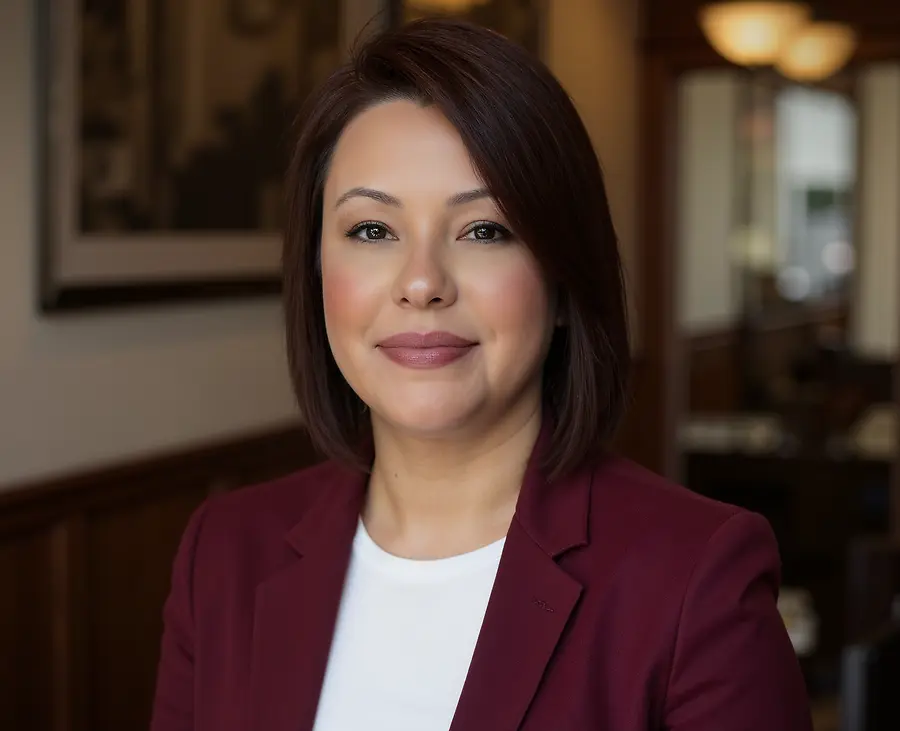
Redefining What’s Possible: My Journey from the Frontlines to Healthcare Leadership
By Camila (Losoya) Mendez
There is a moment in every woman’s life when she realizes that the path she was given does not have to be the path she follows.
For me, that moment didn’t come all at once. It came in pieces—through long shifts in healthcare, late nights studying, and quiet conversations at home about what more could be possible.
Today, as a healthcare leader in revenue cycle management and a first-generation graduate completing my Master of Health Administration, I stand in a space I once thought was out of reach. But my journey here is not just about career growth—it is about resilience, support, and redefining what success looks like on my own terms.
Where It All Began
I come from a family where opportunity was limited, but determination was not.
My grandfather immigrated from Tamaulipas, Mexico, as a child with his mother and siblings in search of safety and stability. My father, born in Texas, left school after the fourth grade to help provide for his family. Education beyond high school wasn’t the norm—it was the exception. He always told us he wanted better for us than the hard labor he endured as a young man. He encouraged education and taught us that learning does not stop in the classroom.
Growing up, I didn’t see many examples of what higher education or leadership looked like. Success felt small—contained. But my mother saw something different for me. She pushed me to stay open-minded, to think beyond my environment, and to believe that I was capable of more.
That belief became the foundation of everything I’ve built.
Finding My Purpose in Healthcare
My career started at the bedside, working as a Certified Clinical Medical Assistant and patient care technician. In those early roles, I saw the human side of healthcare—patients navigating pain, uncertainty, and vulnerability.
But I also saw something else.
I saw how broken processes could create additional stress for patients. Billing confusion, insurance barriers, and delays in care weren’t just administrative issues—they were deeply personal experiences for the people we serve.
That realization shifted my path.
I moved into administrative roles, eventually stepping into leadership within revenue cycle management (RCM). What many see as “behind-the-scenes” work, I see as essential to the patient experience. When RCM works well, patients gain access to care faster, providers can focus on treatment, and organizations remain sustainable.
Leading with Purpose, Not Just Performance
Throughout my career, I’ve led initiatives to improve financial outcomes—reducing denials, optimizing workflows, and strengthening revenue integrity. But what drives me most is not just the numbers—it’s the impact behind them.
Every improved process means:
- A patient receives care without unnecessary delays
- A family avoids unexpected financial stress
- A provider can focus on healing instead of paperwork
Leadership, to me, is not about authority—it’s about responsibility. It’s about building systems that serve people better.
The Reality Behind the Achievement
What often goes unseen in professional success is the personal sacrifice—and the support—that makes it possible.
While working full-time in healthcare leadership, I made the decision to pursue my Master of Health Administration. It was one of the most demanding seasons of my life, requiring discipline, sacrifice, and an unwavering commitment to growth.
But I did not do it alone.
My husband, an Air Force veteran who devoted 22 years of service to our country, became my greatest source of strength during this journey. While I focused on advancing my education and career, he stepped in at home in ways that made it all possible. He took on additional responsibilities, created space for me to study, and supported me through moments of exhaustion and doubt.
His service did not end with his military career—it continued at home, through quiet acts of support that allowed me to keep going.
That kind of partnership is something I do not take for granted. It is a reminder that behind every achievement, there are people who help carry the weight when it matters most.
Breaking Barriers and Building Representation
As a first-generation college graduate stepping into leadership, I carry more than my own ambition—I carry representation.
There are still barriers for women in healthcare leadership, especially for those from underrepresented backgrounds. But those barriers also create opportunity—an opportunity to lead differently, to bring new perspectives, and to challenge systems that were not designed with us in mind.
I’ve learned that leadership doesn’t require you to fit into a mold—it requires you to bring your full self into the room.
A Vision for the Future
The future of healthcare leadership must be both strategic and human-centered.
We need leaders who understand operations and people—leaders who can balance financial performance with patient experience. Leaders who invest in their teams, mentor the next generation, and create pathways for growth.
For me, leadership is about impact that extends beyond my role:
- Building systems that improve access to care
- Creating opportunities for others to rise
- Leaving organizations stronger than I found them
A Call to Action: Step Into What’s Possible
To the women reading this—especially those from backgrounds where leadership was never modeled—I want you to know this:
You belong in the room.
Not someday. Not when you feel “ready.” Now.
Your story is not something to overcome—it is your greatest strength. The challenges you’ve faced, the sacrifices you’ve made, and the resilience you’ve built are exactly what leadership needs.
So take the step.
Apply for the role.
Speak up in the meeting.
Pursue the degree.
Ask for the opportunity.
And just as importantly—build your support system, and be that support for others.
Because when women rise, we don’t rise alone. We bring others with us. We shift cultures. We redefine systems. We change what leadership looks like for the next generation.
And that is how real impact begins.


