Rushing in Life to Get Ahead “Leaves” You Behind; An essay on fall
Finding Balance and Presence: A Yoga Journey Through the Seasons of Change

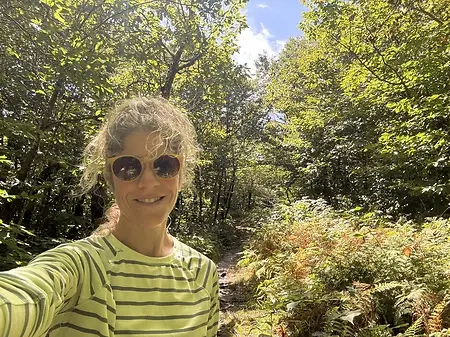
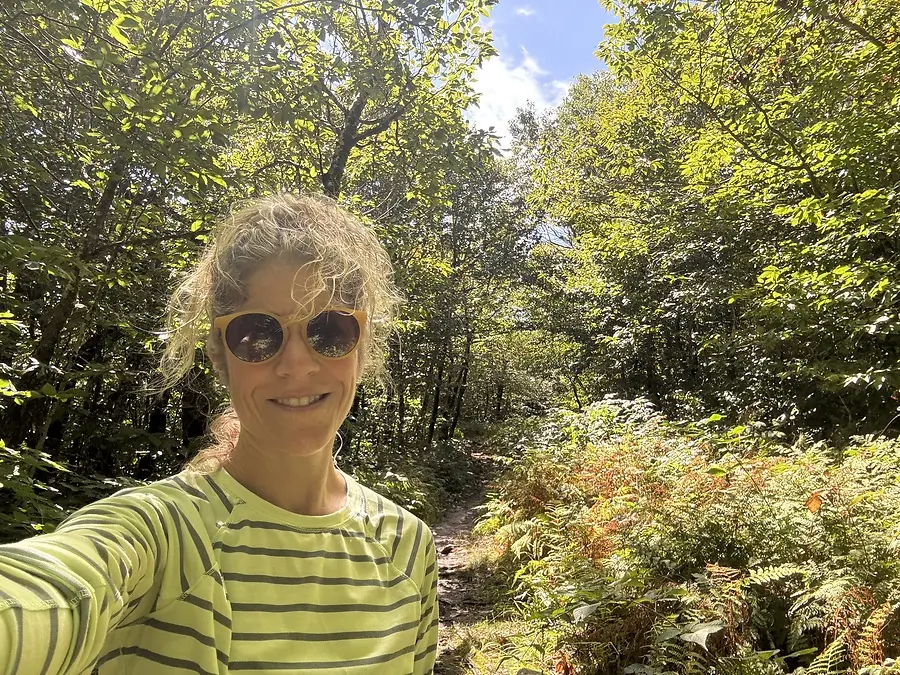
The leaves are falling from many trees, yet still so many trees are holding strong with vibrant yellows, oranges, browns, and neon greens. We always wonder as individuals who like to be "timely" or early in checking things off the list, what would our own tree look like?
Would we be eager to change our colors, be green one day and the next nearly all of our leaves change to yellow/orange and by the next huge windstorm, our leaves would fall from my branches and we would be one of the first naked trees of the fall season? An overachieving shedder of such wondrous beauty?
Or would we be the opposite; a procrastinator, stubbornly resisting changing green leaves and maybe one by one permitting our leaves to change naturally and gradually, following subtle dips in the temperature? Would this tree be full of different leaves at different stages in changing? Would this tree that took its time and was perhaps more attuned with nature and being present in the moment with leaves slowly fall off the tree, hold on to the splendorous fall colors as tightly as possible, before slowly sliding into the skeletal frame of winter?
What would we look like if we were in the middle; a combination of being timely, but not excessively far ahead, but also not a procrastinator? What would our tree look like as the weather got colder and the seasons changed from summer to early fall, to late fall, and finally to winter?
At the end, all the leaves from the trees (aside from Evergreens) end up falling off by winter so that all the trees are only differentiated by the bare bones of their trunks and branches. If all the trees end up at the same end point, what, really is the rush? Why rush through changing leaves and why not savor the beauty and depth of the deep fall colors? Why not allow some leaves to fall before others so that our tree is able to savor the awe of fall colors for as long as possible and gradually move into winter?
What do you see yourself as? Are you an overachieving shedder of your leaves? Or are you resistant to change and holding on to leaves well into the late fall and early winter?
Obviously, this is an analogy, but as we move from fall into early winter and as we use nature and mindful movement through our yoga practice to ground ourselves, we might ask ourselves what is the point of rushing? There is nothing like practicing yoga in the middle of October and viewing the beauty of the year's foliage and savoring every minute of warmth, surrounded by brilliant colors, and feeling grounded in tree pose, anchored on our mats. Challenging ourselves to observe and be present and still amid the changing colors on the trees and falling leaves around us.
It is important to notice the different stages of leaves on trees or on the ground. Perhaps the top of one tree has bright yellow leaves, while it's mid-section and bottom had not yet started to change colors. Another tree may be a tall, skinny tree with many narrow, long branches, resembling a skeleton, because all its leaves have already fallen. Adjacent to this skeleton, there might be a tree with a large trunk, large branches and leaves in full fall colors; deep oranges, reds, and bright yellows. If we look at the ground of a fall forest or backyard, we may see leaves that appear newly fallen, still having life in them as they show off their vibrant colors and their moist appearance.
There is great importance of observing the variety, the changes, and being struck by the beauty in nature while being grounded on the yoga mat. We are present in the moment, even if the moment is fleeting and changing before our eyes. We are anchored on our mat, and perhaps we use nature to buoy our practice and remind us that change is inevitable, but we have control of how we feel in the moment. We have the power to be observers and to remain grounded and rooted in our own practice, independent of the changes around us. And, ultimately, we also have the power to pace ourselves and to find our comfortable flow, guided by our own breath and movement. Frantic thoughts focusing on the "what-ifs" of the future derail our balance on our mats and in our minds.
Analogy of us to a tree aside, let's discuss what happens to our nervous systems and bodily functions during states of panic and chronic stress states.
The rush and anxiety of what is to come wreaks havoc on our neuromuscular system. Our autonomic nervous system is divided into the sympathetic and the parasympathetic systems. Sympathetic is commonly associated with the "fight or flight" response or the survival response when the mind feels threatened and activates the body to run. The parasympathetic nervous system is commonly associated with the "rest and digest" response and a restorative response that balances the freneticism and energy spent from the sympathetic nervous system. This is all controlled through the hypothalamic-pituitary axis, which leads to amygdala hijacking when we are triggered by something that we see as threatening.
If we remain for prolonged periods of time in this chronic fight or flight state, it ultimately causes shifts in our body's chemistry and physiology resulting in increased in inflammatory markers and increased risk for chronic heart disease, some cancers, autoimmune diseases, and chronic pain and musculoskeletal issues as well as increased risk for depression and anxiety disorders. Individuals with trauma and who suffer from Post-Traumatic Stress Disorder are more likely to be triggered by what they deem as threatening stimuli if it reminds them of the trauma. How to return to homeostasis? Balance?
Practice yoga, anchor the self to the mat.
Breath in and breath out, trying to focus on prolonging the exhalations to stimulate the vagal nerve, which stimulates the parasympathetic system. Remember to stand proud in Vrikshasana, look around, observe, and enjoy fall; enjoy nature and its changes. Be in the moment. Reflect as you switch to the other side of your Vrikshasana and feel grounded. If you fall out of your tree, embrace the imbalance and try to come back into your tree, maybe putting your foot to your shin instead of your thigh or to the ankle. Remember to breath, each inhale followed by a long exhalation as you relieve the tension from your shoulders. Play around with arm variations or proprioception through challenging yourself to close your eyes and notice how the sounds may seem different with the eyes closed.
Remember, there is no right way to be your tree, not in this moment and not in any future moment. Imagine what kind of tree you are in the moment and don't rush forward. Enjoy the warmth of a late fall day while practicing yoga amid the beautiful mountains and fall colors. Rushing through life to get ahead "leaves" you behind.

Dr. Amy Sosne is a licensed physician, educator, and certified yoga instructor based in Massachusetts who combines medicine, education, and mindfulness. Since 2019, she served as Assistant Director of Elementary Outreach for North Adams at Williams College. She is an adjunct professor and is in her eight year of teaching courses related to integrating wellbeing into local public schools as well as teaching college…