SoCal’s Dirty Diamond: Airport Analysis #10
Los Angeles International Airport

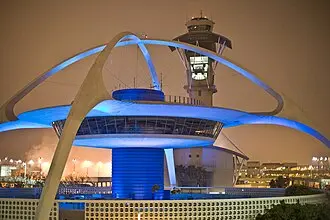
Better known by its IATA airport code, LAX, in colloquial parlance, Los Angeles International Airport warrants its own aviation analysis, as it is one of the most popular airports in the United States and a more-than-common hub for virtually all major (and minor) carriers in the United States.
United, Delta, and American Airlines all have hubs at LAX, in addition to Southwest, JetBlue, and Frontier. Though now (by 2026), most low-cost carriers have moved to nearby John Wayne Municipal Airport (SNA, formerly Santa Ana Regional Airport and popularly known as Orange County Airport), Hollywood-Burbank Airport (BUR), Long Beach Airport (LBG), and others that, when together, make up the Los Angeles World Airport Authority. All these airports surround Los Angeles, six in all, and form a network of sorts, the only one of its kind in the world. LAX itself sits in Westchester County, 18 miles southwest of downtown Los Angeles, California. It sits less than a mile from the coastline of the Pacific Ocean and, interestingly, only about 2.8 miles from SoFi Stadium, home of the L.A. Rams and L.A. Chargers, both of the NFL. LAX is the 8th busiest airport in the world by passenger metrics, and equally loved and hated by its customers. The airport holds the record for the world's busiest origin and destination airport because, relative to other airports, many more travelers begin or end their trips in Los Angeles than use it as a connection. In 2019, LAWA (Los Angeles World Airports) reported approximately 88% of travelers at LAX were origin and destination passengers, and 12% were connecting, i.e., simply passing through. It is also the only airport to rank among the top five U.S. airports for both passenger and cargo traffic. LAX serves as a hub, focus city, or operating base for more passenger airlines than any other airport in the United States.
Some brief history is needed to start things off. In 1926, the Los Angeles City Council and the Chamber of Commerce recognized the need for the city to have its own airport to tap into the fledgling but quickly growing aviation industry. Several locations were considered, but the final choice was a 640-acre (1 sq. mi.) field in the southern part of Westchester. The location had been promoted by real estate agent William W. Mines, and Mines Field, as it was known, had already been selected to host the 1928 National Air Races. On August 13, 1928, the city leased the land, and the newly formed Department of Airports began converting the fields, once used to grow wheat, barley, and lima beans, into dirt landing strips.
The airport officially opened on October 1, 1928, and the first structure, Hangar No. 1, was erected in 1929. The building still stands at the airport, remaining in active use and listed on the National Register of Historic Places. Over the next year, the airport started to come together: the dirt runway was replaced with an all-weather surface, and more hangars, a restaurant, and a control tower were built. On June 7, 1930, the facility was dedicated and renamed Los Angeles Municipal Airport. The airport was used by private pilots and flying schools, but the city’s vision was that Los Angeles would become the main passenger hub for the area. However, the problem was that the airport failed to entice any carriers away from the established Burbank Airport or the nearby Grand Central Airport in Glendale.
World War II put a pause on any further development of the airport for passenger use. Before the United States entered the war, the aviation manufacturers located around the airport were busy providing aircraft for the Allied powers, while the flying schools found themselves in high demand. Then, on December 7, 1941, the United States entered the war.
In January 1942, the military assumed control of the airport, stationing fighter planes there (active-duty Army Air Force squadrons, not training groups) and building massive naval gun batteries in the ocean dunes to the west out of fear of a potential Japanese invasion should the Navy fail in the Pacific (see my Battle of Midway article for clarification here).
Meanwhile, airport managers published a master plan for the land and, in early 1943, convinced voters to back a $12.5 million bond for airport improvements. With a plan and funding in place, the airlines were finally convinced to make the move.
After the end of the war, four temporary terminals were quickly erected on the north side of the airport, and, on December 9, 1946, American Airlines, Trans World Airlines (TWA), United Airlines, Southwest Airways (not to be confused with the modern and much larger Southwest Airlines), and the short-lived Western Airlines began passenger operations at the airport, with Pan American Airways (Pan Am) joining the next month. The airport was renamed Los Angeles International Airport in 1949.
The temporary terminals remained in place for 15 years but quickly became inadequate, especially as air travel entered the "jet age" and other cities invested in modern facilities. Airport leaders once again convinced voters to back a $59 million bond on June 5, 1956, in order to upgrade and modernize the growing airport’s facilities.
The current layout of the passenger facilities was established in 1958 with a plan to build a series of terminals and parking facilities, arranged in the shape of the letter U, in the central portion of the property. The original plan called for the terminal buildings to be connected at the center of the property by a huge steel-and-glass dome. The dome was never built, but a smaller Theme Building (which has since become iconic and an immediate visual identifier for LAX), constructed in the central area, became a focal point for people coming to the airport. The structure was dedicated on June 25, 1961, by Vice President Lyndon B. Johnson.
The first of the new passenger buildings, Terminals 7 (T7) and 8 (T8), were opened for United Airlines on June 25, 1961, following opening festivities that lasted several days. Terminals 2, 3, 4, 5, and 6 (T2–6) opened later that same year. There was a major expansion of the airport in the early 1980s, ahead of the 1984 Summer Olympic Games. In November 1983, a second-level roadway was added, Terminal 1 opened in January 1984, and the Tom Bradley International Terminal (TBIT, Bradley, or simply the “International Terminal”) opened in June 1984. The original terminals also received expansions and further updates in the 1980s.
A note on the modern ongoing LAX expansion must be made here, now that we’re essentially done with the airport’s history. Since 2008, the airport has been undergoing another major expansion. All of the terminals are being refurbished, and the Tom Bradley International Terminal was substantially rebuilt, with a West Gates satellite concourse added. Outside of the terminal area, the LAX West Intermodal Transportation Facility, with 4,300 parking spaces, opened in 2021, replacing the former Lot C. A new LAX/Metro Transit Center and an LAX Rental Car Center (RCC) were built. All will be connected to the terminal area by SkyLink. Altogether, those projects are expected to cost $30 billion and bring LAX's total gates from 146 to 182. Ultra-low-cost carriers say project costs have made operations at LAX unsustainable under their low-fare model, with fees hitting around $50 per departing passenger. As a result, Allegiant Air, among others, is shutting its LAX crew base and cutting several routes as LAX impinges on their low-cost business model at large.
I’ll make a quick note on the “LAX” code here. Before the 1930s, U.S. airports used a simple two-letter abbreviation, and "LA" served as the designation for Los Angeles Airport. In 1947, with rapid growth in the aviation industry, the identifiers were expanded to three letters, and "LA" received an extra letter to become "LAX". The "X" does not have any specific meaning; when it was chosen, the letter “X” was simply convenient. "LAX" is also used for the Port of Los Angeles in San Pedro, and by Amtrak for Central Union Station in Downtown Los Angeles.
The overall layout of the airfield is relatively simple. Runways 24R/06L and 24L/06R (designated the North Airfield Complex) are north of the airport terminals, while runways 25R/07L and 25L/07R (designated the South Airfield Complex) are south of the airport terminals. LAX is located with the Pacific Ocean to the west and residential communities on all other sides. As a result, since 1972, Los Angeles World Airports has adopted a "Preferential Runway Use Policy" to minimize noise levels in the communities closest to LAX, especially at night. During nighttime hours, when there are fewer aircraft operations and residential areas tend to be more noise-sensitive, additional changes are made to reduce noise. Between 10 p.m. and 7 a.m., air traffic controllers try to use the "outboard" runways as little as possible, and, between midnight and 6:30 a.m., the air traffic pattern shifts to "Over-Ocean Operations," under which departing aircraft continue to take off to the west, but arriving aircraft also approach from the west, over the ocean.
Typically, the loudest operations at an airport are from departing aircraft, with engines operating at high power, so during daytime hours (6:30 a.m. to midnight), LAX prefers to operate under the "Westerly Operations" air traffic pattern, named for the prevailing west winds.
Under "Westerly Operations," departing aircraft take off to the west, over the ocean, and arriving aircraft approach from the east. To reduce noise to areas north and south of the airport, LAX prefers to use the "inboard" runways (06R/24L and 07L/25R) for departures, closest to the central terminal area and further from residential areas, and the "outboard" runways for arrivals. Historically, over 90% of flights have used the "inboard" departures and "outboard" arrivals scheme.
Unfortunately, there are times when the Over-Ocean and Westerly operations are not possible, particularly when the winds originate from the east, typically during inclement weather and when Santa Ana winds occur. In those cases, the airport shifts to the non-preferred "Easterly Operations" air traffic pattern, under which departing aircraft take off to the east, and arriving aircraft approach from the west.
The South Airfield Complex tends to see more operations than the North because there are a larger number of passenger gates and air cargo operations areas on the south side of the airport grounds. In 2007, the southernmost runway (07R/25L) was moved 55 feet to the south to accommodate a new central taxiway. There were plans to increase the runway separation by 260 feet, which would have allowed a central taxiway between all runways to have been built, but these plans faced staunch opposition from residents living in neighborhoods north of LAX. These plans were scrapped in 2016 in favor of lifting a gate cap at the airport and building a new park on the airport's north side.
Before closing out our analysis, we’ll go over the terminal layout.
Los Angeles International Airport has 161 gates in nine passenger terminals arranged in the shape of the letter U or a horseshoe. On the landside of the airport, LAX Shuttle Route A buses allow passengers to move between all terminals. On the airside, various pedestrian corridors allow passengers to move between all terminals on foot without having to exit and reenter airport security. However, this can be a walking distance of up to two miles.
By June 2026, the airport will be served by SkyLink, which will connect terminals to one another on the landside, along with providing connections to the LAX Rental Car Center, parking facilities, and the LAX/Metro Transit Center, which is served by the Los Angeles Metro Rail system, public bus routes, and various rideshare parking lots (which, from experience, is the easiest way to get to the airport!).
In addition to these aforementioned terminals, there are 2 million square feet of dedicated cargo facilities.
The iconic LAX Theme Building in a futuristic artistry style was built in 1961 and resembles a flying saucer that has landed on its four legs. A restaurant with a sweeping view of the airport is suspended beneath two arches that form the legs. The Los Angeles City Council designated the building a Los Angeles Historic-Cultural Monument in 1992. A $4 million renovation, with retro-futuristic interior and electric lighting designed by Walt Disney Imagineering, was completed before the Encounter Restaurant opened there in 1997. The restaurant is no longer in business, but visitors are able to take the elevator up to the observation deck of the "Theme Building." The observation deck had previously been closed after the September 11, 2001, attacks for security reasons. A memorial to the victims of the 9/11 attacks is located on the grounds, as three of the four hijacked planes were originally destined for LAX. The Bob Hope USO Club expanded and relocated to the first floor of the Theme Building in 2018.
We’ll close out with an overview of Los Angeles International Airport’s terminals.
Terminal 1
Terminal 1 (T1) has 14 gates: Gates 9, 11A, 11B, 12A, 12B, 13–16, 17A, 17B, 18A, 18B, and the bus gate. As of January 2026, this terminal is served by JetBlue and as an operating base for Southwest Airlines. The terminal also, for now, has check-in facilities for Allegiant Air, Breeze Airways, Cayman Airways, Frontier Airlines, Sun Country Airlines, and Viva. After clearing security in Terminal 1, passengers for all airlines other than JetBlue and Southwest board a shuttle bus to the West Gates of the Tom Bradley International Terminal, where the flights operate. Terminal 1 was built in 1984 for Pacific Southwest Airlines (PSA) (see my article on Southwest Airlines to learn their fate). The terminal was last extensively renovated in 2018, providing updates to the security screening area, terminal areas, and baggage handling. The terminal was also expanded in 2021 to fill in the area between terminals 1 and 2, adding a post-security walking bridge between the terminals and a bus gate to take passengers to boarding gates in the Tom Bradley International Terminal (TBIT); this section of the terminal will provide a connection to SkyLink when it opens.
Terminal 2
Terminal 2 (T2) has 13 gates: Gates 20, 21, 21B, 22, 23A, 23B, 24, 25A, 25B, 26A, 26B, 27, and 28. As of July 2025, this terminal, along with Terminal 3, serves as a hub for Delta Air Lines, although the airline has no check-in facilities at this terminal. The terminal also has check-in facilities for Norse Atlantic Airways and Canada’s WestJet. After clearing security, Norse passengers board a bus to the Tom Bradley International Terminal, while WestJet passengers must walk to Terminal 3. A Delta Sky Club lounge operates on the upper level of Terminal 2; space originally built for a second lounge is currently in use as offices.
Terminal 3
Terminal 3 (T3) has 15 gates: Gates 30A, 30B, 31A, 31B, 32A, 32B, 33, 34A, 34B, 35, 36, 37A, 37B, and 38. As of June 2022, this terminal, along with Terminal 2, serves as a hub for Delta Air Lines. The terminal also has check-in facilities for Delta's SkyTeam partners, Aeroméxico and Virgin Atlantic. After clearing security in Terminal 3, Aeroméxico and Virgin Atlantic passengers must walk to the Tom Bradley International Terminal in the airside terminal bridge. Terminal 3 has one Delta Sky Club located off the walkway between Terminals 2 and 3; two clubs are close together, one club in T2 and one in T3. The more elite Delta One Lounge opened on October 8, 2024.
Terminal 4
Terminal 4 (T4) has 16 gates: Gates 40, 41, 42A, 42B, 43–45, 46A, 46C, 47A, 47B, 48A, 48B, 49A, and 49B. As of June 2022, this terminal, plus the dedicated Regional Terminal and part of Terminal 5, serve as a hub for American Airlines.
Regional Terminal
Speaking of the Regional Terminal, the Regional Terminal has nine gates: Gates 52A–52I, although Gate 52B is a bus gate. The terminal is used exclusively for American Eagle flights, earning it the nickname “the Eagle's nest.” It serves as the remainder of American's hub operations in Los Angeles, supplementing Terminals 4 and 5. The terminal itself is located on the southeast side of the LAX airfield, east of Sepulveda Boulevard from Terminal 8. As it is physically separated from the other terminal buildings, passengers access the Regional Terminal using a system of shuttle buses. Buses operate between the Regional Terminal and Terminal 4 or Terminal 5, which house American Airlines' other gates, as discussed. The Regional Terminal's gate numbers (52A–52I) are meant to encourage passengers originating their travel from LAX to enter the airport through the less congested Terminal 5 and board the bus at a stop located at Gate 52. But as the majority of American Airlines' mainline flights at LAX operate out of Terminal 4, a separate bus service is additionally operated to and from that terminal to minimize connection times. The terminal has a covered walkway and ramp at each gate for access and egress to the aircraft instead of jet bridges. The terminal features restrooms, seating areas with power outlets, and a concession area. American Airlines has one Admirals Club in the terminal. The terminal originally handled United Express flights until it was vacated in 2005. As you can likely surmise, American Airlines has more flights and gates at LAX than any other airline at the airport.
Terminal 5
Terminal 5 had 17 gates: Gates 50, 51A, 51B, 53A, 53B, 54A, 54B, 55A, 55B, 51A–51D, 57–59, and a bus gate. Terminal 5 was closed for demolition and reconstruction, with the last day of operation on Tuesday, October 28, 2025. JetBlue moved to Terminal 1 on Tuesday, October 21, 2025. Spirit Airlines moved to Terminal 2 before they filed for bankruptcy and shut down permanently in May of this year.
Terminal 6
T6 is probably the most reconstructed terminal at LAX. Terminal 6 has 16 gates: Gates 60–63, 64A–64C, 65A–65C, 66, 67, 68A, 68B, 69A, and 69B. As of April 2025, the terminal serves as a hub for Alaska Airlines and Hawaiian Airlines (which is fitting, as legally now they are one airline, Alaska Airlines, which just happens to operate Hawaiian Air on behalf of Alaska Airlines) and is also used by Air Canada and Porter Airlines (recently voted Canada’s best airline).
The terminal opened as "Satellite 6" and "Ticketing Building 6" in November 1963 and marked the conclusion of the initial phase of passenger terminal construction at the airport. When it originally opened, it was a common-use, multi-carrier terminal that supported the operations of Continental Airlines (merged with United Airlines), Delta Air Lines (the only airline listed still in existence), Pacific Air Lines, and Pacific Southwest Airlines (bought out).
There are two lounges in the terminal: an Air Canada Maple Leaf Lounge and an Alaska Airlines Lounge.
Terminal 7
The last of the terminals that are directly in the airport’s unique U-shape. Terminal 7 has 13 gates: Gates 70A, 70B, 71A, 71B, 72A, 72B, 73, 74, 75A, 75B, 76A, 76B, and 77. As of June 2022, this terminal, along with the satellite Terminal 8, serves as a hub for United Airlines. The terminal opened in 1962 and was expanded to accommodate widebody aircraft in 1970. The terminal was expanded in 1982 with the addition of a connector building, which today consists of gates 70A–70B and 71A–71B. Four of these gates have two jetways, which accommodate large aircraft, which in United's case are the Boeing 767, 777, and 787 Dreamliner. The terminal has two lounges—the United Club and extremely restrictive United Polaris Lounge—and a customs area on the arrivals floor, used by international United flights and Alaska Airlines flights in adjacent Terminal 6. Not all United and Alaska international arrivals are handled at Terminal 7's FIS (Federal Inspection Station). The remainder of international arrivals are handled at the Tom Bradley International Terminal.
Terminal 8
Terminal 8 has eight gates: Gates 80–85, 86A, and 86B. As of June 2022, the terminal, along with Terminal 7, serves as a hub for United Airlines. Terminal 8 was originally called Concourse 8 or Satellite 8 because it does not have its own passenger processing facilities (ticketing, security checkpoint, or baggage claim) and relies on the facilities located in Terminal 7. The building was redeveloped in 1982, ahead of the 1984 Olympics.
Tom Bradley International Terminal
Lastly, the international terminal. Stay with me, folks, we’re almost done. The Tom Bradley International Terminal (TBIT), also referred to as "Terminal B," is named in honor of Tom Bradley, the first African-American and longest-serving (20 years) mayor of Los Angeles and a champion of LAX, and has 40 gates: Gates 130–225. The terminal hosts more than 45 airlines, primarily foreign carriers. This terminal is the showpiece of the airport and has a separation of five different areas:
- North Concourse (9 gates: 130–135, 137, 139, 141)
- South Concourse (10 gates: 148, 150–157, 159)
- West Gates (23 gates)
- Bus Gates (6 gates: 136, 138, 140, 142, 144, 146)
- Bus Port
The Bus Gates, located off the North Concourse, are used to shuttle passengers between Terminal B and nine satellite gates located on the west side of the LAX airfield. The Bus Port, located at the West Gates, is used to shuttle passengers from the remote check-in areas at other terminals to Terminal B.
The main Tom Bradley International Terminal has nine lounges. Three are operated by the major airline alliances (Oneworld, SkyTeam, and Star Alliance; indeed, LAX is home to the only official Star Alliance lounge in North America), while the rest are operated by American Express, Emirates, Etihad Airways, Korean Air, and Qantas, alongside the independent and airport-operated "Los Angeles International Lounge." The West Gates building has space for lounges not yet in use and is dominated by retail space for now.
Thank you for reading along and joining us at Brooke in the Air Travel, and remember, you can explore LAX yourself through a consultation at brookeintheairtravel.net.


