Speech Sound Disorders Explained
By a Pediatric Speech-Language Pathologist with 40 Years of Experience

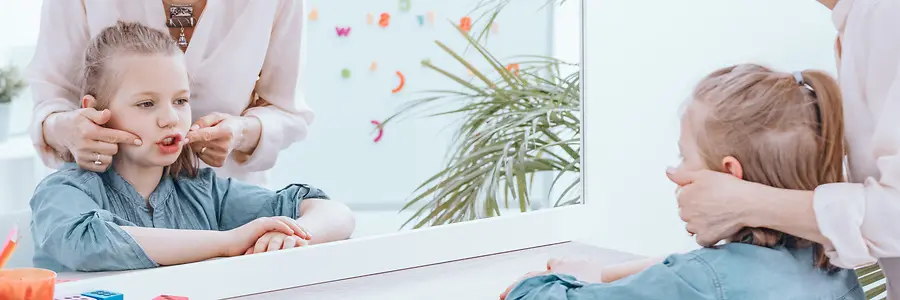
For four decades, I’ve had the privilege of sitting across from children who struggle to say the sounds they so desperately want to say. I’ve watched frustrated four-year-olds melt into tears because no one understands them. I’ve seen bright second graders avoid reading aloud. I’ve reassured worried parents who wonder, “Will my child grow out of this?”
Speech sound (articulation and phonological) disorders are among the most common challenges we see in pediatrics — and also among the most treatable.
After 40 years in this field, here’s what I want parents, teachers, and even young clinicians to understand.
What Is a Speech Sound Disorder?
A speech sound disorder (SSD) occurs when a child has difficulty producing sounds correctly or uses sound patterns that are not age-appropriate.
There are two primary types:
1. Articulation Disorders
These involve difficulty physically producing specific sounds.
Examples:
- Saying “wabbit” instead of “rabbit”
- Distorting /s/ so it sounds slushy
- Leaving off final sounds (“ca” for “cat”)
These are motor-based production issues — the child knows the word but cannot produce the sound accurately.
2. Phonological Disorders
These involve patterns of sound errors.
Examples:
- Saying “tat” for “cat” (fronting)
- Saying “poon” for “spoon” (cluster reduction)
- Saying “gog” for “dog” (backing)
Here, the issue is more linguistic than motoric. The child has not yet learned the rule system for sound use. Understanding the difference matters — because treatment approaches differ.
When Should Parents Be Concerned?
Over the years, I’ve found that many parents wait too long because someone told them, “Oh, that’s cute. They’ll grow out of it.”
Sometimes they do.
Often, they don’t.
General guidelines:
- By age 3, unfamiliar listeners should understand about 75% of what a child says.
- By age 4, most speech should be intelligible.
- By ages 5–6, most speech sounds should be developed, with a few later sounds (/r/, /th/) still emerging.
If a child is difficult to understand beyond these ages, it’s worth pursuing an evaluation.
Early intervention is almost always easier than remediation later.
The Emotional Impact Is Real
In my early years of practice, I focused heavily on sound accuracy.
Experience has taught me to focus just as much on confidence.
Children with speech sound disorders often:
- Avoid speaking in groups
- Let siblings speak for them
- Become class clowns to deflect attention
- Develop reading and spelling weaknesses
- Experience teasing
I have seen children’s personalities transform when their speech improves. Clear speech changes social experiences. It changes classroom participation. It changes self-perception.
This is not cosmetic therapy.
It is life-impacting therapy.
Why Do Speech Sound Disorders Happen?
Causes can include:
- Delayed phonological development
- Motor planning difficulties (e.g., childhood apraxia of speech)
- Structural differences (tongue tie, dental malocclusion)
- A history of hearing loss
- Unknown factors
Often, there is no single clear cause.
And that’s okay.
The focus is on treatment and progress.
What Effective Therapy Looks Like
Forty years ago, therapy often meant repeating sounds at a table.
Today, we know better.
Effective therapy includes:
✔️ Accurate Diagnosis
Is it articulation, phonological, motor planning, or a mixed profile?
✔️ High Repetition
Research consistently shows that children need hundreds of accurate productions per session to create meaningful change.
✔️ Systematic Progression
Isolation → syllables → words → phrases → conversation → carryover
✔️ Parent Involvement
Five minutes of structured home practice can significantly accelerate progress.
✔️ Functional Application
Using sounds in reading, classroom language, and real conversation.
The Reading and Spelling Connection
One of the most overlooked aspects of speech sound disorders is the literacy connection.
Speech sound awareness is tied to:
- Phonemic awareness
- Decoding
- Spelling patterns
When a child says “tat” for “cat,” they may also spell it incorrectly.
Addressing speech early can prevent later academic struggles.
I have seen countless children avoid reading intervention because their articulation therapy corrected the underlying sound system.
What Progress Really Looks Like
Parents often ask, “How long will therapy take?”
The honest answer: it depends.
- Mild articulation errors: a few months
- Phonological disorders: 6–12 months
- Motor-based disorders: longer
What matters most is:
- Frequency of therapy
- Consistency of home practice
- The child’s motivation
- Early identification
Therapy is not magic.
It is systematic skill-building.
What I’ve Learned After 40 Years
If I could leave families with five truths, they would be:
- Speech errors past age 4–5 deserve attention.
- Early therapy is easier than middle school therapy.
- Confidence grows as clarity grows.
- Parents are powerful partners in progress.
- Most children make excellent gains with the right approach.
I have watched children who were once unintelligible go on to become teachers, attorneys, business owners, and public speakers.
Clear communication opens doors.
And it is never “just a speech issue.”
A Final Word to Parents
If you are concerned about your child’s speech, trust your instincts.
You are not overreacting.
An evaluation provides clarity — and clarity reduces anxiety.
After 40 years in pediatric speech-language pathology, I can confidently say:
Few interventions yield such visible, measurable, and confidence-building results as speech sound therapy.
And few things are more rewarding than watching a child realize:
“People understand me.”


