The Death of Spirit! (2026 Update)
Why the Low-Cost giant fell!

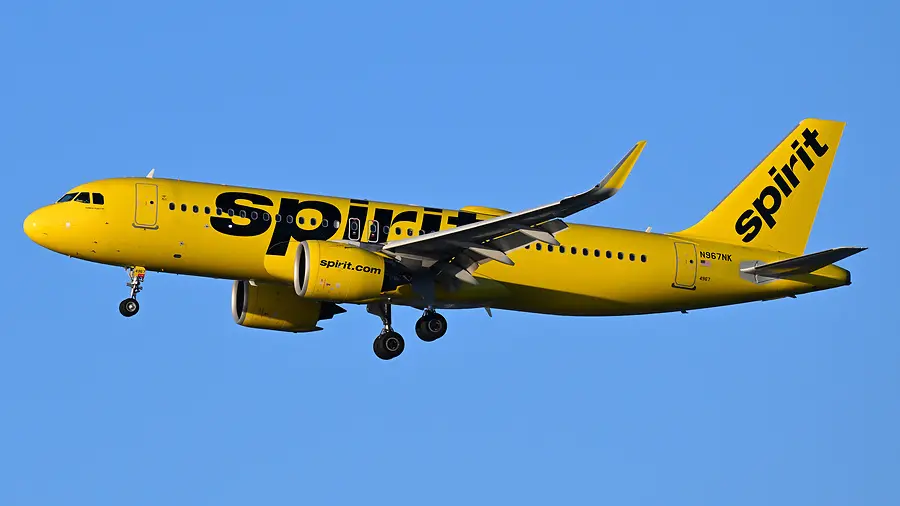
The Death of an Ultra Low-Cost Carrier
With Spirit Airlines' very recent collapse and ultimate demise (as of Saturday, May 2, 2026), I would feel severely remiss not to address the proverbial "death" of Spirit Airlines. This ties directly into my previous article discussing why LCCs and ULCCs (such as Spirit and Frontier) have historically struggled in the United States.
I will expand on this concept in a future article, but for now, it is enough to say that Spirit largely failed due to a combination of factors. Chief among them was the post-pandemic shift in consumer behavior, as American travelers became far more willing to pay for premium cabin experiences. Spirit, Frontier, Sun Country, Allegiant, Avelo, and Southwest all operated largely within single-class configurations and lacked true premium cabin offerings.
Each airline mentioned above responded differently to these market changes.
- Avelo secured contracts with the U.S. government for deportation flights through Immigration and Customs Enforcement (ICE), while Southwest undertook a major rebranding effort.
- Frontier began introducing premium seating options - a form of pseudo-First Class, though I would hesitate to call it that outright.
- Allegiant diversified revenue through major naming-rights deals, including Allegiant Stadium, home of the NFL's Las Vegas Raiders, located along the famous Las Vegas Strip.
- Sun Country dramatically reduced its airport footprint and shifted toward marketing partnerships with Canada, offering flights to near-international destinations such as Vancouver, Regina, and Winnipeg.
Spirit, however, pursued no comparable strategic pivot. Instead, the airline continued aggressively expanding its domestic route network while simultaneously cutting routes in what often appeared to be a random and inconsistent manner, despite the routes remaining concentrated around its Florida base and East Coast-heavy network.
Origins of Spirit Airlines
The company we know today as Spirit Airlines began as the Clippert Trucking Company in 1964 - a distinctly American origin story. In 1974, the company changed its name to Ground Air Transfer, Inc. In 1983, the airline itself was founded in Macomb County, Michigan - often considered the unofficial home of trucking in the United States - by Ned Homfeld as Charter One Airlines, a Detroit-based charter tour operator offering travel packages to entertainment destinations such as Atlantic City, Las Vegas, and the Bahamas.
In May 1992, Charter One introduced jet aircraft into its fleet and officially changed its name to Spirit Airlines, debuting its first livery: a simple blue-and-white striped fuselage inspired by the trucking industry. Throughout the 1990s, from 1992 to 2002, Spirit operated exclusively with McDonnell Douglas DC-9 aircraft.
In 1996, Janet Patton became Spirit Airlines' first female pilot. In 1998, she became the airline's first female captain and one of the first female captains in the broader aviation industry.
Early Fines and Fleet Changes
In 2000, the U.S. Federal Aviation Administration (FAA) fined Spirit Airlines $67,000 for violating federal regulations regarding cabin and seat markings and placards. Discrepancies were found in nearly all markings and placards related to emergency equipment, passenger seats, storage areas, and doors across eight DC-9 aircraft and nearly the entire MD-80 fleet. It was the first of many fines the airline would receive throughout its existence.
Between 2002 and 2003, Spirit acquired its first Airbus A320-family aircraft, including the A319, A320, and A321. In the process, the airline forcibly laid off pilots rather than retraining many of them and retired its McDonnell Douglas DC-9 and MD-80 fleets. Employee resentment deepened further in June 2008, when Spirit filed a WARN (Worker Adjustment and Retraining Notification) notice that proposed relocating or laying off hundreds of pilots and flight attendants while closing crew bases in San Juan, Puerto Rico, and LaGuardia Airport in New York.
Just eight months later, Spirit began adding advertisements and marketing gimmicks throughout its aircraft interiors, making the flying experience feel less like air travel and more like riding a city bus.
In 2007, Spirit Plus was rebranded as the "Big Front Seat," and the airline discontinued traditional business-class service. Passengers could pay an additional fee - roughly $119 at airport check-in - for a larger front-row seat, while all other passengers were charged for even basic refreshments such as soda or chips. In December 2010, Spirit launched the Free Spirit World MasterCard to compete with other airlines offering co-branded credit cards.
The COVID-19 Pandemic
In 2020, during the COVID-19 pandemic, Spirit Airlines received $334 million in grants and loans through the Coronavirus Aid, Relief, and Economic Security (CARES) Act. The funds were used to continue paying employees through September 30 while flights were canceled. In July 2020, Spirit announced plans to place 20-30% of its workforce on leave. Many employees sought supplemental work through services such as Uber and DoorDash to make ends meet. By August, numerous pilots and flight attendants voluntarily accepted reduced schedules or leaves of absence to help prevent layoffs.
One of the darker moments of Spirit's pandemic experience occurred in July 2020, when a passenger reportedly died of COVID-19 aboard a Spirit flight. Spirit claimed it had notified the Centers for Disease Control and Prevention (CDC), though no official record of that communication was found. Passengers on the flight were reportedly never informed that they had been exposed to an infected individual.
On April 17 of last year, Spirit emerged from bankruptcy and appointed Dave Davis as its new - and ultimately final - CEO, effective four days later.
Attempts to Save Spirit
Several attempts were made to save Spirit as it struggled in the wake of the pandemic and the market shift toward premium travel experiences. The airline's "Big Front Seat" offering was simply too limited to consistently attract travelers seeking a more premium product.
The Frontier Merger Attempt (2022)
The first major rescue attempt came in February 2022, when Frontier Airlines announced plans to acquire Spirit, pending regulatory approval. The combined airline would have become the fifth-largest carrier in the United States. However, Spirit shareholders ultimately rejected Frontier's offer in July 2022. In hindsight, the merger may have saved the airline.
The JetBlue Acquisition Attempt
In April 2022, JetBlue proposed acquiring Spirit for $33 per share in cash, valuing the company at approximately $3.6 billion. Spirit initially rejected the offer, arguing that the U.S. Department of Justice's Antitrust Division would likely block the deal on the grounds that the acquisition of an ultra low-cost carrier by a higher-fare airline would reduce competition and increase fares. Spirit's concerns were not unfounded, as the DOJ was already scrutinizing JetBlue's Northeast Alliance partnership with American Airlines for similar reasons.
In July 2022, JetBlue reached a revised agreement to purchase Spirit for $33.50 per share, including additional incentives for shareholders. Spirit shareholders approved the deal, but the U.S. Department of Justice sued to block the merger, arguing it would lead to "higher fares, fewer seats, and harm to millions of consumers."
The trial began in October 2023, and in January 2024, a federal judge blocked JetBlue's acquisition of Spirit Airlines, ruling that the merger was anticompetitive and harmful to consumers. Spirit's stock price immediately collapsed by roughly 47%, and speculation grew that the airline would ultimately be forced into Chapter 11 bankruptcy or liquidation if it could not establish a viable growth strategy.
On January 18, Spirit publicly denied bankruptcy rumors, insisting it had no immediate plans to file and was exploring alternative paths forward. JetBlue officially abandoned its takeover attempt on March 4, 2024, after Judge William G. Young ruled the merger would substantially reduce competition. JetBlue later entered a partnership arrangement with United Airlines, which has thus far proven considerably more successful.
Bankruptcy and a Second Frontier Offer
In November 2024, Spirit announced preparations to file for Chapter 11 bankruptcy protection, validating widespread speculation. The airline's stock fell by more than 50%, and quarterly results were withheld amid expectations of severe financial losses.
A third rescue attempt emerged in January 2025, when Frontier again offered to purchase Spirit. Spirit rejected the revised $2.1 billion stock-and-cash proposal, which also required Spirit's creditors to invest an additional $350 million. The offer was substantially lower than the original 2022 proposal. Although Spirit rejected the offer, company leadership stated publicly that they remained open to continued discussions. Frontier, however, never returned to negotiations.
Spirit officially emerged from Chapter 11 bankruptcy protection in March 2025 after restructuring its debt and finalizing a privatization plan approved the previous month.
The Final Collapse
In August 2025, Spirit warned that it was rapidly running out of cash and might not survive another year without additional funding. On August 29, after a failed restructuring effort, Spirit Airlines filed for Chapter 11 bankruptcy protection for the second time in less than a year as part of a plan to reduce its fleet and stabilize operations.
On April 15, 2026, reports emerged that Spirit Airlines was facing possible liquidation by the end of the following week, citing sharply rising fuel costs caused by the 2026 Iran War.
By week's end, reports indicated Spirit was seeking a government bailout. Later that month, the Trump administration reportedly considered acquiring a controlling stake in the airline, effectively nationalizing it.
CBS News reported on May 1, 2026, that Spirit planned to cease all operations within 24 hours after bailout negotiations with the Trump administration collapsed amid major disagreements between both parties.
Spirit's Business Model
Spirit's collapse can ultimately be traced back to its business model.
Under CEO Ben Baldanza, Spirit embraced the ultra low-cost carrier model by charging fees for amenities traditionally included in standard airline tickets. Passengers paid extra for virtually every customization, including seat selection, carry-on baggage, checked luggage, printed boarding passes, and even seat changes within the same cabin. These ancillary fees eventually accounted for more than 40% of Spirit's total revenue.
In short, the recent fuel crisis and the Iran War did not kill Spirit Airlines. They merely delivered the final blow to an airline that had already been slowly collapsing under the weight of passenger dissatisfaction, relentless ancillary fees that simply do not function in U.S.-aviation (as opposed to European and Asian aviation where the ULCC model not only exists, but thrives), operational instability, and the long-term difficulty of sustaining a true ULCC model across a geographically vast and economically volatile market such as the United States.
We hope you found this examination of Spirit Airlines' downfall informative. Book your next reliable and relaxing journey with a consultation at brookeintheairtravel.net.