The Alaska Airlines' Milk Run
Discover Alaska's Essential "Milk Run": The Only Bush Trip Serving Isolated Southeast Alaskan Communities

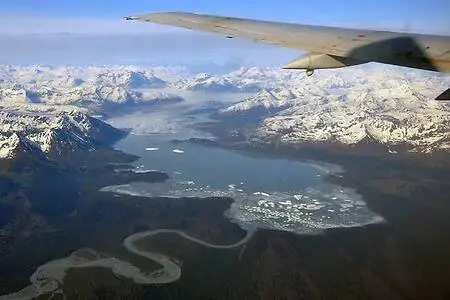
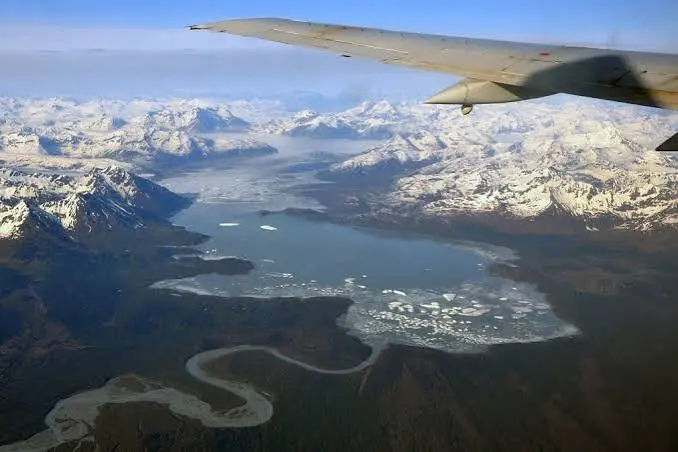
Welcome back, valued travelers! I hope you enjoyed the Island-Hopper because we’re presenting another aviation adventure! We present the only so-called “bush trip” in the continental United States: Alaska’s “Milk Run.” Flown exclusively by Alaska Airlines, this is a series of multistop flights that serve as lifelines for isolated communities in the Alaskan backcountry.
Notably, the Milk Run provides resources for many towns in Southeast Alaska (such as Sitka, Ketchikan, Petersburg, Wrangell, Yakutat, and Cordova), which have no roads or railways connecting them to the outside world. The flight serves as a vital daily transit bridge for people, mail, medicine, and fresh groceries—including milk, which gave the route its historical name.
Route Variations (all depart from Seattle and arrive in Anchorage) include the following:
- Northern Panhandle Run: Seattle – Juneau – Yakutat – Cordova – Anchorage
- Central Panhandle Run: Seattle – Ketchikan – Wrangell – Petersburg – Juneau – Anchorage
- Inner Panhandle Run: Seattle – Ketchikan – Sitka – Juneau – Anchorage
Instead of flying nonstop, a single cold-weather-specialized Boeing 737-700 of the Next Generation (Next Gen) variation makes multiple short hops (sometimes as brief as 10 to 15 minutes between adjacent towns). After retiring the Combis (the 737-400C, or Combi, short for combination, routinely used to make these trips), Alaska pivoted to the 737-700, valued for its high thrust-to-weight ratio, which is critical for short, weather-beaten runways. The airline also utilizes the 737-700SFP, or 737-700 Short Field Performance variant, which is incredibly useful on short, dirt-beaten, or snow-covered runways.
The leg between Wrangell (WRG) and Petersburg (PSG) spans just 31 miles, for example, necessitating the SFP variant. The actual flight time is routinely only 9 to 13 minutes, with the aircraft topping out at around 4,000 to 5,000 feet above sea level. Passengers can choose to stay on the plane or step off briefly at certain stops while the crew and cargo are managed. (Though, given the cold weather, that decision is questionable, but it's all a matter of personal preference. We're not judging!)
Because of intense wind shear, rapidly shifting visibility, and challenging terrain, pilots frequently choose to fly the ultra-short hops manually rather than relying on autopilot. Alaska Airlines pioneered Required Navigation Performance (RNP) in the 1990s specifically for this region. RNP uses GPS and onboard computing to allow planes to fly highly precise, curved flight paths through narrow valleys and land safely on runways that completely lack traditional ground-based instrument landing systems (ILS), though experienced pilots still prefer to fly manual approaches.
Regardless, the geographic layout of Southeast Alaska features tight fjords, unpredictable coastal fog, and sheer mountain faces. The Milk Run would face constant cancellations without Required Navigation Performance (RNP).
Actual in-air service is abbreviated, as alluded to earlier. The seatbelt sign rarely turns off, according to a consensus of passengers, because flight crews must prepare for landing almost immediately after takeoff. Typical cabin service is suspended on the shortest legs, with snacks and drinks sometimes handed out during ground layovers instead.
While the Milk Run acts as a de facto public bus in the sky for locals (who frequently check coolers of Costco goods on these flights), tourists and aviation enthusiasts can freely book a ticket for the scenic coastal and glacier views, provided they do not interfere with the mission of the Milk Run, which is almost purely resource-driven.
Fascinatingly, the airports along the panhandle (like Yakutat or Cordova) are remarkably minimalist. They lack any jetways, automated baggage belts, or standard airport amenities. Alaska Airlines ground crews are highly cross-trained; during a tight 45-to-60-minute turnaround, the same local agents will guide passengers down the air stairs, marshal the aircraft, unload heavy mail crates, and load seafood cargo (like fresh Alaskan salmon) into the belly of the aircraft. These are jobs typically assigned to 7–9 employees, at a minimum, at major metropolitan airports. Instead, just 2–3 employees handle these jobs expertly.
The logistical reality of this “sky highway” in the Alaska Airlines Milk Run highlights what happens when a commercial airline functions as a region's sole heavy-freight highway and mode of conveyance. Because coastal and Southeast Alaska are fragmented by deep fjords, dense rainforests, and jagged mountains, towns like Petersburg and Wrangell have no road or rail access.
The Milk Run handles a starkly unbalanced supply chain, requiring perfectly optimized belly space for entirely different commodities depending on the direction of travel.
From a passenger ticket perspective, the cost of flying the Alaska Airlines Milk Run presents a fascinating paradox. While it functions as an essential, heavily utilized public utility for isolated locals, it is priced and ticketed like any standard commercial flight. It is still much less costly than the Island-Hopper due to its utility-first nature.
If a local passenger just needs to jump one stop—for instance, from Wrangell (WRG) to Petersburg (PSG)—a one-way ticket for a point-to-point hop typically ranges from $90 to $160 USD. Considering that the flight is under 15 minutes, the cost per minute of flight time is exceptionally high, but it may be worth it if one is simply looking to experience the flight.
Booking the entire multistop itinerary from Seattle (SEA) to Anchorage (ANC) as a single continuous trip usually costs between $250 and $550 one-way (around $1,100 plus taxes for a round-trip ticket, which is very reasonable overall), depending on seasonality and how far in advance the ticket is booked.
Summer tourist season drives Milk Run prices to the higher end. Alaska Airlines' Dynamic Pricing Program controls this flight’s prices just like those of every other flight in Alaska's network.
We hope you enjoyed this exploration. Please learn so much more at brookeintheairtravel.net, and we’ll see you next time!

Brooke is the founder and chief operator of Brooke In The Air Travel LLC, a company she formed shortly after graduate school in 2022. She holds a Bachelor’s degree in history and sociology, plus a Master’s degree in history, and has since dedicated her life to travel and unraveling the complex mysteries of flights, connections, hotel bookings, etiquette, and in general “how to travel” with the least hassle…