The Cultural Mismatch: Western Modalities, Social Work, and the Global Client
How Western-Centric Mental Health Systems Fail Global Populations and Perpetuate Institutional Harm

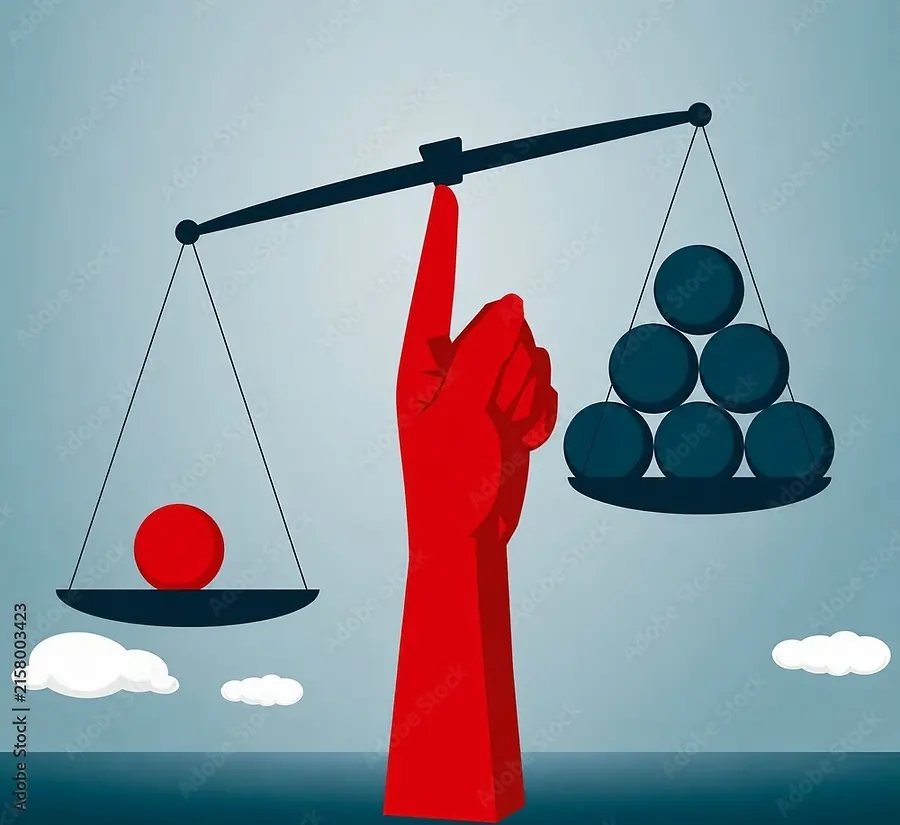
The Ethnocentric Foundation of Standardized Modalities
Public mental health infrastructure relies heavily on manualized, brief-intervention frameworks—most notably Cognitive Behavioral Therapy (CBT) and Dialectical Behavior Therapy (DBT). While these evidence-based practices (EBPs) are highly favored by insurance companies and state funding bodies for their measurable, uniform metrics, they are built on a highly specific cultural foundation:
The Hyper-Individualistic Bias: Western psychology assumes an autonomous self. It teaches that distress is primarily an individual problem caused by localized "cognitive distortions" or maladaptive thought patterns.
The Rationality Trap: CBT treats human suffering as a logical puzzle to be dismantled through cognitive restructuring.
For a global client population—particularly individuals from collectivistic cultures in Asia, Africa, the Middle East, and Latin America—this framework is often entirely incongruent. In these cultures, the self is interconnected with family, ancestors, community, and the spiritual world. An individual's psychological distress cannot be neatly separated from their social fabric. Framing a client's deep existential grief, cultural displacement, or systemic oppression as a mere "thought distortion" to be reframed on a worksheet is not only clinically ineffective—it can feel invalidating and gaslighting to the person seeking help.
The Training Deficit: Social Work vs. The Human Psyche
To understand why these outdated and rigid modalities persist, one must look at the workforce tasked with delivering them. In large-scale public clinics, the overwhelming majority of front-line clinical staff hold a Master of Social Work (MSW) degree.
Social work is a noble and vital discipline, historically rooted in sociology, civil rights, and systemic advocacy. Its foundational educational framework centers on the "person-in-environment" model. Social workers are trained to look outward: navigating socioeconomic barriers, coordinating community resources, understanding policy, and managing institutional systems.
However, this outward focus creates a severe educational deficit when it comes to looking inward at the deep architectures of the human mind. Standard MSW programs rarely include rigorous, multi-year training in:
- Depth Psychology & Psychodynamics: Understanding the unconscious mind, defense mechanisms, and transference.
- Complex Somatic Trauma: How severe trauma, torture, or displacement alters the nervous system and registers in the physical body, rather than just in cognitive thoughts.
- Advanced Cross-Cultural Psychopathology: How different cultures express, experience, and heal from psychological fracturing.
- New Scientific Research in Neuroscience and Quantum Physics
When a public agency relies almost exclusively on social workers to function as therapists for a complex, global population, a systemic failure occurs. The clinician lacks the deep psychological training required to navigate complex trauma, while the system forces them to use superficial, manualized Western tools.
The Consequence: Surface Triage and Somatic Blindness
Because of this combination, global clients in public clinics are frequently subjected to surface-level behavioral triage.
A well-documented phenomenon across global populations is somatization—expressing psychological trauma through chronic physical pain, gastrointestinal distress, or profound physical fatigue. Many non-Western cultures do not separate the mind from the body. A client from a war-torn region or a refugee background may present to a clinic complaining of a heavy chest or a burning sensation in their body.
A doctoral-level psychologist or a practitioner deeply trained in somatic psychodynamics or transpersonal psychology understands how to track these physical manifestations back to profound, unconscious trauma. Conversely, a public health social worker, constrained by their training and handed a standard CBT manual, is structurally conditioned to look only at conscious behaviors and thoughts. They try to apply a cognitive solution to a deeply rooted somatic and systemic injury.
When Institutional Dysfunction Becomes Clinical Harm
The public is told that community clinics provide "clinical therapy" backed by science. The stark reality is that the public mental health sector operates as an assembly line. It pairs an undertrained workforce with rigid, Eurocentric behavioral manuals and applies them universally to a deeply diverse global population.
Another factor contributing to stagnant systems is the presence of dangerously burned-out supervisors who lack genuine curiosity and a commitment to learning about areas outside the scope of their knowledge. They might remain anchored to what they learned decades ago, showing little motivation to expand or deepen their knowledge due to burnout or ego. I say this is dangerous because supervisors who lack intellectual curiosity and the motivation to continually expand their knowledge risk becoming stagnant not only professionally but also psychologically, which affects client care.
When professional growth ceases, established knowledge can become a source of rigid identification. In some individuals, this stagnation may give rise to feelings of inadequacy or inferiority, particularly when confronted with clinicians whose curiosity, specialized knowledge, and commitment to learning challenge their established sense of authority. Feelings of inadequacy may manifest through excessive control, micromanagement, dismissal of alternative perspectives, or the unethical exercise of institutional power.
From a psychodynamic perspective, such behaviors may reflect compensatory defenses or projection, in which uncomfortable feelings about one's own limitations are displaced onto employees, leading to misconduct and toxic work environments. This pernicious cycle has a negative impact on therapeutic care for clients. Until the public mental health system moves away from uniform box-checking and embraces multidisciplinary, deep psychological, and culturally organic models of healing, it will continue to offer little more than a Band-Aid for the profound fractures of the human psyche.
When Authority Overrides Ethics
Unfortunately, we see this happening everywhere in the healthcare industry, government, and other sectors. I wanted to present one example of how authority can be misused in organizations in ways that are detrimental to professional integrity and the quality of client care. You may ask why this cycle continues and why so many people are choosing alternative mental health approaches. We need to identify all areas of dysfunctional systems. One example is that some human resources departments, entrusted with ensuring fairness, ethical accountability, and employee protection from institutional misconduct, become more invested in preserving longstanding managerial relationships and existing power structures than in addressing legitimate concerns. When this happens, they cease to function as safeguards against abuse and instead become complicit in perpetuating it.

Hayat Mohammad is a Holistic Coach with an MA in Transpersonal Psychology specializing in trauma-informed care and somatic healing. Drawing from her background as a visual artist and personal transformation journey, she integrates Reiki, somatic awareness, and psychological frameworks to support clients through trauma and spiritual crises. Her practice emphasizes whole-person healing by addressing…