The DES Tragedy: An Influential Woman’s Call for Accountability
From Patient to Advocate and Leader

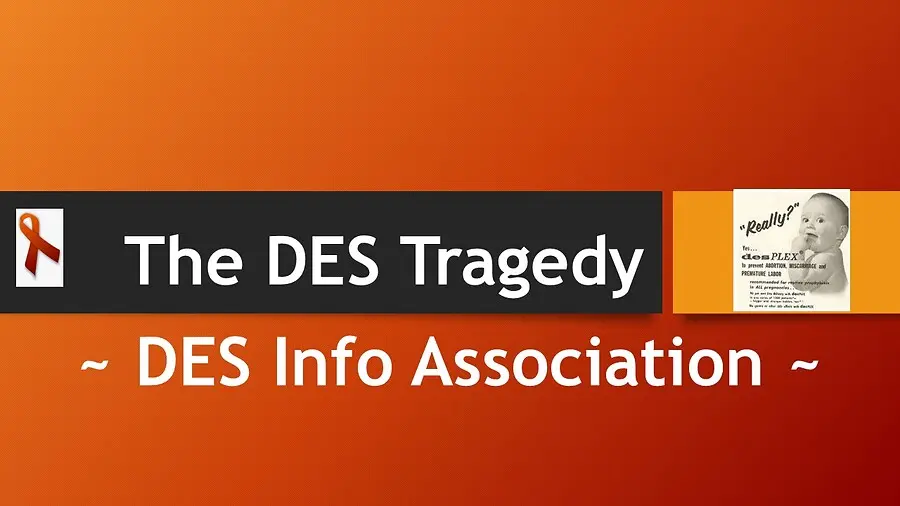
The DES Tragedy: An Influential Woman’s Call for Accountability
By Karen Fernandes, R.N., CPHQ – Administrator, DES Info
When my mother took Diethylstilbestrol (DES) during her pregnancy with me, she believed she was protecting her baby. DES was promoted for decades as a “miracle” drug to prevent miscarriage and complications, and millions of women trusted that promise. Today, I stand not only as a DES Daughter but also as a nurse, patient-safety leader, and advocate for one of the most significant—and still unresolved—medical tragedies in modern history.
Growing Up a DES Daughter
I first learned of my DES exposure in the mid-1970s, when evidence emerged linking prenatal DES to clear cell adenocarcinoma of the vagina in young women. The shock of that discovery was only the beginning. Over time, we learned that DES Daughters face higher risks of infertility, ectopic pregnancies, pregnancy loss, structural reproductive anomalies, and reproductive cancers. Many, like me, also confront osteoporosis and fragile bones as they age.
DES Sons have not been spared. They are more likely to experience testicular abnormalities, hypospadias, undescended testes, hormonal imbalances, and infertility. A drug given with the intention of safeguarding pregnancy left a multigenerational legacy of damage.
A Multigenerational Public Health Crisis
DES’s impact does not end with the first exposed generation. Research shows it is a transplacental carcinogen and teratogen, capable of altering fetal development. Early evidence now points to multi- and transgenerational effects, likely through epigenetic changes that affect gene expression.
Third-generation DES grandchildren are already showing health concerns:
- Increased rates of menstrual irregularity, amenorrhea, and preterm birth in granddaughters
- Higher likelihood of low birth weight and prematurity across grandchildren
- Reports of hypospadias in grandsons and early ovarian cancer signals in granddaughters
We do not yet know what future generations may face. What is certain is that DES was one of the first recognized drugs causing harm not just to the user, but to their descendants.
Emerging Health Concerns Over a Lifetime
As DES-exposed individuals age, additional health risks continue to emerge:
- Cardiovascular disease (high cholesterol, hypertension, coronary artery disease, heart attack)
- Diabetes and pancreatic disorders
- Early menopause and endometriosis
- Osteoporosis and brittle bones
- Spinal degeneration
- Immune system disorders
These “encoded genome changes” highlight a critical truth: the DES story is ongoing. The drug may be gone, but its impact persists across generations.
From Patient to Advocate and Leader
For over 30 years, I have advocated for DES-affected individuals. I have served on the board and as president of DES Action, participated in NIH research, and now lead DES Info, a volunteer organization keeping DES-affected families informed and supported.
Our work includes:
- Sharing updated medical information and screening guidance
- Collaborating with the NIH and DES researchers
- Educating healthcare professionals about DES
- Supporting DES Daughters, Sons, Grandchildren, and their families navigating complex health systems
Influential women often transform personal loss into public leadership. In doing so, private grief becomes organized advocacy, ensuring others are not left to suffer in silence.
A Rare Disease with No Apology
DES embryo fetopathy (DES syndrome, UMLS C0853695) is now recognized as a rare disease. Yet recognition has not been met with accountability. Over ten million Americans were exposed, yet there has never been a comprehensive apology or coordinated support program from the pharmaceutical companies responsible.
Congress has acted in part:
- 1992: Established a national program of research, outreach, and education via the National Cancer Institute and CDC
- 1997: Renewed support for further research and education
- 2011: FDA correspondence referred to DES as “The DES Tragedy”
- 2025: House Resolution 342 introduced, calling for DES Awareness Week, restored research funding, and a formal FDA apology
These milestones are important—but they stop short of full justice.
What Influential Women Should Know — and Demand
The DES tragedy offers crucial lessons:
- Medical innovation requires humility: Drugs for pregnant women must be rigorously studied with long-term, multigenerational vigilance.
- Silence compounds injury: Delayed or opaque responses amplify suffering.
- Apology and accountability matter: Modern healthcare expects transparency, disclosure, and acknowledgment of harm.
- Women’s health is foundational: DES highlights the consequences of medicalizing women’s bodies without adequate research. Leadership in women’s health is essential to prevent history from repeating.
A Call to Action
To women in medicine, policy, media, philanthropy, and advocacy: help bring DES out of the shadows. We need:
- Renewed, multigenerational research funding for DES-affected families
- Inclusion of DES history and surveillance guidelines in healthcare education
- Formal acknowledgment and apology from the pharmaceutical industry
- Policies ensuring no drug replicates this scale of unchecked harm
The DES community has carried this story for decades. It is time for the broader world—and influential women—to carry it with us.
We may not yet know the full extent of DES’s impact on future generations, but we know this: silence is no longer an option. Justice demands acknowledgment.
Join the fight: Support DES Awareness Week, April 19–25, 2026.


