The Downfall of a Titan (AA Analysis)
How American Airlines Lost Its Way: From Legacy Carrier to Budget Airline

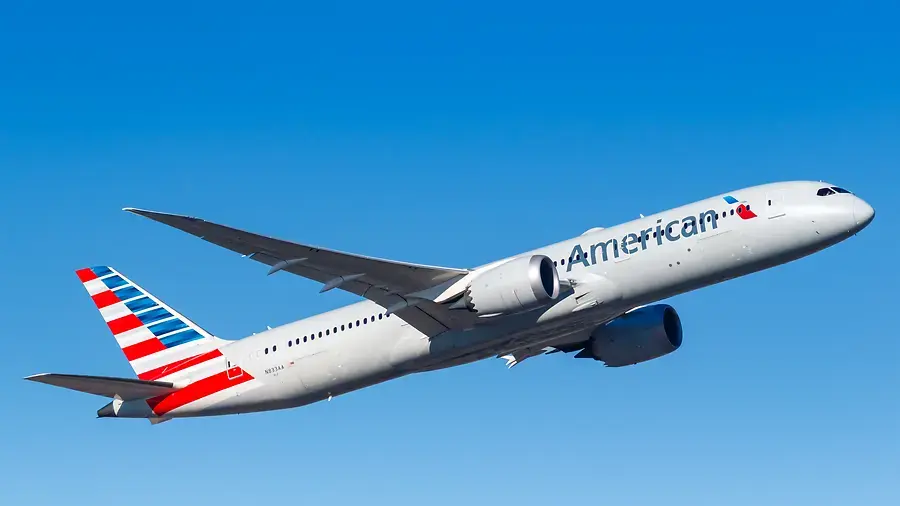
American Airlines has metaphorically shot itself in the foot.
American Airlines has metaphorically shot itself in the foot. While Delta Air Lines continues to market itself as a "premium" carrier, and United is rapidly closing the gap through its United Next strategy and the upcoming Polaris Next premium product slated for 2026, American appears content positioning itself as a domestic "bus" airline - closer in spirit to Spirit or Frontier than to its legacy peers.
United CEO Scott Kirby was blunt when he stated that "the U.S. has only two legacy carriers, not three," and American Airlines is not disputing that claim. In fact, they seem to be leaning directly into a low-cost-carrier persona.
A Credit Card Company That Happens to Operate Airplanes
American (IATA code: AA or AAL) has effectively become a credit card company that happens to operate airplanes. The airline's net value and profitability are driven more by Visa card applications and card usage than by long-haul premium travelers flying from hub cities like Dallas-Fort Worth or Charlotte to destinations such as London or Tokyo - routes that now represent only a fraction of its former international network.
While American does technically maintain a hub at Los Angeles International Airport (LAX), this is largely irrelevant in today's competitive landscape. Delta, United, Southwest, and even JetBlue all operate significant presences there. What matters more is that these carriers are fighting for prime airport real estate - namely gates and gate space, or in airline parlance, territory.
The Decisions That Ultimately Crippled American Airlines
The decisions that ultimately crippled American Airlines were twofold.
First, the airline fired its former Executive Vice President, Vasu Raja, the architect behind its domestic-network-centric strategy. United Airlines has since hired Raja to lead its MileagePlus loyalty program - a move that speaks volumes.
The second mistake occurred earlier, at the height of the COVID-19 pandemic.
While other airlines placed widebody aircraft into long-term storage with plans to reactivate them post-pandemic, American sold off its entire Boeing 757 and 767 fleets, along with most of its 777 fleet. This decision severely limited its long-haul capability, cutting an estimated 85-90% of its international network. Even the later acquisition of Boeing 787-9 Dreamliners failed to fully compensate for the loss.
American's response was to aggressively expand its domestic network while simultaneously reducing ticket-booking accessibility, particularly through travel agencies. The airline also sold off its Embraer E195 fleet, which had been well suited for domestic regional routes. As a result, American narrowed its mainline fleet primarily to Boeing 737 aircraft, relying on its American Eagle subsidiary to operate CRJ-700 and CRJ-900 jets on short-haul routes.
Under Raja's leadership, the domestic network did grow, but the focus was overwhelmingly on economy-class passengers - prioritizing quantity over quality.
A Strategy of Customer Inevitability
Even American's upgraded Flagship Suite on its remaining long-haul aircraft falls short when compared to Delta One Suites and United's Polaris, and soon Polaris Next. Rather than emphasizing customer experience and retention, American has adopted a strategy of customer inevitability - positioning itself as the only viable option in much of the southern and southeastern United States.
The Flagship Suite itself is a visual representation of this unavoidability. The product is "mid," as the kids say - an expensive experience that delivers surprisingly little value. There is a non-trivial chance your seat will be broken regardless of route or class of service, and when that happens, passengers are often met with a half-hearted apology and perhaps a modest travel voucher.
Next time, we will examine the decline of another once-beloved airline - the "heart" of American aviation: Southwest Airlines.
You can learn more and book your dream trip through a personal consultation at Brooke In The Air Travel:
Photo credit: Condé Nast Traveler