The Female Paper Route: AyeDNicole Introduces the 4HIO Era
Building an Independent Legacy: How AyeDNicole's 4HIO Label Redefines Female Ownership in Southern Hip-Hop

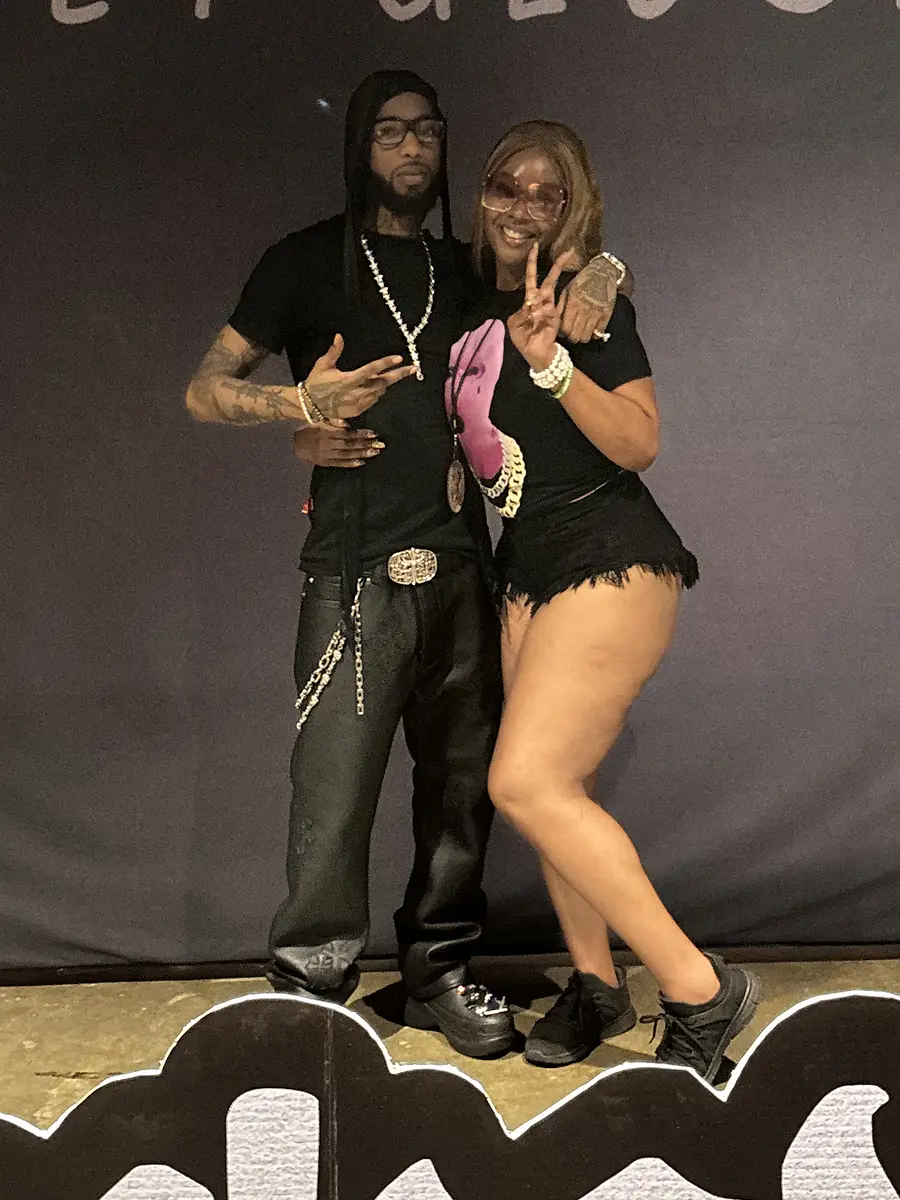
"The stamp didn't need clout. It needed assignment." — AyeDNicole
For AyeDNicole, introducing 4HIO Label is about far more than placing a label name behind her music. It represents the convergence of writing, education, Southern culture, professional experience, entrepreneurship, and a lifelong appreciation for music.
As the founder of 4HIO, an independently developed, female-owned label, I am entering this era while proudly acknowledging the cultural relationships, artistic influences, and personal experiences that I associate with the broader Paper Route story. That distinction matters to me. I can appreciate what has influenced me without overstating a corporate affiliation, manufacturing a title, or constructing my identity around someone else's success.
I see it as an assignment.
My responsibility is to take everything I have learned—from education and Corporate America to Southern hip-hop, fitness, entrepreneurship, and Black culture—and determine what I can responsibly build for myself.
Femininity Without Compromise
Before discussing music, affiliations, or 4HIO, I want one principle understood: my femininity is not a bargaining tool for access.
Entering a male-dominated area of hip-hop has made me increasingly conscious of the difference between embracing womanhood and believing that sexual persuasion must become part of a woman's strategy for establishing a creative position beside men.
I can be feminine, attractive, fashionable, and expressive without making romantic or sexual availability part of my business strategy. Creative credibility should come from the music, preparation, genuine relationships, and the substance a woman brings into the room.
That distinction is particularly meaningful to me as a member of Alpha Kappa Alpha Sorority, Incorporated, and a two-time graduate of Florida A&M University. I want young Black women who encounter me through rap to understand that an artist can embrace adult creativity while still carrying education, sisterhood, service, professionalism, and boundaries into the larger picture of her life.
I do not believe women should have to choose between being the "professional woman," the "respectable woman," the "female rapper," or the "successful Black woman."
I can rap, embrace femininity, be an AKA, have an education, work professionally, build businesses, and understand boundaries simultaneously. None of those identities require me to stop being myself.
Knowing which part of yourself belongs at the forefront of a particular environment is not being fake. It is social awareness.
Before the Rapper, There Was the Writer
Long before the HBIC series, recording sessions, or conversations about owning a label, I was writing.
At Terry Parker High School, I received recognition through Celebration of Poets, which reflected an early relationship with poetry, storytelling, and language. Writing eventually expanded into songwriting, rap, memoir development, and creative entrepreneurship.
Before there was an artist persona to market, there was simply a young writer discovering what words could become when paired with emotion.
Music was equally foundational. Growing up in a musically inclined family exposed me to old-school music, rock, pop, country, classical music, and other traditions that shaped my appreciation for instrumentation, rhythm, storytelling, and performance.
Hip-hop did not replace those influences. It became another language through which I could interpret them.
My love for rap ultimately comes from my love for music itself.
Young Dolph, Paper Route, and Ownership
Young Dolph's influence on my development extends beyond his music.
Watching the development of Paper Route Empire provided an example of how an artist could think beyond records and performances toward ownership, brand identity, and infrastructure.
Independence was no longer simply about releasing music. It meant understanding that creativity and entrepreneurship could coexist.
As my HBIC series developed, particularly after HBIC VOL 4, I started thinking more seriously about Southern hip-hop, Memphis culture, and what it means to contribute to a musical ecosystem instead of simply seeking proximity to successful people within it.
Watching what Dolph built gave me another perspective on ownership. It was not simply about making music and becoming popular. It was about building something capable of existing beyond a single record.
That principle became much more important to me than proximity.
Key Glock: Respecting the Man Behind the Momentum
My appreciation for Key Glock has also matured beyond simply being a fan of the music.
What speaks real volume to me now is observing his growth, maturity, work ethic, and increasingly recognizable businessman aura, along with the attention he has publicly shown toward community and the culture surrounding his platform.
I respect forward movement.
I also think this distinction matters because whenever a woman speaks positively about a man in entertainment, people can be quick to reduce that appreciation to attraction.
Girl, no. We can respect men, too. LOL.
Of course, I can recognize that Glock is an attractive man, but that is not what makes his development meaningful to me. At this stage of my own life, qualities such as discipline, evolution, consistency, entrepreneurship, and purpose resonate differently.
I cannot speak for who another person is privately, and I do not need to. What I can respect is what is observable through the work: an artist continuing to develop his craft, business identity, and responsibility while moving forward after tremendous changes within the Paper Route story.
As I grow, the qualities I notice in people grow with me.
That is maturity, too.
When the Birthday Wish Actually Happened
One of my favorite memories happened around my birthday in January 2024, when I randomly posted on Instagram that all I wanted was a FaceTime with Key Glock so I could recite lyrics.
There was no coordinated campaign behind the post, and to my knowledge, Glock had not seen it.
Then my former manager and team member, Allison Barrett, called with a very simple instruction: "Answer your FaceTime."
I answered, and Key Glock was on the screen.
Baby, I screamed.
Then I immediately started tapping out "Ambition for Cash" because apparently behaving normally was simply not an option that day.
Glock wished me a happy birthday shortly before going onstage, and what stayed with me was the simplicity of the gesture.
Approximately a year later, we met in person in Atlanta. That moment became another reminder that not every meaningful interaction needs to become an immediate business transaction, announcement, or celebrity storyline.
Some things can simply be genuine.
When it is organic, I would rather respect the moment than manufacture meaning around it.
Male Hip-Hop and Female Hip-Hop Can Complement Each Other
That respect also influences how I think about the evolution of male and female hip-hop.
The newer wave I observe within Glock's lane of male hip-hop complements what I am developing within my female lane—not because our artistry is identical, because it certainly is not supposed to be, but because I see value in artists developing portfolios that extend beyond the booth.
Music can be the foundation without becoming the ceiling.
An artist can make records while learning business. An artist can influence fashion while building ownership. An artist can create music that fuels workouts, sporting events, and athletic culture while exploring broader opportunities in fitness and sports. An artist can represent where they come from while allowing maturity to expand what influence means.
That is the kind of hip-hop excellence that interests me.
When I look at what I am developing through 4HIO, my music, education, professional experience, fitness interests, and entrepreneurship belong to the same larger portfolio.
I do not want my influence to stop when the song ends.
I want young women to see education, ownership, financial literacy, fitness, intellectual property, professionalism, and creativity existing together.
Likewise, when I observe Black male artists developing multidimensional careers in which music, business, community, culture, and legacy intersect, I can simply say:
I respect that. Keep going.
Male-female artistic relationships do not always need to be reduced to romance, competition, or controversy.
Sometimes Black men can build.
Black women can build.
Everybody can respect the work.
And hip-hop wins.
Bless Em Bless and Protecting Organic Relationships
My engineer and longtime friend Bless Em Bless represents another important part of this journey.
Bless developed professional connections to the broader Paper Route music environment through his engineering career before our own working relationship took shape. Our creative partnership developed during earlier HBIC volumes, which gave our friendship and professional relationship an identity independent of connections that later emerged around me.
Bless was also present when I met Glock again, and we were in the front acting like two teenagers.
That experience charged me creatively, but it also reinforced another principle I want 4HIO to protect: not every conversation needs to become a public promise.
Music, business ideas, creative possibilities, and relationships should be allowed to develop before social media decides what they mean.
Strategy sometimes means knowing what not to announce.
Degree First, Mic Second
One of the most important parts of my journey is what I deliberately did not do: rush into rap while attending college.
My parents invested their hard-earned money into giving me an educational foundation capable of supporting a life far beyond entertainment. Respecting that sacrifice meant taking school seriously.
My parents were not paying tuition for me to turn the campus into my personal record-label audition.
I had a degree to get.
Actually, I ended up getting two.
Music could wait long enough for me to establish a foundation.
That decision still shapes how I speak to young artists. Education will look different for every person, and college is not the only pathway to success, but young creatives should not feel pressured to make entertainment their entire identity before adulthood has even given them the opportunity to discover who else they can become.
I also want emerging artists to understand intellectual property early. Document your work. Understand ownership before collaborating. Learn what you are signing. Know when an idea is ready to be shared, and do not allow excitement to replace discernment.
Sometimes you have to hold the heat until the structure is ready.
The Woman Behind 4HIO Carries More Than a Microphone
Waiting gave me time to build an identity independent of entertainment.
I became a two-time Florida A&M University graduate, a member of Alpha Kappa Alpha Sorority, Incorporated, and served during my university years in leadership capacities that included Student Government Senator and Electoral Commissioner.
My path later expanded into Treasury and financial operations, entrepreneurship, fitness, writing, and creative development.
All of that walks into the room with me.
My education walks in.
My professionalism walks in.
My Southern upbringing walks in.
My femininity walks in.
My understanding of business walks in.
And then AyeDNicole walks in with the bars.
A woman can understand a balance sheet and write a sixteen. Those identities do not have to fight each other.
That is part of my definition of Black excellence.
Sports, Fitness, and Giving the Adrenaline Somewhere to Go
One of my longer-term interests is exploring how music can intersect more intentionally with sports, fitness, and sports marketing.
That direction feels natural because music already exists throughout athletic culture. It is in locker rooms, workouts, stadiums, runs, training sessions, and moments when athletes need to mentally shift into performance mode.
Certain rap records ignite what I call my Beast Mode energy.
That relationship between sound, movement, and emotional expression is also why I have become increasingly interested in music as a tool for mood regulation. Sometimes an aggressive song does not need to become a life instruction. Sometimes it simply gives adrenaline somewhere productive to go.
That distinction matters to me when discussing aggressive rap.
Artists can use exaggeration, imagery, metaphor, fictionalization, and persona to explore emotions that would have very different consequences if literally acted upon.
We can "choose violence" in the art without choosing violence in our lives.
Make the hard record.
Go crazy during the workout.
Then go home.
Protect your freedom.
Protect your future.
Giving Young Women More Than an Image
The educational side of my platform matters just as much.
I want to expand female-focused conversations around time management, study habits, early career development, wellness, natural beauty, financial literacy, entrepreneurship, and respect for family.
I also believe I have a responsibility to be transparent about my image.
As an adult hip-hop artist, I may explore mature fashion, adult themes, and imagery created for an adult entertainment audience. That does not mean I carry that presentation indiscriminately into corporate, academic, family, or service environments.
Knowing the room is not abandoning authenticity.
It is respect.
You do not have to perform every part of yourself everywhere.
A young woman should be able to love rap and study for an exam. She can appreciate fashion while preparing for an internship. She can enjoy social media and still understand when to put the phone down. She can pursue beauty and wellness without believing appearance determines her worth.
That is range.
The Female Paper Route
4HIO is my independently owned vision for a female-centered lane within Southern hip-hop.
I am developing it as a home for my music, creative direction, business operations, and longer-term artist-development ambitions while openly celebrating the Paper Route influence and relationships that have become meaningful within my journey.
The distinction is important.
Respecting Paper Route does not mean claiming Paper Route.
I do not want to capitalize on Key Glock's visibility, manufacture loyalty into a credential, or treat Young Dolph's legacy as something I am entitled to inherit.
My responsibility is to understand what inspired me and determine what I can contribute.
That is why I call my philosophy The Female Paper Route.
It is not a claim to somebody else's corporate position.
It is my philosophy of ownership, independence, discipline, and building a lane capable of standing on its own.
I can cheer for Mr. Glock while building AyeDNicole.
I can respect what Dolph created while developing 4HIO.
I can imagine future possibilities without announcing partnerships that do not exist.
And I can appreciate genuine relationships without turning every connection into currency.
The Assignment Is Bigger Than the Booth
With HBIC VOL 6 and HBIC VOL 7 representing the next phase of my music, I want the infrastructure surrounding the projects to demonstrate the same intentionality I bring to creating them.
The larger vision reaches beyond my own discography.
I am interested in what happens when women in hip-hop understand that intellectual property, financial literacy, education, emotional regulation, fitness, professional development, and ownership belong in conversations about music just as much as streams, image, and visibility.
I am equally inspired when I see Black men in hip-hop growing into businessmen, community figures, and leaders whose influence becomes larger than the record itself.
That is why Key Glock's continued development resonates with me.
It represents something I want more of for hip-hop generally: artists growing with their influence instead of becoming trapped by the version of themselves that first became famous.
There is room for masculine ambition and feminine ambition.
There is room for male leadership and female leadership.
There is room for Southern culture, education, business, sports, fitness, and community development to exist alongside hard records.
Most importantly, there is room for Black artists to mature publicly without people interpreting growth as abandoning authenticity.
I know what I bring to the table, and I also know what I am still learning.
That keeps me humble enough to respect the foundation and confident enough to build upon my own.
I am not racing toward somebody else's definition of the top. I am preparing the music, protecting what remains sacred, building the business, respecting the culture, and allowing the next chapter to unfold in its own time.
The Female Paper Route has begun.
And for me, the stamp never needed clout.
It needed assignment.
Editorial & Legal Notice
This feature is published for biographical, editorial, artistic, and informational purposes concerning the professional and creative development of Adrienne "AyeDNicole" Floyd. Statements regarding personal experiences, relationships, or interactions represent the subject's recollection, perspective, or opinion unless otherwise identified as independently established fact. References to artists, labels, companies, or other third parties should not be interpreted as claims of endorsement, employment, partnership, ownership, authorization, or formal corporate affiliation unless expressly documented.
4HIO is described in this feature as AyeDNicole's independently developed undertaking. References to Paper Route Empire, Young Dolph, Key Glock, and related individuals concern artistic influence, personal experiences, cultural appreciation, or stated aspirations and should not be interpreted as representing an announced collaboration, contractual relationship, or authorization by those parties. Future creative possibilities discussed in this feature remain aspirations unless subsequently confirmed by all relevant parties.
Nothing contained in this feature is intended to misrepresent Adrienne Floyd's academic, professional, legal, or ethical history or to substitute for official records maintained by educational institutions, employers, courts, licensing authorities, or other governmental bodies.