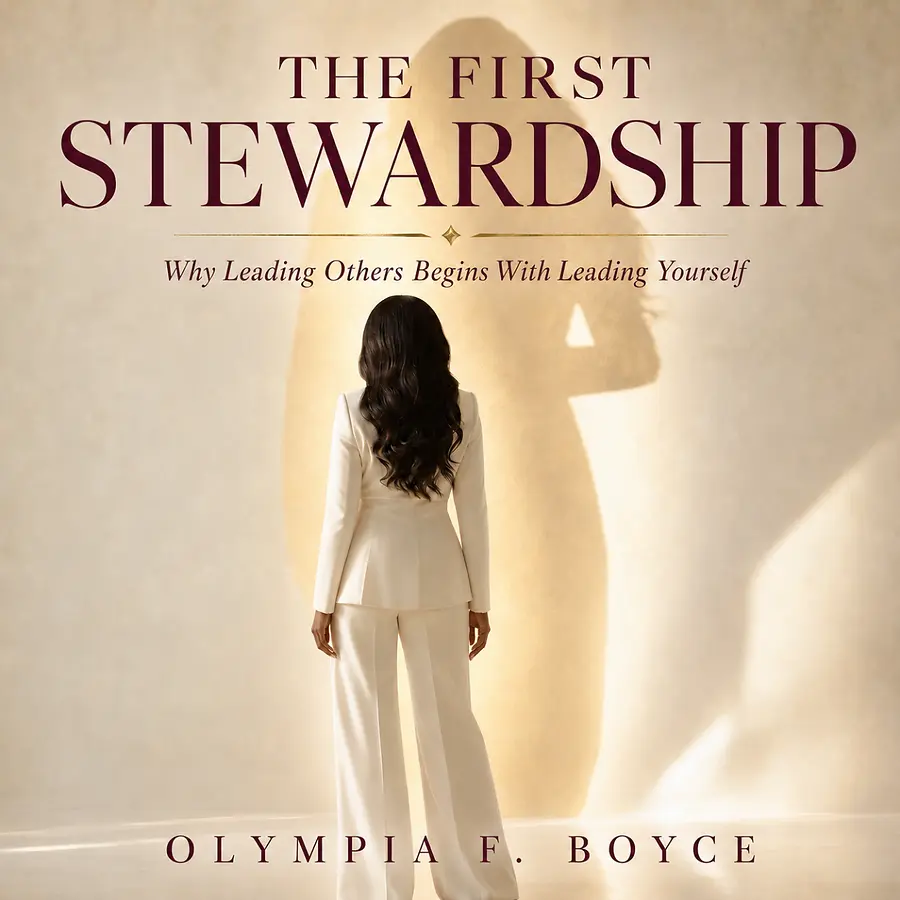
The First Stewardship
Why Leading Others Begins With Leading Yourself

What Is Your Definition of Leadership?
Before you became a leader, how did you envision yourself getting there?
Did you picture yourself holding a certain title, making important decisions, guiding a team, or finally having the authority to create change?
We enter leadership for many reasons. Some of us want to make a difference. Some want to become the leader we once needed. Others recognize an opportunity to use their gifts, influence an organization, or create a better experience for those who come behind them.
Yet somewhere along the way, leadership can become closely associated with position, authority, and control. It becomes measured by how many people report to us, how much influence we hold, or how effectively we direct the work of others. Even when our intentions are good, we can become so focused on leading, developing, protecting, and supporting everyone around us that we overlook the first person we were entrusted to lead.
Ourselves.
The First Person I Was Entrusted to Lead Was Me
When I truly understood that, self-leadership became more than managing my time, controlling my emotions, or making responsible decisions. It required me to know, own, and accept myself.
I had to look in the mirror and accept the woman looking back at me. I had to accept the journey she had traveled, the pain she had endured, the triumphs she had earned, the mistakes she had made, and the lessons she was still learning. I had to recognize her gifts and abilities, become acquainted with her voice, and embrace the direction she desired for her life.
That was my first stewardship.
Leadership Is Not Ownership. Leadership Is Stewardship.
Ownership asks, "What can I control?"
Stewardship asks, "What have I been entrusted to cultivate?"
When leadership is treated as ownership, people can become resources to manage, voices to silence, or instruments used to fulfill a leader's vision.
But people do not belong to the leaders entrusted to guide them.
Their gifts, ideas, experiences, and potential are not ours to possess. They are ours to recognize, cultivate, and protect.
However, I cannot responsibly steward what is within someone else if I am unwilling to steward what is within myself.
Self-Stewardship Begins with Knowing Who I Am
It means accepting my voice, values, gifts, limitations, needs, and capacity. It means taking responsibility for my emotional well-being, health, time, energy, boundaries, development, and decisions.
It means caring for the person carrying the vision, not only pursuing the vision itself.
This acceptance allows me to walk into a room knowing that I belong there. It enables me to sit at any table without abandoning myself to gain the approval of those seated around it.
Before I could confidently lead within different rooms and environments, I first had to learn how to lead myself into them.
That does not mean I enter every room believing I have all the answers.
Stewardship of self does not require perfection.
I will not always articulate every thought perfectly. I may stumble over my words, fumble in a moment, or enter a conversation without knowing exactly what to say.
But my confidence is not based on flawless performance.
It is grounded in knowing who I am.
I can be confident and still be teachable.
I can recognize the value I bring while remaining humble enough to learn from others.
I can accept who I am today while continuing to develop the woman I am becoming.
Self-acceptance does not mean believing there is nothing left to improve.
It means I no longer reject myself while I am growing.
That is the foundation of empowered leadership.
Empowered Leaders Hold Up Mirrors
An empowered leader does not lead by forcing others to become replicas of herself.
She understands that every person possesses a distinct combination of experiences, talents, abilities, and perspectives. Because she has learned to accept herself, she is not threatened by what is different in someone else.
Instead, she holds up a mirror.
She helps people recognize strengths they may have overlooked.
She asks the questions that encourage them to discover what is already within them.
She creates opportunities that challenge them to use their gifts.
She does not define their potential according to her own path.
She helps them discover the unique way they are equipped to lead.
That is how I define leadership.
I do not believe my responsibility is to make people lead exactly as I do.
My responsibility is to help them recognize who they are, accept what they see, and develop the confidence to lead in a way that is authentic to their gifts, talents, and abilities.
But I can only hold that mirror steadily for someone else because I first had the courage to stand before my own.
Sustainable Leadership Begins Within
Taking care of myself is not separate from my leadership.
It is what makes my leadership sustainable.
Leading myself well gives me the emotional capacity to listen, the confidence to welcome other perspectives, the discernment to recognize potential, and the security to help someone else grow without feeling diminished by their advancement.
When I neglect myself, I may still hold a title. I may still make decisions, meet expectations, and produce results.
But eventually, depletion changes how I lead.
Exhaustion affects my patience.
Unhealed pain affects my responses.
Insecurity affects how I receive the brilliance of others.
Self-neglect is not the price of leadership, and abandoning myself is not evidence of service.
The first stewardship requires me to care for my whole self so that I can lead from wholeness rather than depletion. It requires me to keep becoming—not because I am inadequate, but because growth is part of honoring what has been entrusted to me.
Before I lead a team, protect a mission, build an organization, or develop another person, I must first accept responsibility for the life, voice, gifts, and purpose placed in my care.
The first person I was entrusted to lead was me.
And when I lead her well, I am better prepared to hold up the mirror that helps someone else recognize the leader within themselves.
Leadership is not ownership.
Leadership is stewardship.
And leadership begins with me.


