The Hardest Part of Science Isn't the Research—It's the Communication
Why the ability to explain science matters more than the science itself.

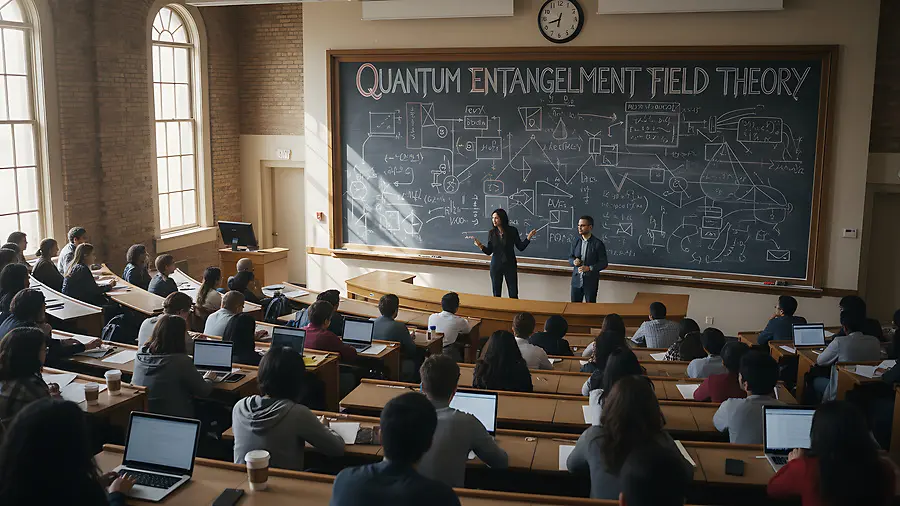
The Hardest Part of Science Isn't the Research—It's the Communication
While research is undoubtedly challenging, communicating scientific discoveries can be even more difficult. A breakthrough has little impact if people cannot understand its significance.
When I first began conducting research under the guidance of my mentor, I never imagined communication would become one of my greatest challenges. I had always considered myself a strong communicator in both my personal life and previous professional experiences. I assumed those skills would naturally translate into science. I was mistaken.
Communicating science requires an entirely different skill set. It's not enough to understand a concept yourself—you must be able to explain it clearly to people with varying levels of knowledge and experience. This was one of the areas I struggled with most early in my research career.
Fortunately, growth often comes from discomfort. Through practice, mentorship, and a willingness to learn, I gradually became more confident. Even today, I continue to learn from those around me.
One of the most influential people in that journey was my mentor. He had a remarkable ability to provide constructive feedback with kindness and perspective. Rather than focusing solely on what needed improvement, he also recognized what was going well. That balance taught me an important lesson: growth is most effective when we acknowledge both our strengths and our opportunities for improvement. To this day, I approach my own development in the same way—taking time to recognize progress while remaining honest about the areas where I can continue to learn and grow.
This challenge was partly shaped by my background in nursing. I was accustomed to listening closely, gathering information, and supporting patients through complex situations, but communicating science required a different kind of skill. Instead of guiding someone through their care in a one-on-one setting, I now had to translate complex biological processes, research findings, and scientific concepts for a range of audiences.
At times, the transition felt overwhelming. I was surrounded by unfamiliar terminology and intricate pathways, and scientific jargon often felt as though it was moving faster than I could fully absorb. In the process, I was also trying to find my own voice in a field that seemed to speak an entirely different language. Looking back, however, this experience became one of the most formative periods of growth in my career.
I learned an important lesson: effective communication is not defined by fitting into a particular professional mold. Rather, it is about refining your voice so that clarity and scientific accuracy come through together.
What AI and a Fly Revealed About the Limits of Sound Bites in Science
How do you present the role of artificial intelligence and research on Drosophila melanogaster proteins—many of which share similarities with human proteins—in advancing cancer research to a broad audience?
That was the final challenge of my first major research project in college.
One of the most difficult lessons I learned was how to communicate something incredibly complex without sacrificing accuracy or losing my audience along the way.
Science rarely provides simple answers. It is full of nuance, uncertainty, exceptions, and layers of detail that can take years to fully understand. Yet, in a world shaped by headlines, social media posts, and brief presentations, there is often pressure to compress complex ideas into just a few sentences.
During this research project, those challenges became especially real. I often found myself trying to explain how AI-driven analysis of human proteins—many of which have conserved similarities to Drosophila melanogaster proteins—can be used to better understand disease pathways and support cancer research. At the same time, I was learning how these computational tools integrate with biological data to identify patterns that would be nearly impossible to detect manually.
The more I learned, the more I realized how difficult it was to translate that depth of science into something clear, meaningful, and accessible.
I often found myself wondering how I could possibly condense months of experiments, countless hours of reading, and intricate scientific concepts into something that people outside the field could genuinely understand. In many ways, the deeper my understanding became, the harder it was to explain.
What I eventually realized is that effective science communication is not about fitting all of the science into a sound bite. It is about identifying the most important message and building a bridge between the science and the audience.
People do not connect with long lists of data points or technical jargon. They connect with meaning. The best science communicators are storytellers.
Every scientific discovery has a story: a question that sparked curiosity, a problem that needed solving, moments of uncertainty, setbacks, and ultimately, new understanding. When science is presented through that lens, audiences become invested in the journey rather than overwhelmed by the details.
This does not mean removing complexity. Instead, it means helping people understand why the science matters before asking them to understand every detail of how it works.
Over time, I learned that successful science communication is not about proving how much you know. It is about helping someone else understand. The goal is not to impress your audience with complexity but to connect with them through clarity.
One of the most important lessons I learned in science was not just how to conduct research, but how to help others understand why it matters.
Storytelling Transforms Research Into Impact
Without effective communication, even the most groundbreaking discoveries can be misunderstood, misrepresented, or overlooked entirely. Miscommunication in science can have serious consequences. It can create confusion, contribute to misinformation, erode public trust, and ultimately prevent people from making informed decisions about their health, environment, and future.
I've learned that understanding science is only half the challenge. The other half is ensuring that the message reaches people in a way that is accurate, meaningful, and accessible. If we fail to communicate clearly, we risk creating a gap between scientific discovery and public understanding.
On the other hand, impactful communication has the power to inspire action, build trust, and create lasting change. It allows research to move beyond the laboratory and into the lives of the people it is intended to serve. Whether it's helping a patient better understand their health, encouraging a student to pursue a career in STEM, or informing decisions that affect entire communities, clear communication gives science purpose beyond the data.
The most valuable lesson I have learned is that science is not just about discovering new knowledge—it's about sharing that knowledge in a way that empowers and inspires others. Research can begin in the laboratory, but its true impact is realized when people can understand it, connect with it, and use it to make informed decisions in their everyday lives.
Science is not finished when the experiment ends. In many ways, it is only the beginning. The true impact of discovery comes when knowledge is shared, understood, and used to inspire future innovation and exploration.


