
The Human Side of Healthcare Leadership
Leadership lessons from healthcare: responsibility, compassion, and the power of putting people first.

What Healthcare Management Has Taught Me About Leadership, People, and Purpose
Some of the most important leadership lessons I have learned did not come from having a leadership title.
They came from the moments when someone needed an answer, a problem needed to be solved, and there was no room to simply say, “That's not my responsibility.”
Because behind every problem is a person—a patient, a family member, a caregiver, or an employee—who is depending on someone to care enough to get it right.
That perspective has shaped the way I approach healthcare management and, more importantly, the kind of leader I want to become.
Leadership Begins with Responsibility
As a healthcare administrator, I have learned that leadership is not always about being the person with all the answers.
Sometimes, leadership means being willing to listen, investigate a problem, ask the right questions, and find a better way forward.
In home care, no two days are exactly the same. There are patient concerns to address, employees who need support, schedules that change, families who need answers, documentation that must be accurate, and regulations that must be followed.
You learn very quickly that leadership requires both structure and flexibility.
You have to know how to prioritize without losing sight of the person in front of you. You have to communicate clearly, remain organized, and stay calm when circumstances change.
Those experiences have taught me that responsibility is not simply something that comes with a position. It is something you choose to carry.
The Patient Experience Matters
One of the areas of healthcare management that is especially meaningful to me is the patient and family experience.
When someone allows a healthcare organization into their home, they are placing a tremendous amount of trust in that organization.
That trust should never be taken for granted.
Whether I am addressing a concern, reviewing patient satisfaction feedback, communicating with a family member, or helping resolve an issue, I try to remember that there is often more behind the question than the question itself.
Sometimes people want an immediate solution.
Sometimes, they simply want to know that someone is listening.
And sometimes, being heard is the beginning of solving the problem.
That has taught me that effective healthcare leadership must remain human.
Compliance Is Part of Quality Care
Healthcare compliance can sometimes be viewed as a collection of rules, regulations, and paperwork. My experience has taught me to see it differently.
Compliance is part of quality.
Proper documentation, accurate records, appropriate procedures, and adherence to regulatory requirements help protect patients, employees, and the organization.
If a service was provided, it should be properly documented.
If there is a concern, it should be addressed.
If a process is not working, we should not continue doing it simply because “that is how it has always been done.”
We should ask a better question:
Is there a better way to do this?
That question has become an important part of how I approach my work.
Technology Is Powerful When People Know How to Use It
Technology has become an increasingly important part of healthcare operations, and I have seen how the right technology can improve efficiency, communication, documentation, and workflow.
But I have also learned that technology is only as effective as the people and processes surrounding it. Learning healthcare systems and platforms has taught me not to be intimidated by technology. Instead, I have learned to be curious, ask questions, troubleshoot, and adapt.
When I encounter a technology problem, I do not believe in guessing when accuracy matters.
I believe in understanding the issue, finding the correct information, and making sure the solution is reliable.
That mindset has helped me with technology, but it has also influenced how I approach healthcare operations as a whole.
Sometimes the Solution Is the Process
One of the biggest lessons healthcare administration has taught me is that when the same problem happens repeatedly, we should examine the process—not simply blame the person.
Maybe communication needs to improve.
Maybe responsibilities are unclear.
Maybe employees need additional training.
Maybe technology is not being used effectively.
Or maybe the workflow itself needs to change.
Good management requires us to step back and look at the bigger picture.
It requires us to ask not only, “Who made the mistake?” but also, “What can we change so this does not continue happening?”
That shift from blame to improvement is one of the lessons I value most in leadership.
My Leadership Philosophy
I believe good leadership should be professional, accountable, compassionate, and willing to learn.
I also believe you can be both a leader and a learner.
Healthcare is constantly changing. Technology is changing. Regulations change. Patient expectations change. Organizations change.
The leaders who continue to grow are those who are willing to grow with those changes.
My own professional journey has taught me that there is always something new to learn, another problem to solve, and another opportunity to improve.
Where I See Myself Going
My background in healthcare administration has given me a strong appreciation for operations, compliance, patient care, technology, and process improvement.
As I continue growing professionally, I want to bring those areas together.
I am particularly interested in the future of healthcare and how technology, data, and better operational processes can help organizations provide more efficient, meaningful, and patient-centered services.
But regardless of how much healthcare technology advances, I never want to lose sight of the human element.
Because at the end of the day, healthcare is not just about systems.
It is about people.
It is about the patient who needs someone to care.
The family member who needs an answer.
The caregiver who needs support.
The employee who needs a leader who will listen.
And the organization that has a responsibility to do things the right way.
That is what healthcare management means to me.
It is not simply managing an organization.
It is managing responsibility.
It is building trust.
It is solving problems.
It is creating better processes.
And it is helping create an environment where people can receive and provide better care.
As I continue my journey, I want to be known not simply by the positions I have held, but by the difference I make through the way I lead, the way I serve, and the way I continue to grow.
That is the kind of leader I am becoming and the kind of leader I intend to remain.
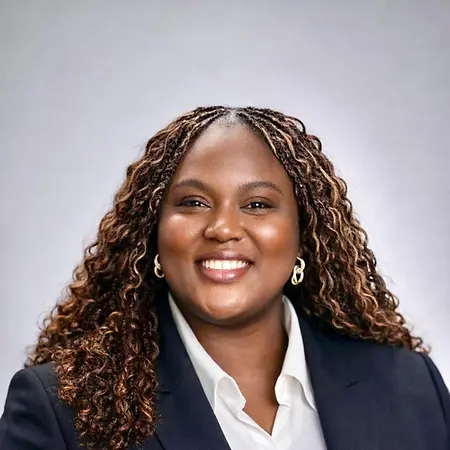
Samira Yussif is a healthcare operations and administration professional based in Hurst, Texas. With 15 years in the home health care field and 10 years in her current leadership role since June 2016, she oversees daily workflows, ensures compliance, and improves processes for skilled and unskilled staff. Her background includes an associate degree in computer networking, a Scrum Master Certificate, CNA…





