
The Illusion of Separation:
How difference can unite us when we shift our perspective on what separates us.

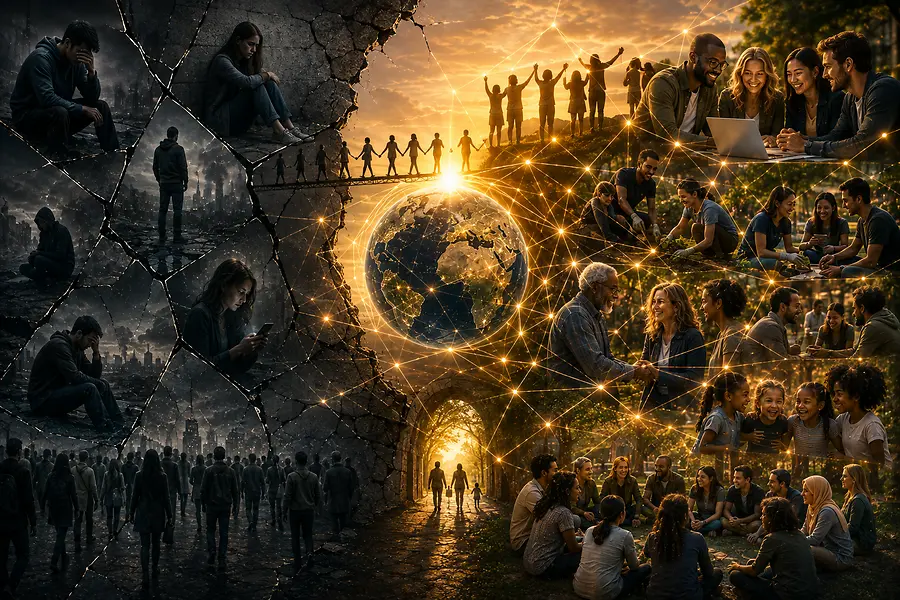
Human beings are remarkably talented at creating categories.
Countries. Religions. Political identities. Industries. Social classes. Generations. Cultures. Teams. Tribes.
Categories help us understand complexity. The danger begins when difference automatically becomes division.
Because difference does not have to mean opposition.
Unity Does Not Require Sameness
When I speak about unity, I do not mean eliminating individuality.
A healthy society should contain different ideas, traditions, personalities, beliefs, and ways of living. Harmony is not everyone singing the same note. Harmony exists because different notes can coexist.
This distinction matters enormously to me.
Unity without individuality can become conformity. Sovereignty without connection can become isolation.
The challenge is learning how to preserve both.
Perspective Determines What Difference Becomes
When we encounter someone different from us, perspective influences whether we interpret that difference as a threat or information, opposition or opportunity, division or diversity.
We may never agree on everything.
Perhaps we were never supposed to.
But disagreement does not automatically require dehumanization.
Underneath many of our differences are remarkably similar human desires: safety, belonging, love, dignity, opportunity, meaning, and hope for the people we care about.
Remembering that does not solve every conflict.
It changes the person entering it.
Systems Reveal Our Interdependence
Modern life makes complete separation almost impossible.
The products we use cross countries. Businesses depend on international networks. Markets react globally. Technology connects strangers instantaneously. Environmental decisions cross borders. Ideas move faster than governments.
We already live interconnected lives.
The question is whether our consciousness has caught up with our systems.
Perhaps humanity's next stage is not erasing difference but learning how to cooperate across it.
Because once we recognize our interconnectedness, responsibility expands.
The question stops being only What can I achieve?
It becomes:
What can I contribute?

Marcy Elizabeth Granger is a strategic brand and digital marketing consultant, entrepreneur, and CEO of The Marcy Elizabeth. With over a decade of experience, she helps businesses and organizations achieve sustainable growth through strategic communication and authentic branding. Integrating neuroscience, psychology, and personal development, Marcy specializes in transformation and resilience-building, measuring…





