Discover how the lens through which you view the world shapes your reality, influences your choices, and determines what becomes possible in your life and leadership journey.

Verified Member
Influential Woman · Growth, Alignment, and Transformation, Health and Wellness, Marketing, Business Development
Marcy Elizabeth Elizabeth Granger
Founder / CEO, The Marcy Elizabeth
Limassol, Cyprus 34212
2011Years experience
1Article published
1Award received
Her Story
About Marcy Elizabeth
Marcy Elizabeth Granger is a strategic brand and digital marketing consultant, entrepreneur, creative director, and transformation specialist dedicated to helping individuals, leaders, and organizations achieve sustainable success. With more than a decade of experience spanning digital marketing, branding, business development, health and wellness, and leadership consulting, she has built a career centered on growth, alignment, and meaningful transformation. As the founder and CEO of Wonder Media Marketing, Marcy partners with businesses, entrepreneurs, and purpose-driven organizations to strengthen their visibility, deepen audience engagement, and create long-term impact through strategic communication and authentic brand development.
In addition to her expertise in marketing and business strategy, Marcy considers herself a growth, alignment, and transformation expert. Her work integrates neuroscience, psychology, somatic practices, personal development, spiritual wisdom, and lived experience to help individuals and organizations navigate challenges, build resilience, and unlock their highest potential. Recognizing that every person and business has unique needs, she begins each engagement with meaningful conversation and discovery, tailoring her approach to bridge the specific gaps, opportunities, and goals that emerge. She is deeply committed to practicing the same principles she teaches, making personal growth, self-awareness, and continuous development a daily part of her own life.
Throughout her career, Marcy has worked across health and wellness environments, including pain management clinics, mental health organizations, fitness facilities, and entrepreneurial ventures, while simultaneously building extensive expertise in social media, digital marketing, and business growth. Having witnessed and participated in the evolution of social media from its earliest stages, she has helped organizations adapt, grow, and thrive in an ever-changing digital landscape. While her professional accomplishments span multiple industries, Marcy measures success not by titles, recognition, or financial gain, but by the lives she has influenced and the businesses she has helped transform. She believes her greatest achievement is empowering people and organizations to realize their potential, overcome limitations, and create lasting success.
Her Interview
Ten minutes with Marcy Elizabeth
01What do you attribute your success to?
I attribute my success to resilience. Throughout my career, I've learned that every obstacle is an opportunity, which is one thing I truly like to live by. It's never been about status or job title, or even dollars in the bank, but it's been more so the amount of people and businesses that I've been able to help and see them succeed and reach their potential. That impact on lives is what I credit as my most meaningful achievement and what drives my continued success.
02What’s the best career advice you’ve ever received?
The best career advice I live by is that every obstacle is an opportunity. This perspective has shaped how I approach challenges throughout my career and has been fundamental to my growth and success. I believe that when we shift our perspective and see difficulties as chances for growth rather than setbacks, we open ourselves up to new possibilities and paths forward.
03What advice would you give to young women entering your industry?
My advice to young women entering this industry is to stay committed, but more importantly, to understand that you are often just one perspective shift away from a completely different outcome. When challenges arise or circumstances feel overwhelming, your ability to pause, reframe the situation, and recognize alternative paths forward can make all the difference. This work is deeply rooted in resilience and mindset, and there will be moments when it feels difficult or discouraging. In those moments, take a breath, reassess, and remember that there is almost always another route available. You have more agency than it may initially feel like, and learning to shift your perspective is one of the most powerful tools you can carry throughout your career and life.
04What are the biggest challenges or opportunities in your field right now?
The biggest challenge in my field is helping people recognize the true value and depth of this work, as it is often misunderstood as something tangible or surface-level like a pamphlet or a quick resource when in reality it involves meaningful internal development and transformation. However, the opportunity lies in the consistent evidence that this work is effective and impactful. As knowledge and understanding continue to grow, more people are realizing that this type of deep, internal work is not only beneficial but essential. It is increasingly being recognized not as a luxury, but as a necessity for sustainable growth, success, and overall well-being.
05What values are most important to you in your work and personal life?
The values most important to me are integrity, balance, alignment, connection, teamwork, community, and harmonization with people. I believe in supporting each other and working together toward mutual success. I think we should all support each other, because we're more successful when we are united and working in harmony. These values guide everything I do, both professionally and personally.
Her Content Hub
Articles by Marcy Elizabeth
Your Perspective Dictates Everything
Why the lens through which you interpret life may matter more than the circumstances themselves.
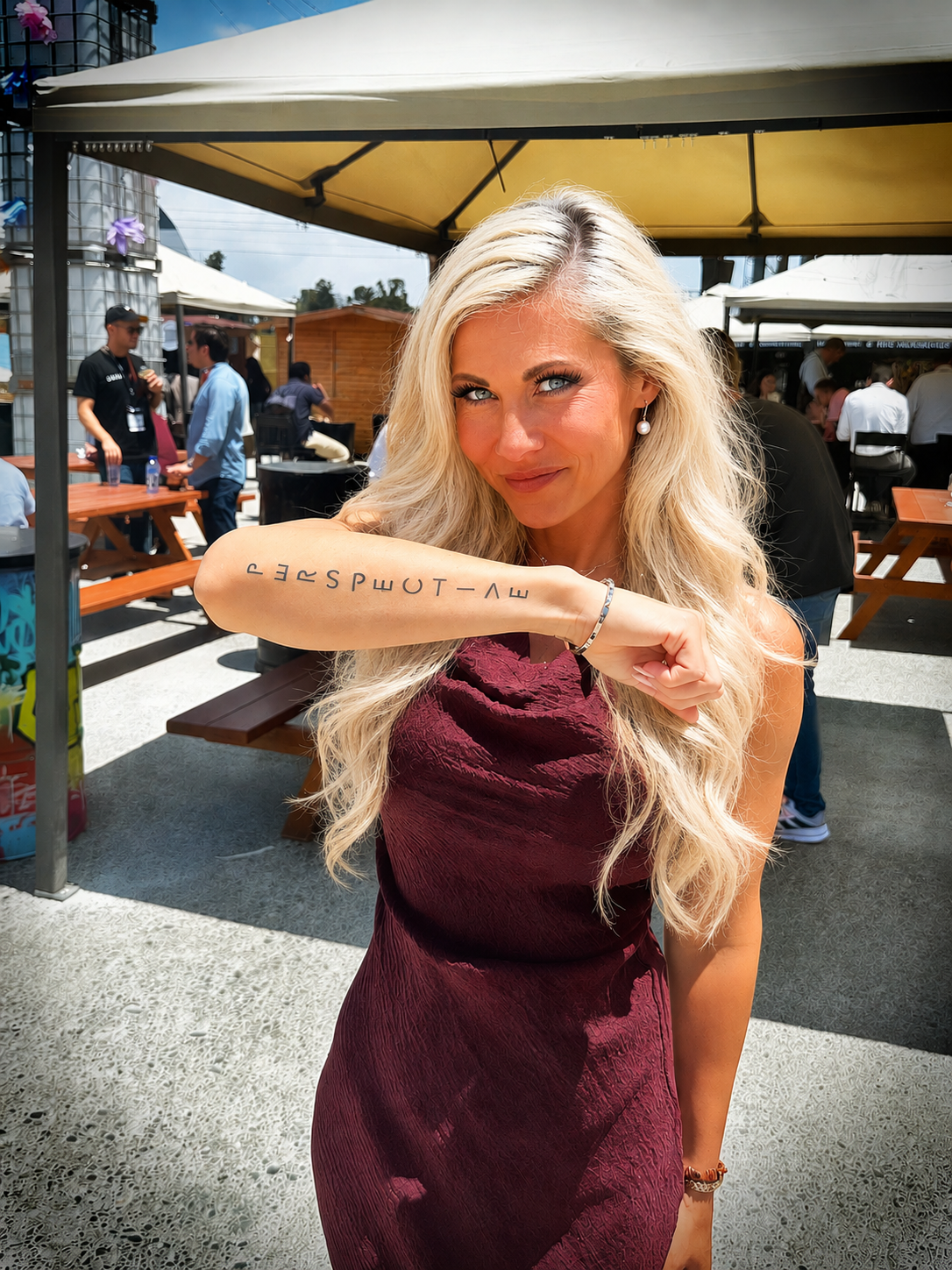
Your Perspective Dictates Everything: How the Way You See the World Shapes Your Reality
By The Marcy Elizabeth
What if the most powerful force shaping your life isn't what happens to you, but the perspective through which you experience it? From neuroscience and psychology to philosophy, spirituality, leadership, and even the questions raised by modern physics, perspective influences what we notice, what we believe, how we respond, and ultimately what we create. Change the lens, and you may change far more than the view.
The Same Reality, A Different Experience
Two people can walk into the same room, hear the same words, experience the same setback, receive the same opportunity, and leave with entirely different realities.
One sees rejection. The other sees redirection.
One sees failure. The other sees information.
One sees uncertainty. The other sees possibility.
One sees an ending. The other recognizes an invitation to become someone new.
The event may be identical.
The experience is not.
Why?
Perspective.
Perspective is far more than positive thinking. It is the lens through which we assign meaning to ourselves, other people, circumstances, opportunities, adversity, and even what we believe is possible.
And once meaning is assigned, an entire chain reaction begins.
Perspective influences perception. Perception influences belief. Belief influences emotion. Emotion influences reaction. Reaction influences behavior. Behavior influences decisions. Decisions influence outcomes. And repeated outcomes eventually construct what we experience as our life.
Change the lens, and you may change far more than the view.
You Don't Experience Life Completely Objectively
Human beings like to believe we simply observe reality and respond accordingly.
But our experience is much more complicated.
Our previous experiences matter.
Our expectations matter.
Our emotional state matters.
Our beliefs matter.
Our environment matters.
Even the questions we ask ourselves matter.
This means that what we consciously notice is not necessarily the entirety of what exists around us.
Think about buying a particular car and suddenly noticing that model everywhere.
Those cars didn't suddenly materialize.
Your attention changed.
The same phenomenon occurs throughout life.
If you believe people cannot be trusted, you may become particularly sensitive to evidence of betrayal.
If you believe opportunity is everywhere, you may notice connections and openings that someone else overlooks.
If you believe you aren't qualified enough, an intimidating opportunity can appear to be evidence that you shouldn't enter the room.
Someone else may look at the same opportunity and think, I can learn.
Neither person's internal interpretation changes the objective facts of the opportunity.
But it can dramatically change what happens next.
Perspective Changes the Body, Too
Perspective isn't confined to thought.
How we interpret an experience can influence how our bodies respond to it.
Consider a racing heart before stepping onto a stage.
One interpretation is:
"I'm anxious. Something is wrong. I'm going to fail."
Another is:
"My body is preparing me. I'm energized. This matters to me."
The physical activation may initially be similar, yet the meaning assigned to it can influence the emotional experience and subsequent behavior.
This matters far beyond public speaking.
When we perceive circumstances as threatening, our nervous system may prepare us to defend, escape, freeze, or protect ourselves. When we perceive greater safety, possibility, or control, different responses become available.
This is one reason perspective cannot simply be reduced to "think positively."
Sometimes changing perspective requires changing the state from which we are perceiving.
A person operating from exhaustion, fear, unresolved pain, or chronic stress may interpret a situation differently than that same person would when regulated, supported, rested, and secure.
Transformation, therefore, isn't always about forcing yourself to believe something better.
Sometimes it begins by creating enough internal space to see something differently.
The Meaning We Give an Experience Can Become More Powerful Than the Experience
One of the most important distinctions I've learned is that an event and the meaning we assign to that event are not necessarily the same thing.
A business fails.
That's an event.
"I'm incapable of succeeding" is an interpretation.
A relationship ends.
That's an event.
"Nobody will ever choose me" is an interpretation.
You lose an opportunity.
That's an event.
"I'm behind everyone else" is an interpretation.
A plan changes unexpectedly.
That's an event.
"Everything is falling apart" is an interpretation.
We frequently suffer not only from circumstances themselves, but also from the stories we build around them.
Those stories can become beliefs.
Beliefs can become identities.
And identities can quietly determine what we allow ourselves to attempt next.
This is where perspective becomes extraordinarily powerful.
You may not be able to change what happened.
But you can examine the meaning you've attached to it.
And changing that meaning can change what the experience is allowed to become.
I've Had to Live This, Not Just Study It
Perspective became important to me because life repeatedly gave me opportunities to test it.
There have been chapters of my life that, viewed through one lens, could easily have become evidence that everything had gone wrong and there was no longer any point to life.
I've experienced dramatic changes in my body, health, career, relationships, finances, geography, identity, and the direction I thought my life was supposed to take.
There were versions of those experiences I could have labeled solely as loss, failure, disruption, or starting over.
Sometimes, initially, I did.
But with distance, I began recognizing something else.
Many of the experiences I once wanted to escape became catalysts for reinvention.
Things I thought were breaking me were also revealing me.
Endings forced questions I might otherwise never have asked.
Who am I without the identities I've outgrown?
What actually matters to me?
What am I capable of?
What if this isn't happening to me, but becoming material I can build with?
That shift didn't magically erase difficult circumstances.
It changed my relationship with them.
And when my relationship with the circumstances changed, my choices began changing too.
That distinction has shaped how I approach personal transformation, business, leadership, relationships, adversity, and opportunity today.
I no longer ask only:
"What is happening?"
I also ask:
"From what perspective am I interpreting what is happening?"
That second question has changed my life.
Perspective Is a Business Advantage
Perspective is equally powerful in business.
Markets change.
Deals fall through.
Employees make mistakes.
Campaigns underperform.
Competitors emerge.
Technology disrupts industries.
Clients leave.
The leaders who navigate these realities effectively aren't necessarily those who avoid problems. Often, they're the ones capable of examining a problem from more than one angle.
Where one company sees disruption, another sees an emerging market.
Where one leader sees an employee who "isn't performing," another investigates whether the system, incentives, communication, training, or role alignment is contributing to the problem.
Where one entrepreneur sees competition, another sees validation that demand exists.
Where one executive sees an impossible constraint, another asks:
"What becomes possible because this constraint exists?"
That question can produce an entirely different strategy.
Perspective also affects negotiation.
If you enter a negotiation believing the other side must lose for you to win, you search for leverage.
If you enter believing there may be a structure where both parties gain value, you search for alignment.
Different lens.
Different questions.
Different information.
Potentially different deals.
The ability to consciously shift perspective is therefore not merely a personal-development skill.
It is a leadership competency.
The Spiritual Perspective: What If There Is More Meaning Available?
Across spiritual and philosophical traditions, humans have wrestled with a similar question for thousands of years:
What does this experience mean?
Faith can radically change perspective without necessarily changing circumstances.
The person who believes their life has purpose experiences adversity differently from someone who believes suffering is entirely meaningless.
The person who believes a difficult season can produce wisdom may move through it differently from someone who interprets difficulty as proof of abandonment.
For me, spirituality doesn't mean denying reality.
It means considering that the reality immediately visible to me may not be the entirety of the story.
Sometimes what appears to be rejection may become protection.
A delay may create preparation.
An ending may create space.
A period of uncertainty may force the development of faith, discernment, resilience, or identity.
We rarely possess enough information in the middle of an experience to know everything it will eventually mean.
Perspective leaves room for that possibility.
Philosophy Has Been Asking This Question All Along
The relationship between perception and reality is hardly a new idea.
Philosophers have debated it for centuries.
How much of reality do we perceive directly?
How much is interpreted?
How do language, consciousness, memory, culture, and belief influence our experience?
The Stoics, for example, emphasized the distinction between what occurs and our judgments about what occurs.
Other philosophical traditions have questioned whether humans can ever access reality entirely independent of the structures through which consciousness interprets it.
Different traditions arrive at different conclusions, but the recurring insight is powerful:
Human experience is inseparable from interpretation.
That doesn't mean objective reality doesn't exist.
It means our relationship with reality is mediated by the lens through which we encounter it.
Science Even Shows Us That Seeing Is Interpretation
We don't simply see with our eyes. We see with our brains.
Our eyes detect light and convert it into neural signals. The brain then interprets those signals using context, memory, expectation, attention, and previous experience to construct what we consciously perceive.
Even our vision isn't a perfect recording of objective reality. Each eye has a natural blind spot, yet we don't experience a hole in our visual field because the brain compensates for the missing information.
Optical illusions demonstrate something similar: what is physically present and what we consciously perceive aren't always identical. Hence, some people can see colors differently or even experience seeing things that aren't physically present.
And this extends far beyond sight.
Expectation, emotion, memory, attention, and belief can influence how we interpret information and experiences. A delayed response can feel like rejection to one person and mean absolutely nothing to another. The circumstance is the same. The perceived reality is different.
This doesn't mean objective reality doesn't exist or that we can simply imagine it away. It means our conscious experience of reality is filtered through the biological and psychological systems interpreting it.
Our eyes receive. Our brains interpret. Our beliefs contextualize. Our emotions color. Our perspective gives it meaning.
So perhaps "seeing is believing" has it backward.
Sometimes, believing influences what we're capable of seeing.
And if the relationship between observation and reality is already this fascinating within the human brain, it becomes even more intriguing when we enter one of science's strangest territories: quantum physics.
What About Quantum Physics?
This is where conversations about "creating your reality" can become fascinating—and where precision matters.
Quantum physics has demonstrated that reality at microscopic scales behaves in ways that challenge ordinary intuition. Measurement plays an important role in quantum experiments, and concepts such as superposition have transformed our understanding of matter and probability.
But quantum mechanics should not be casually reduced to the claim that "your thoughts literally create whatever reality you want."
That goes beyond what the science establishes.
I find the philosophical implications interesting for a different reason.
Modern physics reminds us that reality is considerably stranger and more complex than everyday human perception suggests.
What appears solid at our scale has an extraordinarily complex underlying structure.
What feels intuitively obvious isn't always scientifically correct.
Observation, measurement, probability, and interaction matter in ways humanity once couldn't have imagined.
For me, the lesson isn't that quantum mechanics proves manifestation.
It's that intellectual humility is warranted.
There may always be more happening than the limited perspective available from where we currently stand.
Your Perspective Can Become a Self-Reinforcing Reality
There is also a much more practical way our perspective can "create reality."
Imagine you believe:
"Nobody takes me seriously."
You enter meetings guarded.
You speak less confidently.
You hesitate before contributing.
You interpret neutral reactions as dismissive.
You avoid opportunities requiring visibility.
People then interact with a quieter, more guarded version of you.
Eventually, you conclude:
"See? Nobody takes me seriously."
The belief appears confirmed.
Now consider another perspective:
"My perspective has value, and I belong in this conversation."
You prepare differently.
You communicate differently.
You ask different questions.
You tolerate visibility.
You initiate conversations.
You notice opportunities.
Other people now encounter a different expression of you.
This isn't magic.
It's a feedback loop.
Your internal reality influences your behavior toward the external world, and the external world responds to that behavior.
That response then provides new information to your internal reality.
Perspective becomes participation.
Perspective Doesn't Mean Pretending Everything Is Good
This distinction matters deeply.
Changing perspective does not mean denying grief, injustice, disappointment, anger, fear, or objective problems.
Sometimes something genuinely is wrong.
Sometimes the appropriate perspective is:
This needs to change.
Sometimes anger provides information.
Sometimes leaving is wisdom.
Sometimes failure needs to be acknowledged rather than spiritually reframed.
Sometimes accountability matters more than optimism.
Perspective isn't about making every experience beautiful.
It's about seeing an experience clearly enough that you aren't imprisoned by only one interpretation of it.
There is an enormous difference between toxic positivity and expanded perspective.
Toxic positivity says:
"Nothing is wrong."
Expanded perspective says:
"This is difficult—and difficulty may not be the only truth available here."
Change the Question, Change the Perspective
One of the simplest ways to interrupt an automatic perspective is to change the question you're asking.
Instead of:
Why is this happening to me?
Ask:
What is this showing me?
Instead of:
What if I fail?
Ask:
What becomes possible if I succeed?
Instead of:
Why don't I have what they have?
Ask:
What can their success teach me about what is possible?
Instead of:
What did I lose?
Ask:
What space has now opened?
Instead of:
Who am I to do this?
Ask:
Who do I need to become to do this well?
And perhaps most importantly:
What else could be true?
That question has extraordinary power because it doesn't demand that you immediately replace one belief with another.
It simply creates space.
And sometimes space is all we need to see an entirely different path.
The Reality You Experience Begins With the Lens You Look Through
We cannot control every event.
We cannot think our way out of every circumstance.
We cannot pretend that mindset eliminates biology, economics, systemic realities, other people's choices, or chance.
But within those realities exists an extraordinary human capacity:
We can examine the lens through which we're looking.
And that lens influences far more than most people realize.
It influences what we notice.
What we believe.
How we feel.
How our bodies respond.
What questions we ask.
What opportunities we recognize.
What risks we tolerate.
How we lead.
How we love.
How we respond when life doesn't follow the plan.
And ultimately, what we do next.
Maybe changing your life doesn't always begin with changing your circumstances.
Maybe sometimes it begins with standing in the same place...
and learning to see it differently.
Because when perspective changes, possibility changes. And when the possibility changes, everything that follows can change with it.
Your Perspective IS Your Reality!
The question I invite you to carry with you is simple:
What else could be true?
The next time you encounter a setback, disagreement, fear, opportunity, or moment that challenges what you thought you knew, examine not only what you're seeing, but the perspective you're seeing it through. Sometimes the breakthrough isn't found in changing the situation. It's found in discovering another way to see it.
If you're ready to explore how perspective, alignment, and self-awareness can transform the way you lead, grow, and navigate what's next, connect with me here and explore more of my work.
—The Marcy Elizabeth
Join Influential Women and start making an impact. Register now.