
The Long Game
A dice game teaches us that true winning means lifting others up.

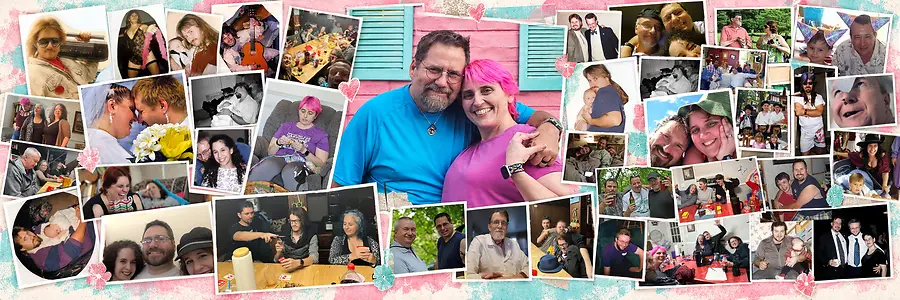
I first met Jon in 1987, when we were both students at the University of Maryland, Baltimore County. I remember that day well.
It was my first day of college. My parents were dropping me off in front of Susquehanna Hall to help me move into my dorm room. Our car had barely pulled up to the curb when a tall young man who introduced himself as “Kirk” suddenly appeared. He opened my car door and asked, “How can I help?” He later told me, winking, “Hey, you were a pretty brunette with a nice rack. Of course I was going to offer my help!” As he carried the first load of my belongings inside, I learned that he lived in a room down the hall from me. I thought to myself, “A coed floor. Nice!”
As I followed Kirk back outside to get more stuff, I passed Jon’s room. Jon was a vertically challenged guy with a long, dirty-blond mullet and blue eyes. He saw me and immediately asked if he could hypnotize me. I paused for a moment—in shock—and then quickly took off, freaking out internally.
Little did I know, this short, hippie-ish, would-be hypnotist would eventually become one of my very best friends.
Nearly forty years later, many of us still hang out together at regular game nights hosted by Jon and his wife, Jocelyn. Kirk, Adam, my sister Erica, and I have been there since the beginning. Dave, the older brother of one of my dorm mates, joined our little group in the early ’90s. We met Brian while we were all shadow-casting for the midnight cult classic The Rocky Horror Picture Show. Then the wives and husbands arrived—and then the kids. Adam’s daughter, Raina—now an adult—is a regular at game nights. My son, Seth, loves to join us whenever he can. Jocelyn’s sons, Jared and Cameron, drop in every once in a while, too.
Others have come and gone over the years, but somehow the core group has held together, and a lot of that is because of Jon. He has always been the glue.
Long before Jocelyn came along, Jon was a natural host, inviting a variety of people to his dorm room, apartment, or house to eat, drink, and play games—just about every weekend. Wherever he lived inevitably became “Jon’s Home for Wayward School Friends,” a nickname we all laughed about, but one that carried deeper meaning.
Jon is the kind of guy who would take you in if you needed a place to stay—regardless of how much or how little room he had to spare. Erica was literally barefoot and pregnant when Jon invited her to move in. After my nephew, Alec, was born, Jon gave Erica breaks by babysitting and singing Alec Beatles tunes until one—or both—of them finally fell asleep.
Years later, Jon met his match. Jocelyn is a crocheting wizard. In her spare time, she fills dozens of Ziploc bags with whimsical creatures she has created from generously donated yarn—along with sweet notes she writes to help people feel seen. She randomly leaves these care packages in the grocery store, on people’s doorsteps, or in the hands of befuddled parents desperately trying to tame a crying child. She does this just to help brighten their day. She expects nothing in return. Even when money is scarce, Jocelyn keeps her needles busy, building new creations. She has never made a penny from them and refuses to sell them under any circumstances. (She will, however, work for yarn and googly eyes!)
Jon and Jocelyn are the type of people who might only have a small amount of food, but if you’re hungry, they’ll share it with you.
That’s just who they are.
Somewhere along the way, they created a game called 20,000.
20,000 is loosely based on Farkle. It is played with six dice. Certain combinations are worth specific amounts. As long as you keep rolling scoring dice, you can keep building points—until you (or the dice) decide it’s the end of your turn. But there’s a twist.
In this game, one person’s good fortune can literally become the next player’s opportunity.
Let me explain. One night, my boyfriend, Lloyd, had an incredible run and still had five dice left over. Dave was sitting beside him. Dave, unfortunately, had a stroke several years ago that left his hands mostly paralyzed. On top of the difficulty of rolling the dice, Dave hadn’t been having much luck that night. Lloyd ended his turn and passed his leftover dice to Dave. To score, Dave just had to roll a five or a one with any of those dice. He rolled a one, which added 100 to the 5,000-odd points Lloyd had already built up. Then Dave passed the remaining dice to the next person, who also scored.
Another night, everyone kept scoring. One person would roll, pass the remaining dice, then the next person would add to the score, and the whole thing kept growing. We were rooting for the dice—and for each other.
Nobody was sitting there hoping the next person would fail. When winning dice are being passed around, rooting against the next player is like shooting yourself in the foot.
When someone is having a terrible night, we want them to do better. When somebody gets a great roll, everyone gets excited. Nobody resents the first person to reach the goal. We’re happy for them. 20,000 is a point-building game that’s a lot more fun when we help each other win.
The more I think about that, the less surprised I am that Jon and Jocelyn came up with it.
Jon has spent much of his life creating that kind of environment. He and Jocelyn both invite people in. They cheer people on. They gather everybody together. And they make room for new people to join our circle.
This became especially clear to me one night when Jon invited a coworker to play games with us. Olu was from Nigeria and had only lived in this country for about ten years.
Most of us around the table had known each other for decades. We had history, recollections of past hijinks, inside jokes, and all the little pieces of shorthand that accumulate when people have been in one another’s lives for that long.
This man had never met any of us (except Jon, of course) and had obviously never played 20,000. So we taught him. We explained the rules. We helped him calculate his score. We made sure he got the maximum points possible. We suggested what he could do for his next move. Nobody expected him to figure it out on his own. Nobody took advantage of his newness.
We wanted him to have as good a time as we were having. We were just being our usual goofball selves—and we invited him to come along for the ride.
Somewhere in the middle of everything, Olu started opening up about himself. He talked about what life had been like in his hometown. He talked about the difficulties of getting a job, how much depended on knowing somebody who could help you get in, and how hard people had to work while barely making a living. Many went hungry. He told us how grateful he was for the life he had been able to build here.
Then he patted his stomach and quipped that, on the other hand, our processed food had done him in. We all laughed together.
This beautiful, gentle-souled man came from a completely different background, but there we were, all of us—around the same table, rolling dice, passing around snacks, and talking about our lives. Playing the game gave us a reason to sit together long enough for the rest of it to happen.
And that’s what I find so beautiful. 20,000 may be a competitive dice game, but as Lloyd points out, “The points are pointless.”
Don’t get me wrong, winning is still fun. Nobody is pretending otherwise. But the biggest reason 20,000 is so special is the way it brings people together—to play a wholesome game, joke around, share stories, and eat lots of chips and ice cream with a chosen family we have built together—one that keeps on growing.
I keep going back to what Olu said. Where he came from, you needed to know somebody to get in. At Jon and Jocelyn’s table, all anyone has to do is pull back a chair and join in.
What if more of the world were that inclusive and community-oriented?
There is so much pressure in this society for each of us to be the best and brightest—to come out ahead of everybody else. But the truth is, we can’t all be “the best.” Is coming in second really that much less valuable? Even if we do manage to become “the best” in any particular area, does that guarantee happiness and fulfillment for the rest of our lives? I really don’t think so. As they say, “It’s lonely at the top.”
I wonder what would happen if we approached our communities the way we play 20,000.
20,000 allows for misfortune in a way life often doesn’t. You can roll and get nothing. We call that a “pity 50.” Nobody acts as though you’ve revealed some terrible flaw in your character. We offer condolences, gift you 50 points, cheer you on, and move to the next roll.
You can rack up an enormous score and lose it all. I once lost a 6,500-point run and was still excited that it had gotten that far. But then my turn came around again—and I started to rebuild.
Real life is not always so forgiving.
In the world of 20,000, you don’t just get one roll and disappear. You watch other people take their turns. You root for them. In this game, you can even show up late and still get to 20,000 first. The score can build up at any time, after all, and eventually, the dice do come back around.
I think 20,000 reflects something Jon and Jocelyn have understood for a long time: We do not have to diminish one another to succeed. Someone else’s good fortune does not have to threaten our own. Sometimes we can pass it along—and watch it grow.
Maybe that lesson can extend beyond Jon and Jocelyn’s game table.
And if it can, I have to ask: Why not work together to make everyone’s lives better—instead of always trying to best each other?

Rachel Zirkin Duda is an author, poet, and photographer exploring parenting and intergenerational trauma through memoir and poetry. Her award-winning memoir "Mending Together, Building Together" chronicles raising her son through trauma. She published a poetry collection as Hannah Blue and co-wrote "Bridging the Gap" with her son, launching a book series on communication and boundaries. Rachel continues expanding…





