The Lost Cause & Jim Crow (part IV)
Examining the Jim Crow Era and the Lost Cause Narrative's Distortion of American History

Welcome back, dear readers, to Brooke In The Air Travel. Today, we present Part IV of our series on American historicism, drawing on Brooke's historical expertise and travel knowledge. We'll be returning to travel soon, but this is a related topic and a continuation of our recent series. Part I covered the founding of the United States and the mentalities of the colonists versus those of Parliament. Part II evaluated the major events spanning the seventy years between the last signature of the Constitution and the causes of the Civil War, ending with the beginning of the war in 1861. Part III provided an overview of the highlights of the Civil War, the war's outcome, and the Reconstruction Era (1865–1877). Part IV, this article, covers aspects of the Jim Crow era and the Lost Cause narrative. Part V will, as promised previously, provide a complete bibliography of the sources used in Parts I–IV. Let's begin, shall we?
To start, a brief overview of the Jim Crow era is needed. This was a long era of societal oppression, largely in the South (though the North was not exempt, such practices were simply less prevalent there), spanning approximately from the 1880s to the Civil Rights Era of the 1960s and 1970s. It helps immensely to recognize the origin of the name "Jim Crow" when discussing the era. The actual term "Jim Crow" comes from "Jump Jim Crow."
This was a song and minstrel routine created around 1830 by performer Thomas Dartmouth ("Daddy") Rice, who wore blackface to mock Black people. The name later became a derogatory label for African Americans and the systemic oppression that targeted them. In essence, Southern leaders in Congress felt that, since they could not win the Civil War on the battlefield, they would win through laws and sociocultural ostracism. This era, which began just after Reconstruction, was essentially the South's retribution for what its leaders saw as the wanton destruction of their way of life.
A major vigilante organization that advanced the racism perpetuated through Jim Crow laws was the Ku Klux Klan. The first leader of the Ku Klux Klan was none other than retired cavalry general Nathan Bedford Forrest, though he denied any membership until his dying day. The KKK was founded explicitly to incite fear in the newly freed African American population in the South.
The KKK was never an "honorable" organization, despite what sympathizers would purport. General Forrest's parting words in a speech to an African American organization in the 1870s essentially amounted to, "Work hard, stay in your lane, and we won't have a problem." This is a paraphrase of a speech he gave toward the end of Reconstruction, when Forrest could afford to appear magnanimous.
The demise of Jim Crow's systemic laws throughout the South initially began in 1954 with the landmark Supreme Court case Brown v. Board of Education (docket and case No. 347 U.S. 483), which overturned the 1896 Plessy v. Ferguson case (163 U.S. 537), which had established the infamous "separate but equal" doctrine. Brown v. Board of Education of Topeka established a key precedent for overturning Plessy, ruling that, in the words of Chief Justice Earl Warren, who wrote the majority opinion, "the 'separate but equal' doctrine adopted in Plessy v. Ferguson has no place in the field of public education." To add metaphorical insult to injury for the defendants, attorney Thurgood Marshall acted as lead counsel for the NAACP Legal Defense Fund, which represented the plaintiffs, including Oliver Brown, an African American resident of Topeka, Kansas, and a staunch supporter of the NAACP. Under Jim Crow, an 1879 Kansas law allowed towns with populations over 15,000 to maintain separate elementary schools for Black and white students. "Plessy" was the legal shield Kansas used to defend its 1879 law in this case. In a follow-up ruling the following year, the Supreme Court ordered schools to desegregate "with all deliberate speed," according to Chief Justice Earl Warren. This order established a vague timeline for desegregation and triggered massive regional resistance in the South. According to their own pamphlets, the KKK members were the "avenging angels" of white Southerners, spreading their message throughout the Deep South. As a result, in 1967, during the height of the civil rights era, the rate of lynchings reportedly reached an all-time high in the United States compared with the period before the Civil War, while many Americans were distracted by the ongoing war in Vietnam.
While the Brown case marked the beginning of the end for Jim Crow, two more landmark developments delivered crucial "death blows" to the legal infrastructure of the Jim Crow system. The Civil Rights Act of 1964 banned segregation in public accommodations and discrimination in employment, extending the desegregation efforts that Brown had begun in schools to other public settings. Ultimately, the Voting Rights Act (VRA) of 1965 outlawed discriminatory voting barriers. You'll recall that John Adams laughed off the notion of allowing women to vote when the Constitution was being drafted in Philadelphia. However, while Jim Crow laws were legally dismantled, the sociocultural systems associated with Jim Crow persisted and remain present throughout the South and in some areas of the North.
In 2010, renowned civil rights litigator Michelle Alexander published The New Jim Crow: Mass Incarceration in an Age of Colorblindness. In this landmark book, Alexander argues that America has not ended its racial caste system, established during the Jim Crow era, but has merely redesigned it for the modern, colorblind era, using the prison system as its vehicle. The incarceration system maintains formal adherence to colorblindness while using the "criminal" label to justify systemic exclusion from society.
Alexander argues that once labeled a felon, individuals, disproportionately men of color, face legal discrimination in employment, housing, voting rights, and access to public benefits, closely mirroring restrictions imposed during the Jim Crow era. With the rise of conservatism, which parallels many Confederate and Jim Crow-era conventions, the South, in essence, won the war. This is a separate discussion, but one that is not entirely unrelated.
In the enduring myth of the Lost Cause, the South established a new religion, as it were, after the Civil War. The South attempted to revise history through a revisionist, pseudohistorical, negationist narrative. After Lee's surrender at Appomattox, the United Daughters of the Confederacy (UDC) began spreading a revised history of the South. Through repetition, many Southern leaders and former Confederate commanders, such as retired General Jubal Early and fellow General J. E. B. Stuart, began to believe in it, at least partially to assuage their wounded "Southern pride" and partially to achieve a measure of revenge against the North.
The United Daughters of the Confederacy started as a female-oriented lineage group, similar to the VFW today but strictly for Southern women descended from Confederate soldiers. Soon, however, the UDC grew into a right-wing, neo-Confederate, Christian, Southern-pride, white-nationalist institution (this isn't hyperbole; this is how they currently describe themselves) with tremendous cultural power throughout the Old South. The Southern Poverty Law Center has listed the United Daughters of the Confederacy as a hate group on its annual list of such groups since 2008, when it began compiling the list. The Lost Cause campaign was so successful that it came to define the UDC's history, orientation, and identity. It is truly telling that, in 2026, the United Daughters of the Confederacy has named two organizations as its so-called "staunch enemies of Southern pride and dignity": the American Civil Liberties Union (ACLU) and the aforementioned Southern Poverty Law Center (SPLC). Both are 501(c) nonprofit nongovernmental organizations (NGOs) dedicated to fighting for the civil rights of American citizens, promoting equality, advancing unbiased education, and eliminating hate groups nationwide. When examining the UDC, it is clear that these stated goals are the antithesis of everything the UDC stands for.
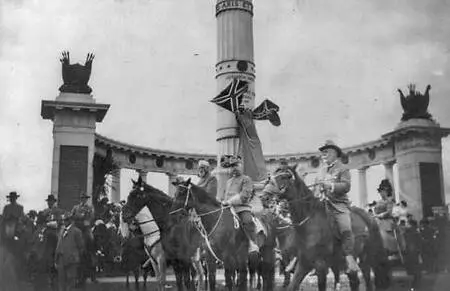
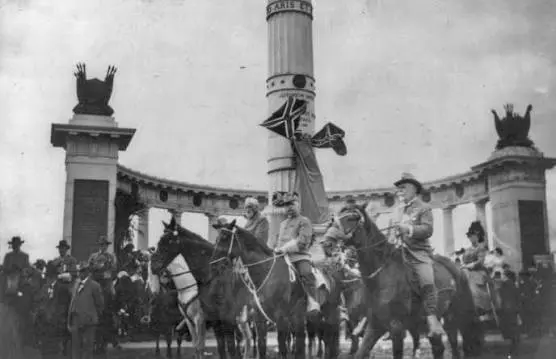
To facilitate the Lost Cause narrative, the United Daughters of the Confederacy commissioned the construction of hundreds of Confederate monuments across the United States, particularly in the South. Monument Avenue in Richmond, Virginia, is a prominent example of this effort and can still be seen today. The UDC also successfully lobbied to censor school textbooks, ensuring that generations of children were taught the myth as factual history. Children from kindergarten through Grade 12 are still being taught these fallacies today and face harsh realities when, and if, they go to college. The term "Lost Cause" was coined from the title of a book by Southern sympathizer and Richmond, Virginia, journalist Edward Pollard: The Lost Cause: A New Southern History of the War of the Confederates, published in 1866. The book itself presents a revisionist narrative, but it nevertheless laid the foundation for the false narrative. The UDC even went so far as to rename the American Civil War the "War of Northern Aggression." The Daughters then reframed the narrative surrounding the war's causes, portraying the Confederacy as a group of victims-turned-patriots defending their homes and lands against despotic tyrants.
Several core tenets were established by the Lost Cause to rewrite history. We will cover four of these tenets in this article.
(1) The South seceded over constitutional principles and Northern overreach, not slavery. Yet, as we have thoroughly established, historical documents prove beyond a doubt that the Confederacy was formed to protect and spread the institution of chattel slavery. Even the Confederacy's own founding documents list slavery among the primary institutions it sought to protect.
(2) One of the most horrific and disgusting revisions in the Lost Cause narrative was the myth of the "happy slave." This myth was so elaborate that it incorporated Robert E. Lee's statement in a letter to his wife (which I discussed in Part III). The narrative claimed that enslaved people were faithful, well-treated, and content, benefiting from the supposedly "civilizing" nature of the institution. In reality, we know that slavery was a dehumanizing, barbaric, systemically brutal institution characterized by extreme cruelty on the part of slaveholders. Hundreds of thousands of enslaved people fled to Union lines to fight against the South, especially during General Sherman's massive March to the Sea. Once President Lincoln signed the Emancipation Proclamation, enslaved people in the designated Southern territories were declared free, and many wished to fight after learning of their new status. According to historical accounts, more than 180,000 people of color fought for the Union by the war's end.
I will cite two examples here. The fighting spirit of people of color can be seen in the intensity displayed in battle by the 54th Massachusetts Infantry Regiment, which was part of General Sherman's bodyguard unit during his march in 1864. There was also the 1st Kansas Colored Volunteer Infantry. The 1st Kansas was primarily a garrison unit, but it did see combat in 1862 at the Battle of Island Mound, where almost half its members were killed or wounded. The unit was organized before the Emancipation Proclamation in 1863, but it was later reorganized under the United States Colored Troops (USCT) department.
By 1918, all United States soldiers, regardless of skin color, wore khaki uniforms. This changed over the years, but all soldiers still wear standardized base uniforms. During World War I, the color was khaki; during World War II, the Korean War, and the Vietnam War, it was olive drab; and during the First and Second Gulf Wars, it was what the Department of Defense called "Digital Desert." Today, troops wear uniforms according to their service branch (the U.S. Air Force, Army, Navy, Marine Corps, Coast Guard, and now, Space Force) and the biome in which they are serving. The point is that military uniforms became more standardized after the Civil War.
The next key fallacy espoused by the Lost Cause concerned the reasons for the Confederacy's defeat in the war.
(3) The Lost Cause narrative continued by asserting that the South lost only because the North possessed overwhelming industrial capacity and manpower, not because of Confederate tactical failures. In reality, while the North had immense resources, Confederate military strategies, constant internal political divisions and infighting, and high desertion rates, especially after Sherman's march, all contributed significantly to the Confederacy's collapse. General Lee had to establish a stronger picket line behind his battle lines than in front of them, as would traditionally be expected, simply to prevent desertions and, in some cases, defections.
(4) The last primary fallacy espoused by the Lost Cause doctrine that we will cover is the reverential lionization of Confederate leaders. Leaders such as Jefferson Davis, Robert E. Lee, Nathan Bedford Forrest, J. E. B. Stuart, and Stonewall Jackson, among many others, were idealized and portrayed as flawless, deeply Christian defenders of their homeland. Thanks to the Lost Cause, many are still portrayed this way today. In reality, without sugar-coating the truth, Confederate leaders were treasonous rebels who actively engaged in warfare against their sovereign nation, the United States, to protect an economic empire built on human bondage and mass suffering. Collectively, they viewed human lives as disposable, replaceable sources of income.
The myth that Confederate leaders deeply cared about their troops and were "the better commanders" overall arose from this glorification. It was just that: a myth. Robert E. Lee is a prime example. Lee is lionized as a sainted hero even today, yet historians have criticized his aggressive military strategy and the heavy casualties it incurred. Lee suffered more than 209,000 casualties in just three years of fighting, losses the Confederacy could not afford. By comparison, Ulysses S. Grant suffered around 159,000 casualties while fighting Lee for almost two years. Most of these losses came through attrition during the brutal Overland Campaign, in which Lee fought a continuously retreating and defensive war against Grant from behind fortifications and other obstacles, forcing Grant to, in his own words from his memoirs, "root him out stock-and-stem." The end result was that Lee lost his army and eventually surrendered at Appomattox Court House, while Grant captured three entire armies throughout the Civil War. Lee's overall casualty rate averaged an estimated 35%. Compare this with Grant's casualty rate of about 18%. Other generals followed similar trends.
Indeed, the average value of an enslaved person was about $1.8 million in 2025 dollars, yet enslaved people were treated as though they were replaceable because, in many ways, slaveholders regarded them as such. The children of enslaved people were enslaved themselves, and women were often bought simply to serve as "breeding stock," which is horrific on an entirely new level.
Lost Cause propaganda perpetuated itself into the twentieth century through The Birth of a Nation, a major American film released in 1915 by D. W. Griffith. The film depicts the KKK throughout as sainted "white knights" and heroes. It makes for an illuminating film study and comparison. Interestingly, the Third Reich's propaganda ministry, led by Joseph Goebbels, promoted the work of Hitler's favorite filmmaker, Leni Riefenstahl, whose film Triumph of the Will (Triumph des Willens) was released in 1935. The film is often discussed alongside The Birth of a Nation in studies of propaganda and cinematic techniques.
This does not mean the North was innocent. Quite the contrary: the North was intensely racist, and deft political maneuvering by Union generals, congressional representatives, and even President Lincoln was required, as illustrated by the Greeley Letter. The Greeley Letter refers to the correspondence between President Lincoln and Horace Greeley, editor-in-chief of the influential New York Tribune, and is often cited by Southern sympathizers as evidence concerning Lincoln's position on slavery. In this letter, Lincoln told Greeley, "If I could end the war by freeing no slaves, I would do so. If I could end the war by freeing some slaves and leaving others in bondage, I would do that. If I could end the war by freeing all the slaves, I would do so by tomorrow morning."
The Greeley Letter shows that Lincoln's priority was ending the war and preserving the Union. Lincoln's position evolved by early 1863, as the military tide began to turn against the Confederacy. The key sociopolitical difference was that slavery was not codified into law in the North in the same way it was in the South. The North, legislatively, increasingly favored abolition. However, as students of history, we must view events from appropriate perspectives and place these ideas in their proper context.
Thank you for reading Part IV of our historical analysis series at Brooke In The Air Travel. In Part V, we'll wrap up any loose ends and provide a bibliography of the sources cited in this series.

Brooke is the founder and chief operator of Brooke In The Air Travel LLC, a company she formed shortly after graduate school in 2022. She holds a Bachelor’s degree in history and sociology, plus a Master’s degree in history, and has since dedicated her life to travel and unraveling the complex mysteries of flights, connections, hotel bookings, etiquette, and in general “how to travel” with the least hassle…