The Magnificent Parent
Redefining Parent Involvement: Understanding Barriers Instead of Judging Absence

Some Parents Are Absent from School, Not from Their Children's Lives
"Some parents are absent from school not because education is unimportant to them, but because survival demands their attention first. Our responsibility as educators is not to judge that reality, but to help transform it."
For decades, schools have searched for ways to increase parent involvement.
We encourage attendance at Open House, parent conferences, family literacy nights, and school events. We celebrate the parents who volunteer, chaperone field trips, and are present at every opportunity.
Those parents deserve our appreciation.
But after nearly four decades in education—as a teacher, literacy coach, educational leader, foster care social worker, educational consultant, and parent educator—I have often wondered whether we have been asking the wrong question.
Instead of asking,
"Why aren't parents more involved?"
Perhaps we should ask,
"What barriers are preventing parents from participating in ways that are meaningful and sustainable?"
That question changes everything.
Throughout my career, I have met parents working multiple jobs to keep the lights on.
I have met single mothers and fathers trying to stretch every paycheck while carrying the emotional weight of raising children alone.
I have met immigrant families navigating a new country while learning a new language.
I have met parents who quietly carry painful memories of their own schooling and genuinely believe they have little to offer their children's education because they were never made to feel successful themselves.
And I have worked in foster care.
I have walked into homes with law enforcement to remove children from circumstances that no child should ever experience.
I have driven children to court, hoping their parents would come.
Sometimes they did.
Sometimes they didn't.
I have driven tear-stained children back to foster homes—some filled with extraordinary love and care, and others that met only the minimum expectation of safety.
Those experiences taught me something I have never forgotten.
Families are complicated.
Children deserve protection.
Parents must be held accountable for their choices.
And yet...
If we truly want to improve children's lives, we cannot stop at accountability.
We must also believe in the possibility of transformation.
One truth continues to guide my work.
Becoming a Parent and Being a Parent Are Not the Same Thing
Biology can make us mothers and fathers.
Parenting requires something far greater.
It requires patience, sacrifice, learning, resilience, humility, and love.
Unlike educators, few people receive formal preparation for one of the most important responsibilities they will ever have.
Teachers complete university degrees, internships, certification programs, professional development, and years of ongoing learning before stepping into a classroom.
Yet every day, parents are expected to nurture, guide, encourage, discipline, advocate, teach, and inspire without ever being intentionally prepared for the role.
That is why schools must move beyond simply expecting parent involvement and instead intentionally empower parents.
Not because parents are incapable.
Because parenting, like teaching, is a lifelong journey of learning.
To every parent reading this...
I want you to know something.
I see you.
I see the parent who cannot attend every school event because missing work means missing a paycheck.
I see the parent who wants to help with homework but lacks confidence because school was never a place where they experienced success.
I see the parent learning English while helping a child navigate an English-speaking classroom.
I see the grandparent unexpectedly raising grandchildren.
I see the parent who wonders every night,
"Am I doing enough?"
Please hear me.
Your circumstances do not determine your capacity to influence your child's future.
You do not have to know everything.
You do not have to be perfect.
You simply need to believe that learning is something you and your child can experience together.
- Read one story.
- Ask one meaningful question.
- Listen carefully.
- Celebrate effort.
- Share stories from your own childhood.
- Encourage curiosity.
- Send one text message that says, "I believe in you."
Those moments matter.
They build confidence.
They strengthen relationships.
They remind children that learning does not belong only to schools.
It belongs to families.
Research consistently demonstrates that parent engagement is associated with stronger academic achievement, improved behavior, greater confidence, and better long-term educational outcomes.
The challenge before us is no longer convincing parents that education matters.
The challenge is helping every parent discover meaningful ways to participate that fit the realities of their lives.
Educational equity is not achieved by asking every parent to do the same thing.
It is achieved by helping every parent discover the meaningful contribution they can make.
That contribution will look different in every family.
And that is perfectly okay.
Magnificent Action
Today, don't focus on what you couldn't do.
Focus on one thing you can do.
- Ask one question.
- Share one story.
- Read one page.
- Offer one word of encouragement.
One intentional moment today can become a lifelong memory tomorrow.
A Magnificent Reflection
The greatest professional development we will ever receive is learning to see parents not as obstacles to student success, but as partners whose strengths have yet to be fully discovered.
Every child enters our classroom carrying a story.
Every parent does too.
If we seek to understand only one of those stories, we will never fully understand the child sitting before us.
The work of education is not simply to develop children.
It is also to help parents discover the confidence, capacity, and influence they already possess.
When we choose understanding over judgment, partnership over criticism, and empowerment over assumptions, we do more than strengthen families.
We help transform futures.
And that is where true educational magnificence begins.
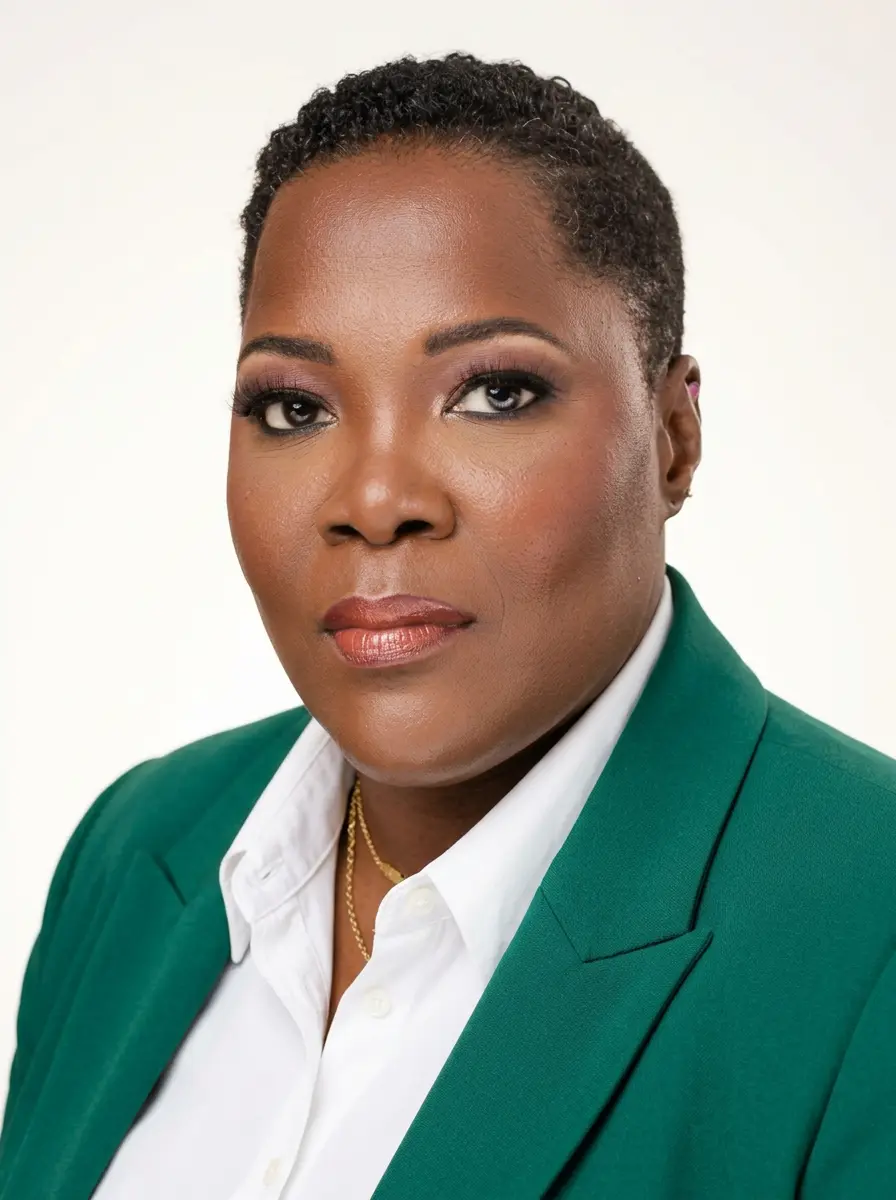
Michelle Magdalene Kelva Agard, M.A.Ed.
Educational Strategist | Literacy Advocate | Founder, Brevard Academic Consulting Group | Curator of The MAGNIFICENCE™ Framework™