
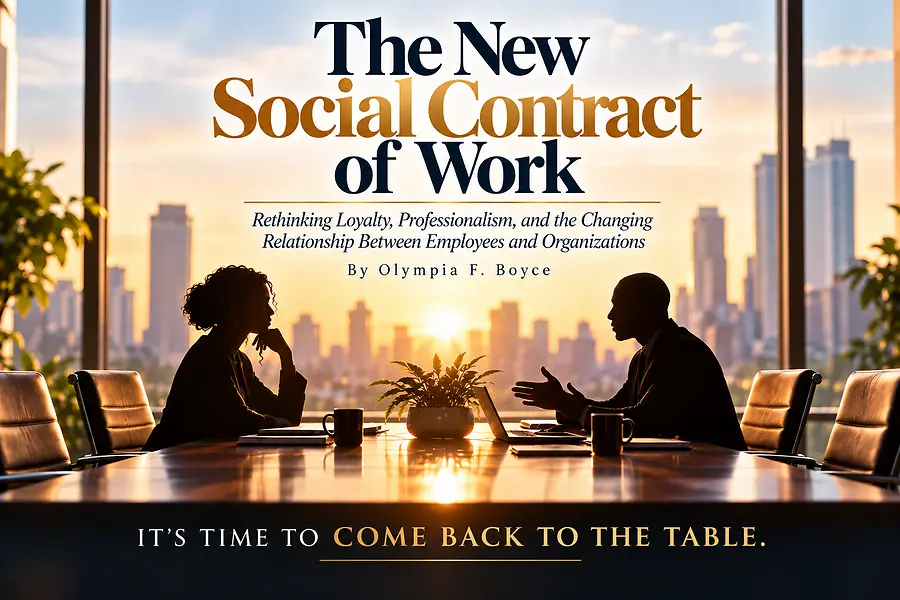
The New Social Contract of Work
Rethinking Loyalty, Professionalism, and the Changing Relationship Between Employees and Organizations

Recently, I found myself engaged in a conversation about a long-standing workplace practice: giving notice before leaving a job.
The discussion centered on whether employees are still obligated to provide the traditional two weeks' notice. There were compelling perspectives on both sides. Some viewed notice as a matter of professionalism, respect, and responsibility. Others questioned why employees should feel obligated to extend a courtesy they do not always believe is reciprocated by organizations.
But as I considered the conversation, I realized I was becoming less interested in the question of notice itself.
I became interested in what the question was revealing.
Something has shifted in the way people think about work.
Employees are increasingly aware of their voices, their boundaries, their value, and their agency. They are questioning traditions that previous generations may have accepted without much examination. At the same time, organizations continue to carry very real responsibilities. They have missions to fulfill, people to serve, businesses to sustain, teams to support, and results to achieve.
Somewhere between those two realities, something important is happening.
The social contract of work is changing.
For generations, many of us were taught a particular way to think about employment. You apply for a position. An organization offers you the job. You accept. You learn the role, understand the expectations, perform the work, and in return, the organization provides compensation, benefits, and an opportunity to build your career.
And when the relationship ends, we were taught how to leave well.
Give proper notice. Do not burn bridges. Complete your responsibilities. Help with the transition. Leave on good terms. Be professional.
There is nothing inherently wrong with any of this.
Professionalism matters. Integrity matters. Accountability matters. How we enter an organization matters. How we contribute while we are there matters. And how we leave matters.
But perhaps what professionalism requires from organizations and employees can no longer be understood as a one-way expectation.
Perhaps the more important question is not simply whether employees still owe organizations notice.
Perhaps we need to ask:
What do organizations and employees owe one another throughout the entire employment experience?
That is where the conversation becomes much bigger than two weeks.
The Employment Relationship Is Still a Relationship
At its core, employment is a relationship.
Both parties enter it because they have something to offer and something they hope to receive.
The organization has a mission, vision, business objectives, customers or communities to serve, and work that needs to be accomplished. It needs people willing to contribute their knowledge, skills, talents, creativity, experience, and time toward advancing those goals.
The employee enters with needs and aspirations of their own. Yes, compensation and benefits matter. But people also enter organizations hoping to learn, contribute, grow, develop their skills, find meaning in their work, build relationships, advance their careers, and perhaps discover capabilities they did not know they possessed.
That makes employment more than a transaction.
It is an investment.
And like any healthy relationship, it cannot thrive when only one party is expected to invest.
Organizations must invest in their people.
Employees must invest in the organizations they choose to join.
The question is whether we are willing to acknowledge that both responsibilities exist at the same time.
The Workplace Has Changed
The conditions surrounding work have changed significantly.
The pandemic accelerated a shift that was already beginning. Work collided with family, health, caregiving, uncertainty, identity, loss, purpose, and time in ways that became impossible to ignore.
Many employees began asking questions previous generations may not have felt as empowered to ask.
What am I willing to sacrifice for my career?
Does my voice matter here?
Can I be committed to my work and still establish boundaries?
Does advancement require me to surrender other parts of my life?
Am I valued only for what I produce?
Who am I becoming because I work here?
Those questions did not necessarily signal the end of professionalism or loyalty.
They signaled a workforce becoming more conscious of its own value and agency.
And the evolution did not stop with the pandemic.
Different generations are working alongside one another, sometimes carrying very different expectations about leadership, communication, flexibility, career advancement, and the role work should occupy in their lives.
Technology continues to change how we communicate, learn, collaborate, and perform our jobs. Artificial intelligence is accelerating that transformation, challenging organizations and employees alike to reconsider skills, responsibilities, productivity, and even the nature of certain roles.
Employees have access to more information about compensation, workplace culture, leadership, and career opportunities than previous generations could have imagined.
Organizations are evolving too. They face economic pressures, staffing challenges, rapidly changing technology, customer expectations, increased competition, and the constant need to adapt.
So this cannot become a conversation in which organizational responsibility is simply replaced by employee entitlement.
Nor can it remain a system in which employee commitment is expected without organizational investment.
The environment surrounding work has evolved.
Which raises a question we should be willing to ask:
Is the social contract of work that we inherited still serving the workplace we have become?
Coming Back to the Table
Perhaps what is needed is not another argument about who owes whom more.
Perhaps we need to come back to the table.
Not a table where the employer sits on one side and the employee sits on the other, each prepared to defend a position.
A table of examination.
What does the organization need from its people today?
What do employees need from the organizations they serve?
What remains reasonable to expect from one another?
What needs to evolve?
What should never change?
What are we each willing to invest?
What are we each accountable for?
And are we willing to listen long enough to understand the answers?
Organizations already have mechanisms that can help begin this conversation. Employee surveys, listening sessions, stay interviews, performance conversations, and other forms of feedback can provide valuable insight.
But asking the question is not the same as having the conversation.
Listening requires us to examine what we hear.
And examination sometimes requires us to acknowledge that something that once worked may no longer work in the same way.
That does not mean we abandon accountability, professionalism, loyalty, or organizational responsibility.
It means we examine what those principles require from both sides in the workplace we occupy today.
Maybe the new social contract of work begins there.
At the table.
Meeting in the Middle: The Empowered Leader Way™
For too long, workplace conversations have often been framed as though we must choose a side.
Employee or employer.
People or performance.
Boundaries or accountability.
Compassion or results.
Organizational needs or individual needs.
I reject the idea that sustainable leadership requires us to choose.
I believe an organization can protect its mission, establish clear expectations, pursue results, hold people accountable, and remain financially and operationally responsible while still empowering its people.
I also believe employees can own their voices, establish boundaries, expect respect, pursue development, and make decisions about their futures while remaining accountable for the commitments they make to an organization.
Those ideas are not opposites.
The work of leadership is learning how to bring them together.
That meeting place is what I call The Empowered Leader Way™.
The Empowered Leader Way™ begins with an understanding that empowerment was never intended to belong to only one side.
It is not about finding a 50/50 compromise in every situation. Leadership will sometimes require difficult decisions. Business realities exist. Personal realities exist. There will be moments when everyone cannot receive exactly what they want.
Meeting in the middle means developing the capacity to see both perspectives before we decide.
It requires communication.
It requires listening.
It requires respect.
It requires accountability.
It requires a meeting of the minds.
And above all, it requires investment.
The Organization Must Invest
Compensation matters. Benefits matter. Competitive salaries matter.
But the new social contract asks organizations to look beyond the paycheck.
What are we doing with the people who have entrusted a portion of their lives to this organization?
Are we training our leaders to actually lead?
Are managers equipped to listen?
Can employees respectfully challenge an idea without being labeled difficult?
Do our leaders know how to develop people rather than merely supervise their work?
Are we creating opportunities for employees to stretch beyond what they already know?
Do people understand how their individual responsibilities connect to the larger mission?
Are we empowering people to lead from wherever they sit?
Organizations cannot say they want innovative, engaged employees and then create cultures in which people are afraid to speak.
We cannot ask employees to take ownership while requiring permission for every thought.
We cannot say we value development while only developing people for the role we currently need them to perform.
That last distinction matters.
Because organizational development should not simply ask:
How can we make this employee more valuable to us?
It should also ask:
Who can this person become because they spent part of their professional life with us?
That is a different approach to leadership.
The Employee Must Invest Too
Empowerment is reciprocal.
Employees must also ask what they are willing to invest in the organizations they choose.
Accepting a position cannot simply mean asking, What will this organization give me?
It should also include the question:
What am I willing to give while I am here?
Will I learn?
Will I contribute?
Will I communicate?
Will I allow myself to be stretched?
Will I receive constructive feedback?
Will I challenge myself to become better at what I do?
Will I remain accountable when something is difficult?
Will I help advance the mission I agreed to support?
There is a difference between being challenged and being harmed.
There is a difference between growth and exploitation.
There is a difference between stretching and sacrificing your health, your well-being, your family, or your entire identity for a job.
The Empowered Leader Way™ does not ask people to abandon themselves in the name of commitment.
But empowerment also does not mean avoiding every difficult season.
Growth can be uncomfortable.
Development requires stretching.
Teams go through difficult periods. Organizations experience change. Leaders make mistakes. Employees make mistakes. There will be disagreements, restructuring, uncertainty, and moments when the work demands more of us than we expected.
The question becomes whether the relationship has enough communication, trust, respect, and mutual investment to navigate those seasons together.
Communication Is the Bridge
This is where the art of communication becomes essential.
Communication is not simply sending an email, holding a meeting, administering a survey, or announcing a decision.
True communication requires both the ability to speak and the willingness to listen.
It requires curiosity.
It requires enough humility to consider that another person's perspective may reveal something we cannot see from where we are standing.
Leaders must be willing to hear employees without automatically becoming defensive.
Employees must be willing to hear leaders without assuming every organizational decision represents a lack of care.
Neither side has complete visibility into everything the other carries.
That is why communication becomes the bridge.
Not because communication guarantees agreement. It does not.
But it gives us an opportunity to understand before we decide, react, disengage, or walk away.
Sometimes the outcome will still be separation.
And even then, the relationship matters.
Legacy Lives Outside the Organization
Eventually, employees leave.
Some retire. Some pursue new opportunities. Some relocate. Some change careers. Some outgrow positions. Some discover that their values and the organization's values no longer align.
Departure is not always evidence that something went wrong.
But every employee leaves carrying something with them.
They carry a story.
They will remember the manager who believed in them.
They will remember the leader who challenged them to become better.
They will remember the organization that gave them an opportunity when someone else would not.
They will remember the colleague who taught them something they carried into the next chapter of their career.
They will also remember when they were not heard.
When values became words rather than behaviors.
When their contribution mattered more than their humanity.
When they stopped believing that speaking would make a difference.
And they will tell those stories.
That is organizational legacy.
Organizations should therefore be asking:
Who are people becoming while they are here, and what will they say about us when they go?
Because legacy does not live only inside annual reports, mission statements, buildings, awards, or organizational history.
Legacy also lives in the people who once worked there.
But the employee has a legacy too.
When you leave an organization, what remains because you were there?
What did you build?
Who did you develop?
What did you improve?
What problem did you help solve?
What conversation did you have the courage to initiate?
What knowledge did you share?
Who became more confident because you encouraged them?
What did you contribute that someone else can now carry forward?
An empowered employee does not simply ask, What did this organization do for me?
An empowered employee also asks:
What became better because I was here?
That is ownership.
That is stewardship.
That is leadership.
The New Social Contract
Perhaps the social contract of employment has not disappeared.
Perhaps it is being rewritten.
And I believe we have an opportunity to be intentional about what we write next.
The new contract cannot simply be an organization offering employment and an employee agreeing to perform a function.
It must become a mutual commitment to stewardship.
The organization says:
While you are here, we will give you the opportunity to contribute. We will communicate with you. We will listen. We will challenge you. We will develop you. We will hold you accountable. We will respect your humanity. And we will do our best to ensure that you are more capable because you spent this season with us.
And the employee says:
While I am here, I will contribute. I will learn. I will communicate. I will receive feedback. I will use my voice responsibly. I will allow myself to be challenged. I will hold myself accountable. I will respect the mission I agreed to support. And I will do my best to leave something better because I was here.
That is not a legal contract.
It is a leadership contract.
It is The Empowered Leader Way™.
Organizations do not have to lose for employees to win.
Employees do not have to diminish themselves for organizations to succeed.
There is a place where organizational purpose and individual empowerment can meet.
Getting there will require both sides to move.
Both sides must communicate.
Both sides must listen.
Both sides must invest.
Both sides must accept accountability.
And both sides must recognize that employment, at its best, is not simply an exchange of labor for compensation.
It is an opportunity for mutual impact.
So perhaps the future of work does not begin by asking whether employees still understand loyalty or whether organizations still care about people.
Perhaps it begins by inviting both back to the table and asking:
What are we willing to invest in one another while we are here?
And when the relationship has run its course, there is one final question worth asking:
Are we both better because we encountered one another?
That, I believe, is the new social contract of work.
That is The Empowered Leader Way™.
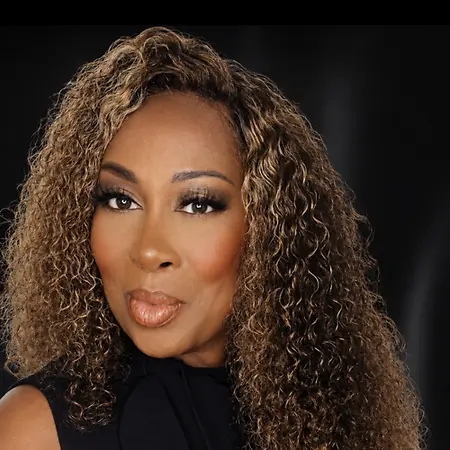
Olympia F. Boyce is an executive leader, author, speaker, leadership consultant, entrepreneur, songwriter, and music producer with more than 25 years of experience helping organizations and leaders cultivate workplaces where people and purpose thrive. She serves as Director of Human Resources at HONOR while leading The Empowered Leader Group, including EmpowerHer Coaching & HR Consulting, through Lady O Enterprises…





