The Power of Community Connections
How a small Midwestern town and the bonds of community nourished a life shaped by love, food, and belonging.

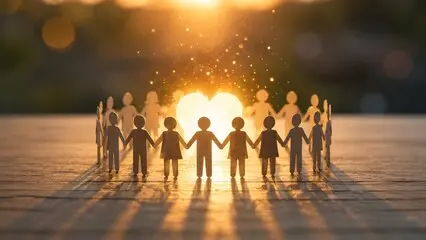
Growing up in a town of just over 1,900 people in rural Minnesota during the '70s and '80s, I am pretty sure that, if memory serves me right, I NEVER had a kiwi in my refrigerator at home. NOW, I can go to just about any grocery store and purchase a kiwi whenever I want to. Growing up in a rural Minnesota town at that time, there were a lot of things I didn't have.
I didn't have confidence, the mental fortitude to feel capable sometimes, or access to mental health practitioners who could help ease my struggles or give me the nudge that could have sent me along a path toward a healthier body and soul sooner. But what I did have was a community of friends and family who loved me without judgment (most of the time) and loved me with all their hearts.
It has been a long and wandering road since I left my hometown so many years ago. There have been many divots in the road and many heavy rocks that looked too big to pry off the path. Sometimes, I would sit behind the rocks, frustrated by the burden of lifting them or rolling them to the side, and it seemed like too much to bear. Other times, I would manage to maneuver myself around their jagged edges or jump over them, ignoring their massive structure as if they were never there. There were also many tears, outbursts of frustration, and sidesteps that took me off my path of good intentions.
I experienced a plethora of emotions on this winding and rugged path. I felt disconnected, shameful, sad, forlorn, curious, wondering, confused, passive, dismissive, jaded, and pensive. Even as I attempted to manage these permeating feelings, somehow I always knew that I still had my community. They may have seemed far off in the distance in my rearview mirror or like a smudged view through my lens of everyday life. I was fortunate to have grown up surrounded by adults who loved me. I guess that's what pushed me to keep moving rocks throughout my life.
In my humble, small Midwestern town, I had grandparents nearby, and we would have Sunday dinner together every week, unless we were out of town, until they all passed away, which was unfortunately too soon. My dad's twin sister was in my hometown as well, so even after my grandparents died, she was still a defining presence in my life and joined us for those weekly dinners. Looking back, I know that until I became a sullen and brooding teen, I relished those Sunday dinners of piping-hot roast meat of some kind, along with roasted vegetables, hot dishes, and stews.
My mother was a Home Economics teacher, so rest assured, we always had a mid-century version of a balanced meal of "meat, potatoes (or some type of starch), vegetables, and a salad." Even though the "salad" may have been a canned pear half with a dollop of Old Home small-curd cottage cheese nestled inside the indentation at the center of the pear. And the coup de grâce was the sprinkle of paprika on top of the cottage cheese. Why the sprinkle of paprika? For color, of course!
Within our community, there was always food. Whether someone had died, a baby was born, someone was being confirmed, was in the hospital, had just come home from the hospital, or was just "stopping by on their way up to the family cabin," there was the ever-present food.
Community and food are forever linked and engrained in my DNA at this point. Whenever my kids come by for a weekend visit, to watch the Super Bowl, or for holidays, I always ask, "What should we have to eat?" This is how my family has come together for generations, with food at the center, or at least on the coffee table as a snack.
My small-town community supported me as well as they could with the resources they had at the time, and that, too, will always be forever engrained in me. I didn't have kiwi fruit, and I didn't have professional help at my fingertips to guide me as a kid who was struggling with identity and mental health challenges. But I know what I did have was eternal support through social connectivity, long, lingering dinners at the table, hugs, and a well-intentioned laugh when things felt really hard.
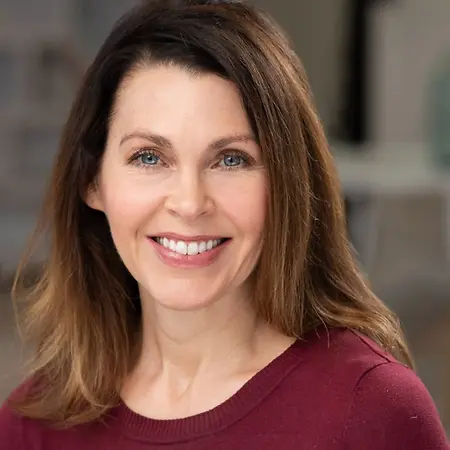
Sarah Dutton is a wellness consultant and owner of The Virtuous Circle in Minneapolis, specializing in mind-body balance. Since 2015, she has provided yoga, mindfulness, and trauma-informed practices to thousands across the Twin Cities through schools, hospitals, corporations, faith based, and community organizations. With extensive certifications in yoga and somatic practices, she also leads international retreats…