The Psychological Cost of Performing Strength While Silencing Pain
Why Emotional Suppression Masquerading as Strength Costs Us Our Wholeness

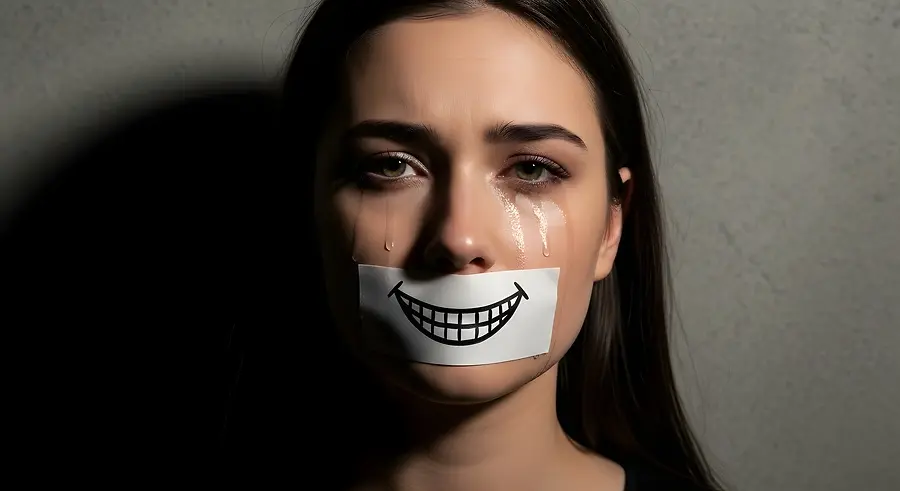
The Psychological Cost of Performing Strength While Silencing Pain
There is a profound difference between genuine resilience and the performance of resilience. One heals. The other slowly disconnects individuals from themselves.
Modern culture often rewards emotional suppression disguised as professionalism, leadership, discipline, or composure. High-functioning individuals are frequently praised for “holding it together” while privately navigating grief, burnout, psychological exhaustion, relational betrayal, discrimination, trauma, or chronic stress. Over time, this performance becomes identity. The mask becomes survival.
Yet the nervous system always keeps score.
As workplaces, institutions, and social systems continue to prioritize productivity over psychological safety, many individuals have learned to suppress emotional truth in exchange for acceptance, stability, or perceived strength. The result is not resilience—it is adaptation through emotional self-abandonment.
“Survival sometimes teaches people how to function beautifully while silently falling apart.” — Teressa Cook
The psychology behind emotional suppression is deeply connected to self-protection. Individuals who have experienced trauma, instability, neglect, chronic criticism, or unsafe relational dynamics often become exceptionally skilled at reading environments, minimizing needs, and managing emotional expression. In many cases, these individuals are viewed by others as dependable, composed, and resilient.
However, the hidden cost of this adaptation can manifest psychologically, emotionally, and physically.
Research in trauma psychology and neurobiology continues to demonstrate the long-term effects of chronic emotional suppression, including heightened anxiety, emotional dysregulation, dissociation, sleep disturbances, burnout, inflammation, identity confusion, and relational disconnection. The body interprets prolonged emotional inhibition as a sustained threat response.
Strength without emotional processing eventually becomes exhaustion.
What is often misunderstood is that emotional suppression does not eliminate pain—it relocates it. Unprocessed experiences frequently emerge through physical symptoms, chronic tension, irritability, perfectionism, emotional numbness, hyper-independence, or cycles of overachievement.
Many individuals become praised for coping mechanisms that were originally developed for survival.
“Not every successful person feels safe inside the life they built.” — Teressa Cook
This dynamic is especially visible among caregivers, healthcare professionals, educators, leaders, survivors of abuse, and individuals raised in environments where emotional expression was punished, dismissed, or unsafe. Over time, emotional performance becomes normalized. The individual no longer asks, “How do I feel?” but rather, “How do I remain functional?”
The distinction matters.
Functionality is not always wellness.
A psychologically healthy environment allows individuals to exist without constantly performing emotional invulnerability. Yet many organizational cultures unintentionally reinforce emotional masking by rewarding silence, overwork, emotional detachment, or people-pleasing behaviors while minimizing emotional honesty and boundary-setting.
The consequence is collective emotional fatigue.
This is where trauma-informed leadership becomes essential. True leadership is not built solely on performance metrics, authority, or productivity. It is built on the capacity to create emotionally safe environments where individuals do not feel psychologically punished for their humanity.
Psychological safety is no longer a luxury in organizational culture—it is a necessity for sustainable performance, innovation, retention, and long-term well-being.
“People do not heal in environments where they must continuously prove their worth to feel emotionally safe.” — Teressa Cook
Healing begins when individuals no longer confuse emotional suppression with strength.
It begins when rest is no longer interpreted as weakness. When boundaries are no longer viewed as defiance. When vulnerability is recognized not as instability, but as psychological honesty.
The future of leadership, mental health advocacy, and organizational wellness will require a deeper understanding of invisible emotional labor—the unseen burden carried by those who appear “fine” while silently managing internal overwhelm.
The strongest individuals are not always the ones who carry the most. Sometimes strength is demonstrated through the willingness to stop carrying what was never meant to be held alone.
And perhaps the most transformative shift occurs when people finally realize that healing does not require the performance of perfection. It requires permission to become whole again.
“Healing is not the abandonment of strength. It is the moment strength no longer requires self-erasure.” — Teressa Cook


