
The Purple Pen
How a $284 Pen Mistake Taught Me Everything I Needed to Know About Running a Luxury Resale Business
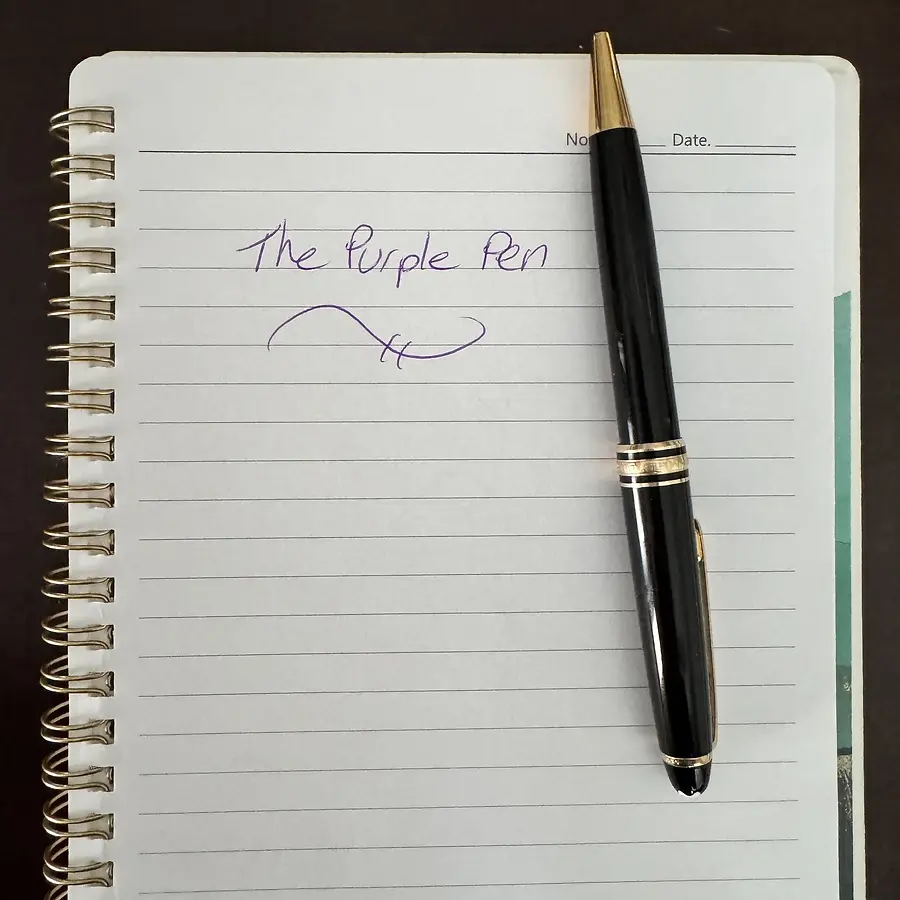
The pen I use to write customer thank-you notes cost me $284, two returns, and several lessons I apparently needed to learn the hard way. At the time, it seemed like one bad purchasing decision after another. I had no idea that this pen would eventually help give me the confidence to invest thousands of dollars in luxury handbags.
The pen writes in purple ink. It did not start out that way.
Almost a year after officially creating Barbee Dreamhouse Luxury Resale, I keep coming back to that pen when I think about how much I have learned.
About two years ago, I lost a fintech job I had held for more than 20 years after a company-wide return-to-office mandate would have required me to relocate across the country. I was in my 50s, settled and happy in Texas. Moving was not part of my plan. Neither was starting a resale business.
My daughter had sold vintage and Y2K clothing and accessories while she was in college. After graduation, she started working and no longer had time for it, so I offered to take over. I quickly discovered that I loved connecting people with things that made them happy. Her inventory was geared toward twentysomethings, though, and I wanted to sell things I loved, too. I shifted toward luxury bags and accessories, set up a reseller account with the state of Texas, and began looking for wholesale inventory.
One of my first purchases was a Montblanc Meisterstück pen. Meisterstück means "masterpiece" in German. My handling of this purchase did not live up to the name.
I was participating in my first overseas auction and felt pressure to bid. My research consisted of a quick Google search. People wanted these pens, and I thought I could sell this one for more than I paid. It had an engraving that said something like "One Million Club," with the initials TJ on the clip. I assumed it was a special Montblanc edition.
How did I miss that this was probably a sales award? I had been an account executive in fintech. I had sales goals. I knew all about million-dollar clubs. I just never got a Montblanc pen for joining one. Now I had one with someone else's initials on it.
When the pen arrived from Europe in December 2025, the mistake was obvious. This was a personal engraving, and it made the pen much harder to resell. With import duties, my first pen had cost $115.
I photographed it and listed it on my website, clearly noting the engraving and pricing it just high enough to cover my expenses. Maybe someone named TJ would want it.
Eventually, it sold! I packed it up and sent it off. On the day it arrived, the customer called. "Hi, I want to return this pen. It has some kind of weird engraving on it."
My first instinct was to point out that the engraving was mentioned in the listing. Instead, I sent a prepaid return label and refunded the full purchase price, including the original shipping charge. My goal was to connect people with things that made them happy. Keeping someone stuck with a pen they did not want was a strange way to accomplish that.
I also had something to learn about expectations. Mentioning a detail in a listing did not guarantee that the customer would notice it or understand what it meant for the item they were buying.
By February 2026, the pen was back. I looked at it with disappointment, mostly in myself. Then I had an idea. I could buy another Meisterstück for parts, replace the engraved body and clip, and finally have a good pen to sell.
Apparently, one pen mistake was not enough.
I found a B-grade pen at an auction in Japan. The body and clip looked good, and the lower grade made it seem like an affordable solution. The price was ¥13,500, plus ¥1,350 for shipping and ¥5,830 in auction commission. That came to ¥20,680, or approximately $130. Import charges added about $40, bringing the second pen's total cost to roughly $170.
Among the charges was a flat $17 DHL import fee. On a low-value item, a fee like that can take a surprisingly large bite out of the margin. I was learning to look at the full cost of getting an item into my hands, not just the winning bid.
The second pen arrived in March. Yes, the pen I bought for parts had cost more than the first pen. I now had $285 tied up in the two of them.
I swapped the engraved parts, listed the better pen for $100, and accepted that I would be taking a loss. The listing described it as preowned and did not promise a box or any extras.
It sold! Once again, I packed it up and shipped it right away. And once again, a message arrived on delivery day. "I am disappointed with this pen. I thought it would come with the original box. Also, the ink cartridge is running low."
My heart sank a little. I had thought I was finally done with this pen. I wanted to explain that the listing had never mentioned a box and that a preowned pen might reasonably need a new cartridge. But the customer had expected something different from what arrived, and I wanted to make it right. So I sent another prepaid return label and refunded the full purchase price and original shipping charge.
The second return drove the lesson home. I needed to make it easier for customers to understand exactly what they would receive, including what was missing and what might need replacing. Good service mattered after the sale, and clear expectations mattered before it.
By April, I had two pens that had cost $285, plus approximately $45 in shipping refunds, return labels, and credit card fees from the two returns. My cumulative outlays had reached $330.
I was ready to end the pen fiasco. I listed the engraved pen in a low-starting-price eBay auction. It sold for $57, leaving me with $46 in net proceeds. That was money recovered, not profit. Subtracting it from the $330 left $284 unrecovered.
I shipped the pen, and it stayed sold. At that point, this was absolutely worth celebrating. I decided to keep the better pen. I purchased inexpensive replacement cartridges and chose purple ink. With its new purple cartridge installed, the pen wrote beautifully. It felt wonderful to write with something so fancy, even if acquiring it had been ridiculous.
The pen that was a $284 mistake was now a $284 gift to myself.
Losing $284 wasn't going to break my business. But it was an expensive lesson for something that should have been a simple purchase. I had bought an item without properly researching it, underestimated the costs, and then spent more money trying to turn a bad purchase into a profitable one. Looking back, I am grateful I learned those lessons on a pen rather than a handbag worth thousands of dollars.
Today, my business focuses on luxury designer handbags, small leather goods, and the occasional scarf. I now regularly evaluate and purchase handbags worth thousands of dollars, something that would have seemed intimidating when I first started. I have learned how to research the resale market, evaluate condition, understand the true cost of sourcing internationally, and, most importantly, recognize when something is not a good investment.
I still take risks, but now they are informed by research, experience, and a much better understanding of what makes something a good investment. And I can confidently say I will never try to sell another pen!
Starting over professionally in my 50s was never the plan. I brought more than 20 years of sales experience with me, but I still had so much to learn about sourcing, importing, pricing, and running my own business. The lessons from that purple pen have become part of how I approach every purchasing decision.
The $284 wasn't the price of failure. It was the cost of learning how to make better decisions when thousands of dollars were on the line.
I know I will make more mistakes. That's part of owning a business, and I've learned not to be afraid of them. Every time I pick up my purple pen to write a thank-you note to a customer, I'm reminded of how far I've come. What began as a bad purchase has become something I use every day in a business I genuinely enjoy. And for now, I have another customer to thank and a note to write.
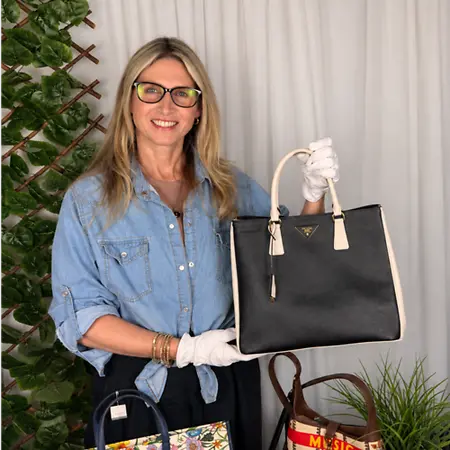
Erica Barbee is founder of Barbee Dreamhouse Resale, a luxury designer handbag resale boutique, leveraging 20+ years in fintech. She oversees all business operations while maintaining Entrupy Verified status. Beyond entrepreneurship, Erica establishes nonprofits, serves as Treasurer of Texans Against Gerrymandering, and mentors women in fintech. With an MBA and BA, she exemplifies integrity and relationship-building.





