The Real AI Challenge Isn't Technology—It's Leadership.
Why AI Implementation Fails Without Supporting the People Who Lead It

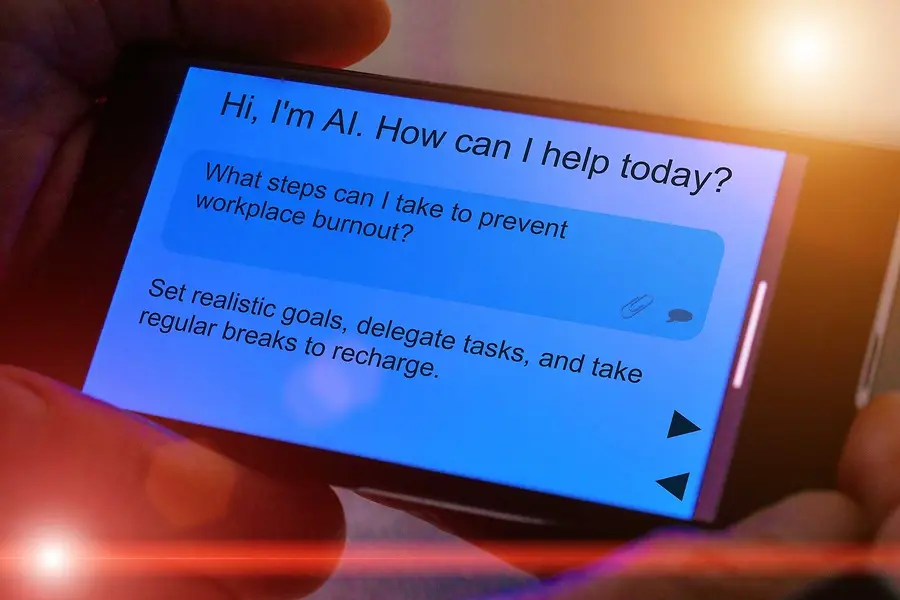
Everyone is talking about AI. Few are talking about the people expected to make it work.
A recent Harvard Business Review article by Julia Shin and Sandra J. Sucher argues that successful AI adoption depends on middle managers—the leaders tasked with implementing AI while simultaneously maintaining quality, supporting their teams, and delivering results.
Organizations that fail to invest in these leaders risk turning AI into another source of workplace overload rather than a catalyst for organizational transformation.
This resonates deeply with my work on the Burnout-Resilience Paradox.
Technology does not create resilience. Systems do.
When organizations layer AI on top of already overwhelming workloads without providing protected learning time, psychological safety, clear governance, and leadership support, they inadvertently increase the burden on the very people expected to lead change. The result is compensation rather than resilience—high-performing professionals quietly absorbing additional cognitive and emotional demands until performance, engagement, and well-being begin to erode.
AI implementation is not simply a digital transformation. It is a human transformation.
Resilient organizations recognize that sustainable innovation requires:
- ✅ Protected time to learn and experiment.
- ✅ Recognition for coaching, collaboration, and knowledge sharing.
- ✅ Clear governance that reduces uncertainty.
- ✅ Leaders who are empowered—not overwhelmed—to guide their teams through change.
As nurses and healthcare leaders, we must remember:
The future of AI in healthcare will not be determined by algorithms alone. It will be determined by how well we support the people who use them.
As I continue developing the Burnout-Resilience Paradox and the Molina Compensation-Collapse Framework™, I am increasingly convinced that resilience is not an individual trait—it is an organizational outcome created through thoughtful leadership, healthy work systems, and psychological safety.
When we invest in people, AI becomes an amplifier of human potential—not human exhaustion.
Reference: Shin, J., & Sucher, S. J. (2026, July 16). AI Adoption Is Overloading Your Middle Managers. Harvard Business Review.
#Leadership #ArtificialIntelligence #HealthcareLeadership #Burnout #Resilience #NursingLeadership #OrganizationalPsychology #FutureOfWork #PsychologicalSafety #ImplementationScience #DigitalTransformation #MiddleManagement #AI #BurnoutResilienceParadox #MolinaFramework


