The Road Past Mile Marker 9: Why Rural Health Requires Local Alliances
Why Rural Health Thrives at the Kitchen Table, Not Behind Clinic Doors


The Kitchen Table on Route 8
The nearest hospital is forty-two miles north, past three cattle guards, a single blinking yellow light, and forty minutes of empty blacktop. Out here, there is no emergency clinic, no therapist's waiting room, and no urgent care center.
When Ben Reynolds didn't show up to run the combine through his back forty during last year's late wheat harvest, no one called an 800 helpline. His neighbor two miles over, Pete, saw the tractor sitting dead in the yard at 7:00 a.m. By noon, Pete's wife had driven down the gravel driveway with a warm casserole dish, walked straight through the unlocked side door, and sat with Ben's wife at the laminate kitchen table while Ben stared silently out at the field from the porch steps.
Three days later, Pete and two other farmers had quietly harvested Ben's eighty acres before the rain set in. They never once used the words depression, burnout, or crisis intervention. But they kept a four-generation family farm afloat, checked on Ben every evening at sunset, and made sure his shotguns were securely locked in Pete's own shop until the dark season passed.
The Blind Spot of Conventional Care
When public health agencies and regional health systems look at places like this, they see a void. They look at heat maps of provider shortages, count the absence of board-certified psychiatrists within a fifty-mile radius, and arrive at the same conclusion: an empty desert that needs outside rescue, usually via an automated telemedicine portal or a regional clinic with a strict appointment calendar.
Yet these well-meaning programs routinely fall flat. An iPad app for anxiety management means nothing to an aging rancher facing a drought, a third-generation dairy farmer crushed by input costs, or a mother who can't get a stable cellular signal behind the ridge. More critically, clinical models built around scheduled fifty-minute office visits and sterile diagnostic codes collide head-on with a rural culture where stoicism is survival, privacy is fierce, and mental distress is deeply stigmatized.
Care out here does not begin behind a receptionist's desk. It begins at grain elevators, church basements, livestock auctions, and kitchen counters. It relies on the volunteer EMTs who also happen to be the local mechanics, and it relies on community caseworkers who understand that healing usually starts with untangling the mess of daily life before anyone ever talks about medicine.
Rural healthcare and mental wellness cannot be delivered through remote screens and metropolitan playbooks that mistake geographic isolation for an absence of care. Sustainable rural health relies on transforming public health from an outside intervention into an embedded partnership—one that equips and trusts the informal, everyday networks of neighbors, co-ops, and local stewards who are already the first and last line of defense.
The Work in the In-Between: The Non-Clinical Lifeline
Between the doctor forty miles away and the kitchen table at home lies a vast, chaotic expanse that no medical chart accounts for. In that gap, clinical credentials often matter far less than showing up, being trusted, and doing whatever the moment requires.
This is the domain of the non-clinical community caseworker—the person who works the "in-between."
When an agency looks at a case, they see an individual with an unmet diagnostic metric. When a community caseworker pulls into the driveway, they see the unvarnished reality:
- It's sitting beside an overwhelmed caregiver at a kitchen table, sorting through a shoebox of past-due propane notices, medical bills, and state aid forms that read like a foreign language.
- It's arranging a ride for an elderly veteran whose cataracts keep him off the highway, or making three calls to find an extra cord of firewood before the first hard freeze hits the valley.
- It's knowing how to listen when a father is unraveling from crop failure, never forcing a clinical label on his pain, but quietly linking him to food assistance, utility relief, or peer support without stripping him of his dignity.
This work cannot be billable under standard fifteen-minute medical codes, nor does it fit neatly into an electronic health records system. Yet it is the very bedrock of rural wellness. By taking care of the practical, exhausting burdens that drive people to the breaking point, the caseworker clears the mental space necessary for people to keep going. They don't arrive as an authority figure with a clipboard; they step in as a steady ally who asks a simple, radical question: "What do you need right now, and how do we get it done?"
The Geography of Silence: Reworking Mental Health
In agricultural communities, psychological strain does not look like clinical data on a chart. It looks like unplowed rows, neglected herd gates, missed church pews, and the quiet sale of long-held machinery.
Rural mental health carries an acute burden of cultural friction. In places where self-reliance is a survival tool and privacy is scarce, parking a recognizable pickup outside a county behavioral health building is out of the question for many. A formal referral to a distant specialist is often interpreted not as a path to recovery, but as an admission of personal defeat. Because of this, formal psychological interventions often fail to find patients, while the crisis festers behind closed barn doors.
Reaching these individuals requires meeting them on their own terrain:
- The Agribusiness Nodes: Equipping feed-store clerks, grain-elevator scale operators, and agricultural bank loan officers with basic distress-recognition training. These individuals see financial duress, severe weather losses, and chronic strain long before any doctor does.
- The Faith and Community Anchor: Partnering directly with country pastors and community leaders who hold generational trust, providing them with practical, destigmatized vocabularies for grief, depression, and trauma.
- Shoulder-to-Shoulder Interventions: Shifting from confrontational, face-to-face clinical interviews across a desk to shoulder-to-shoulder interactions—conversations held while fencing, working on a tractor engine, or standing over a cattle chute, where vulnerability feels less exposed.
The Invisible Pressures: Farm Women and Youth
Discussions of rural distress often conjure the image of the stoic, aging male farmer, but this image obscures the rest of the household.
Farm and ranch women frequently carry a grueling dual burden: managing the farm's accounting, doing field work, raising children, and working an off-farm job thirty miles away just to secure employer-sponsored health insurance. They are often the family's sole emotional shock absorber, monitoring everyone else's mental stability while quietly neglecting their own.
Simultaneously, rural youth face a distinct isolation. Attending consolidated schools that require hour-long bus rides each way, farm kids balance heavy morning and evening chores with academic work, all while absorbing the acute financial anxieties of their parents. With broadband access remaining patchy and recreational outlets limited, adolescent loneliness and depression frequently go untreated until a crisis forces an emergency response. Any rural health initiative that overlooks school counselors, 4-H leaders, and FFA advisors ignores the future stewards of the land.
The First Responders: Volunteer EMS and Rural Pharmacies
When physical emergencies strike, the first line of defense is rarely a staffed hospital ambulance; it is a neighbor with a pager on their belt. Rural volunteer Emergency Medical Services (EMS) and local fire districts form the physical backbone of rural care.
These volunteers—often high school teachers, heavy equipment operators, and local mechanics—do not merely manage trauma:
- Generational Context: When a volunteer EMT enters a home, they know whether the clutter on the floor is normal or a sign of acute cognitive decline; they know whether the family has running heat, working water, or enough food for the winter.
- The Chronic Care Bridge: Because regional ambulances can take an hour to navigate back roads, rural EMS personnel frequently act as de facto primary-care monitors, checking blood pressure and insulin levels while answering simple calls for lift assists.
- A Strained Lifeline: This safety net is near exhaustion. Aging populations and the migration of younger generations have left small crews understaffed, running overnight calls after twelve-hour shifts in the fields or machine shops, often absorbing severe secondary trauma in total isolation.
Alongside EMS stands another overlooked clinical anchor: the independent rural pharmacist. In towns without a physician or nurse practitioner, the community pharmacist is the only healthcare professional accessible without an appointment. They know which elderly patients are stretching insulin doses to save money, who is skipping blood pressure refills, and which families are quietly struggling with opioid dependency. When local independent pharmacies close their doors due to corporate pharmacy benefit manager (PBM) pressures, towns lose far more than a dispensary—they lose their primary triage post.
Proven Playbooks: Real-World Collaboration
Transforming rural health from an abstraction into reality is already happening where external funding steps aside to empower local structures.
- AgriSafe's "Ag Mental Health First Aid" and the Farm and Ranch Stress Assistance Network (FRSAN): Rather than establishing psychiatric offices in rural strips, these programs train regional extension agents, veterinary technicians, and USDA field staff to recognize behavioral signs of acute stress, crisis-deescalate in machine sheds, and connect producers with culturally competent professionals who understand commodity prices and drought cycles.
- Community Paramedicine Programs: In states like Minnesota, Colorado, and Maine, rural EMS units are formally reimbursed not just for emergency transport, but for preventative home visits. Paramedics draw routine labs, review medications, and monitor chronic conditions directly at the kitchen table, drastically reducing avoidable emergency-room runs.
- Co-Op Health Screenings: Organizations such as the North Dakota Farmers Union and regional rural electric co-ops partner with visiting nurses to conduct mobile health checks—cholesterol, glucose, and cardiac screenings—directly at livestock auctions, county fairs, and annual member meetings, integrating preventative medicine into existing commercial routines.
The Policy Reckoning: Fixing the Funding Mechanisms
Good intentions and neighborly goodwill cannot indefinitely compensate for broken reimbursement rules. If external systems want to sustain rural care, they must fix the financial architecture:
- End "Transport-Only" Billing: Medicare and commercial insurers historically only reimburse EMS if an ambulance transports a patient to a physical emergency room. When an EMT spends two hours stabilizing a diabetic crisis at a kitchen table without transport, the agency eats the entire cost. Reimbursement must permanently recognize on-scene treat-in-place care.
- Fund Non-Clinical Navigation: State Medicaid programs and regional grants need flexible line items that pay for the essential, unglamorous connective tissue: the mileage, the advocacy, and the hours community caseworkers spend driving down washboard roads to connect isolated residents with food, heat, and basic dignity.
- Protect Sole Community Hospitals and Rural Emergency Hospitals (REHs): State and federal funding formulas heavily favor high-volume procedural centers. Rural facilities, which maintain 24/7 emergency capacity regardless of volume, need baseline operational block grants, not payment structures that penalize them for lower patient density.
- Credentialing and Reciprocity for Local Caregivers: Bureaucracies frequently bar local first responders from administering basic preventative interventions due to rigid scope-of-practice laws designed for urban hospital wards. States must expand practice authorities for rural nurse practitioners, community paramedics, and community health navigators.
The Collaborative Blueprint for External Systems
Outside health systems, philanthropic donors, and state policymakers must stop acting as distant managers and start operating as supportive resource partners:
- Invest in the Frontline Assets: Direct public health grants straight to volunteer fire districts and community caseworkers for modern mobile tools, fuel stipends, and ongoing crisis training, rather than walling funds behind accredited regional hospital systems.
- Bring Point-of-Care Testing to Community Hubs: Meet residents where they assemble. Offer preventative health screenings at grain elevators, school sports tournaments, and co-op meetings.
- Use Trusted Local Intermediaries for Digital Care: Telehealth platforms should not be dropped into rural areas unassisted. Pair virtual visits with local caseworkers or volunteer EMTs who can enter the home, set up the connection, and translate clinical advice into actionable routines.
- Synchronize Care with Agricultural Calendars: Scrap standard metropolitan 9-to-5 schedules. Expecting clinic visits during planting, harvest, or spring calving guarantees no-show rates. Outreach, casework visits, and wellness screenings must track the seasonal realities of agricultural production.
The Horizon Beyond the Blacktop
Lasting rural health will never be achieved by opening more empty regional facilities or mailing automated brochures down country mail routes. A community that knows how to pull a calf in a blizzard, rebuild a washed-out culvert with scrap iron, and harvest a neighbor's crops in a crisis does not suffer from a lack of will or an absence of intelligence.
When external institutions recognize that the strongest health network in any rural county is the community itself—anchored by the neighbors who step up, the EMTs who answer the midnight call, and the caseworkers who walk into the messy in-between—the paradigm shifts. Real progress begins the moment policymakers step down from the podium, drive past the pavement, pull up a chair at the kitchen table, and ask the only question that matters: How can we help you do what you are already doing?
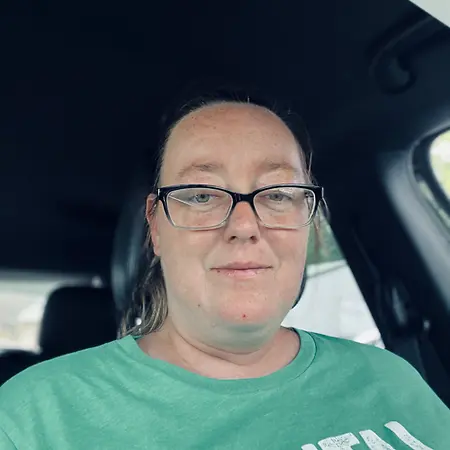
Catherine Mitchell is the founder of Unstoppable Faith, a rural advocacy initiative based in Black, Missouri, providing high-touch community navigation, practical life-skills coaching, and vital safety-net support. Bringing nearly three decades of direct experience across healthcare, mental health, and social services, she began her journey on the front lines as a CNA and Level 1 Medication Aide before serving in…