
The Space Between Doors
Finding Clarity and Strength in the Space Between Change

We often speak about change as if it happens in a single, decisive moment. One door closes. Another opens. We step through, and the new chapter begins. But real transformation rarely unfolds that neatly. There is often a space between the doors: a period when what was familiar no longer fits, yet what comes next has not fully revealed itself.
This is the liminal space. It can appear in our careers, our relationships, our health, our leadership, or our understanding of who we are. We may know that we cannot return to the life we were living, but we may not yet have language for the person we are becoming. That uncertainty can feel uncomfortable because the mind naturally looks for evidence, direction, and control. When none of those arrives quickly, we may assume that something has gone wrong.
But the space between doors is not empty. It is formative.
A caterpillar does not enter a cocoon with a complete view of its future. It withdraws from what it has known and undergoes a transformation it cannot supervise from the outside. The cocoon may look quiet, but it is not inactive. The old structure is being reorganized to support a new way of moving through the world.
Human transformation can feel much the same. There are seasons when our visible progress slows because our inner life is being rebuilt. We begin questioning roles we once accepted, patterns we once repeated, and expectations we once used to measure ourselves. We may feel less certain, not because we have lost our way, but because an older identity can no longer lead us where we are going.
This is where self-trust becomes more important than certainty. Certainty asks us to predict the outcome. Self-trust reminds us that we can meet the outcome, learn from it, and choose again if necessary. It allows us to move without demanding that every step be explained in advance.
The nervous system also has a role in this passage. When change feels unfamiliar, the body may interpret uncertainty as danger. We can become tempted to reopen a door simply because we recognize the room behind it. We may return to an old job, relationship, belief, or version of ourselves because familiarity feels safer than possibility. Yet familiar does not always mean aligned, and discomfort does not always mean we are making the wrong choice.
Sometimes growth asks us to pause long enough for the nervous system to soften around a new reality. We do not need to force the butterfly from the cocoon. We need to create enough safety for the transformation already underway to complete itself.
That may mean resting before deciding. It may mean allowing grief and hope to exist together. It may mean declining opportunities that resemble the past while remaining open to something we cannot yet name. Most of all, it means refusing to judge an unfinished chapter as if it were the final story.
Leadership is often measured by visible action, but there is also leadership in the quiet work of becoming. There is courage in releasing what no longer fits. There is wisdom in not rushing toward the first available door simply to escape the hallway. And there is strength in saying, ‘I may not know exactly what comes next, but I trust the person who will meet it.’
The space between doors is not a place where life has forgotten us. It is where discernment deepens, identity reorganizes, and capacity expands. Like the cocoon, it protects a transformation that may not yet be ready for public view.
When the next door opens, we will not step through it as the person who first entered this in-between space. We will carry greater clarity, stronger boundaries, and a more honest relationship with ourselves. We may still feel nervous. We may still be unable to see the entire road. But readiness does not require the absence of uncertainty. Sometimes readiness is simply the willingness to emerge.
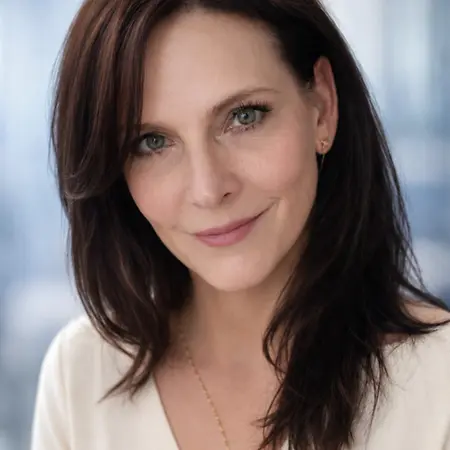
Melissa Darrington is a Certified Consulting Hypnotist and founder of Happy Medium Hypnosis, LLC, specializing in clinical hypnosis and nervous system regulation. With 25+ years as a surgical technologist, she developed The CALM Protocol™ for healthcare stress management. Her innovative approach combines clinical hypnosis expertise with frontline healthcare knowledge to address clinician burnout, improve mental…





