The Story Behind Carrasco 67'
Author Pen name Elaine Broun

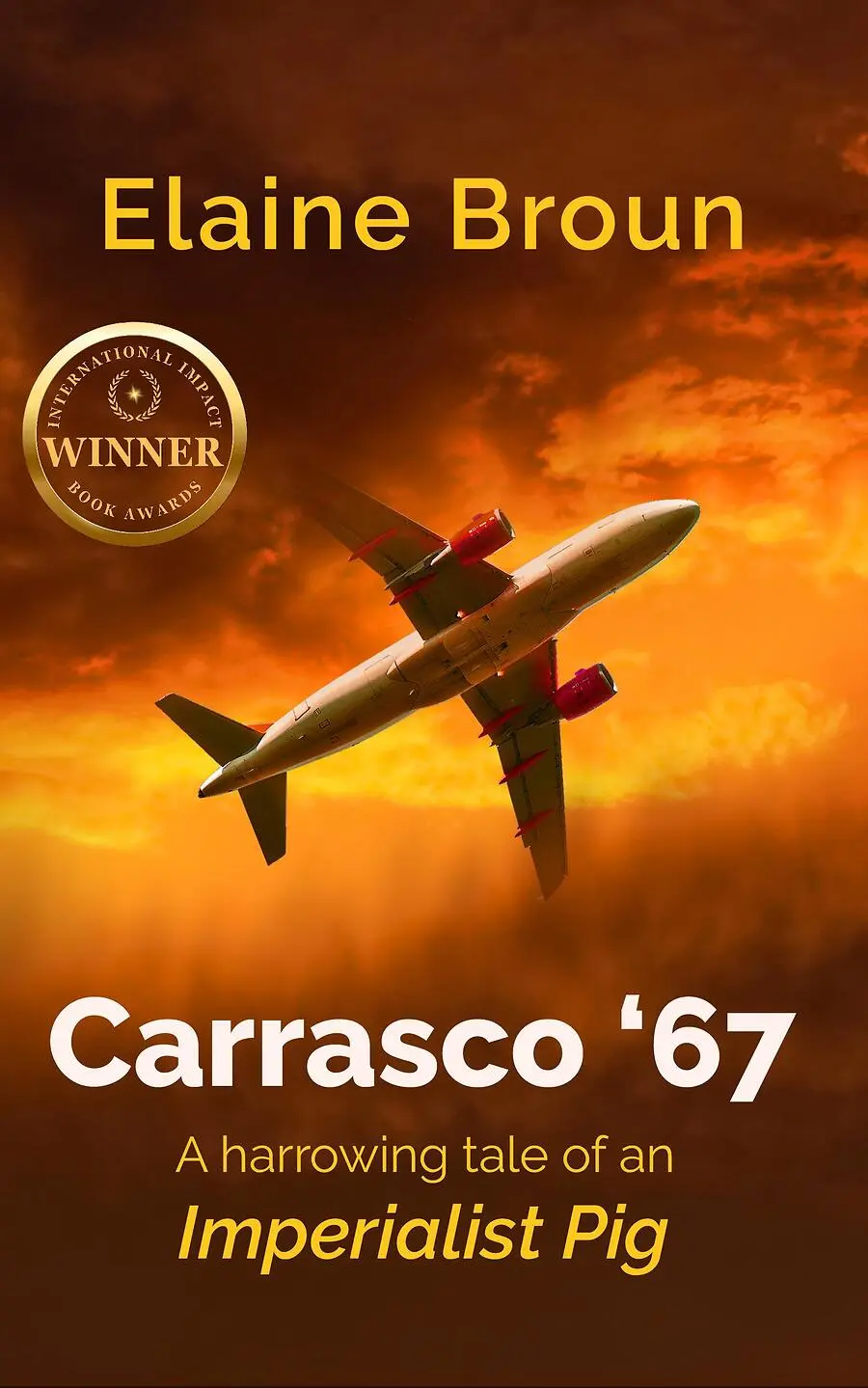
Some stories remain dormant.
Mine waited in the quiet recesses of my mind and memory. They lingered in the pauses between attempted conversations as I tried to initiate discussions with my father, desperately wanting to validate our lived experiences — only to be silenced. They waited in the space between who you appear to be and who you truly were.
Carrasco 67 was one of those stories.
Sometimes fear itself became a weapon.
For years, I lived what many would consider a successful, functional life. I showed up. I achieved. I supported others. From the outside, there was little indication that beneath that competence lived a younger version of me who carried the darkest of secrets.
I did not begin writing this book because I wanted to become an author.
I began writing because the silence was emotionally exhausting.
When Silence Becomes Survival
Trauma has a way of teaching you how to adapt. You learn how to compartmentalize. You learn how to hide things. To lie. You learn how to smile when necessary. You learn how to tell a version of your story that feels safe — one that doesn’t allow others to know your most uncomfortable truths. You learn early how to survive by hiding parts of your soul.
Over time, this new version of us — my family — became our identity.
I had become strong during our dalliance with the terrorists’ constant presence in our lives. Responsible. Reliable. Independent. But strength without acknowledgment can turn into isolation. Independence can mask fear, even as it projects the very strength meant to protect ourselves — our family — or anyone who knew us. We had to learn quickly the art of self-preservation.
There is a particular loneliness that comes from carrying a story no one can fully understand — and one you cannot fully share.
We were instructed to remain silent about the past. Not to speak of it among ourselves or with anyone at all. It minimized what happened and, at times, played games with our psyche, morphing memories as if it had been just a nightmare instead of a lived reality. I convinced myself that because I had survived, there was nothing left to address.
But survival is not the same as healing.
The body keeps what the mind tries to dismiss. It holds onto the internal stress it once endured.
The Moment I Knew the Story Needed to Be Told
The decision to write Carrasco 67 did not happen dramatically. It unfolded slowly.
It began with a plea from my mother. She said, “People may never know who we are, but I want them to know our story.”
Her words carried the emotional weight of a wife who held her husband in her arms after nearly losing him to kidnappers. Of a mother who was told terrorists had nearly abducted her young daughter. Of a woman whose home was invaded, surrounded by Military Police inside and out, just to survive another day.
Why did certain triggers still exist? Why did certain memories still carry emotional weight?
Because severe trauma can be managed, even accepted, and one can move forward — but the mind never forgets.
As I reflected on my mother’s request, I realized something profound: my silence was no longer protecting me. It was containing me.
The deeper I explored my experience, the more I recognized how many people have lived through traumatic events that required anonymity for survival. Conversations would hint at it. Shared glances would confirm it. There was always a common thread:
“I’ve never told anyone this before…”
That was the moment I understood this book was bigger than me.
If I had spent years believing I was alone in my internal struggle, how many others were doing the same?
Carrasco 67 became an answer to that isolation.
Writing Through Memory
There is a difference between remembering something and mentally revisiting it.
Writing requires reliving.
Some chapters came easily — factual, chronological, almost clinical. But the emotional chapters were different. They demanded presence. They required me to sit with feelings I had learned to suppress.
There were days I would close my laptop and feel physically drained. Not because the writing was technically difficult, but because reliving the experiences — and immersing myself in my parents’ headspace — was overwhelmingly heavy. For the first time, I fully grasped the toll it had taken on them.
I confronted the younger version of myself — the one who didn’t yet understand the “why” of what was happening. The one confused about why someone would want to harm us. I felt compassion for the little girl I once was, and in doing so, I better understood the woman I became.
This was one of the most unexpected gifts of the writing process: a sense of closure.
Writing this book reminded me that we survived with the tools we had — my father’s unrelenting drive to protect us, his determination to seek any avenue for safety, and the resilience that carried us forward.
Survival was strength.
The Cost of Unspoken Trauma
One of the reasons this book exists is because of the subtle, long-term impact of unprocessed trauma.
It does not always announce itself loudly.
Sometimes it shows up as hyper-independence. As difficulty trusting. As overachievement. As perfectionism. As the inability to rest.
It shapes internal narratives:
“I have to handle everything alone.”
“My feelings are too much. I am overly sensitive.”
“I am always on guard, ready to flee — but from what? If danger is no longer at my doorstep, why do I still feel this way?”
“Why does it take so long to trust people?”
“Why do I still keep my circle small?”
Those narratives become the invisible architecture of your life.
I wrote Carrasco 67 to dismantle some of that architecture — not only for myself, but for readers who may recognize their own patterns within my story. Patterns of remaining tied to negative experiences. Or, instead, choosing to rise above them.
What happened to us may not have been our choice.
But what we do with it can be.
We are not defined by traumatic events.
We can move forward by choosing not to let them define our future.
The Transformation I Hope Readers Experience
I do not expect every reader to share my exact story.
What I hope is that they recognize trauma can touch anyone — but by removing its power, by loosening its hold, you regain yourself. You regain your strength. Your voice. Your independence.
My hope is that readers move through the pages of this book, experience the turbulent roller coaster of emotions we endured, and leave with this truth:
Negative experiences do not have to define your future.
You can write your own ending.