The Unseen Balance: Competence and Connection in Human Expression
Discovering Your Wholeness: The Ancient Questions We Still Ask When Claiming Our Power

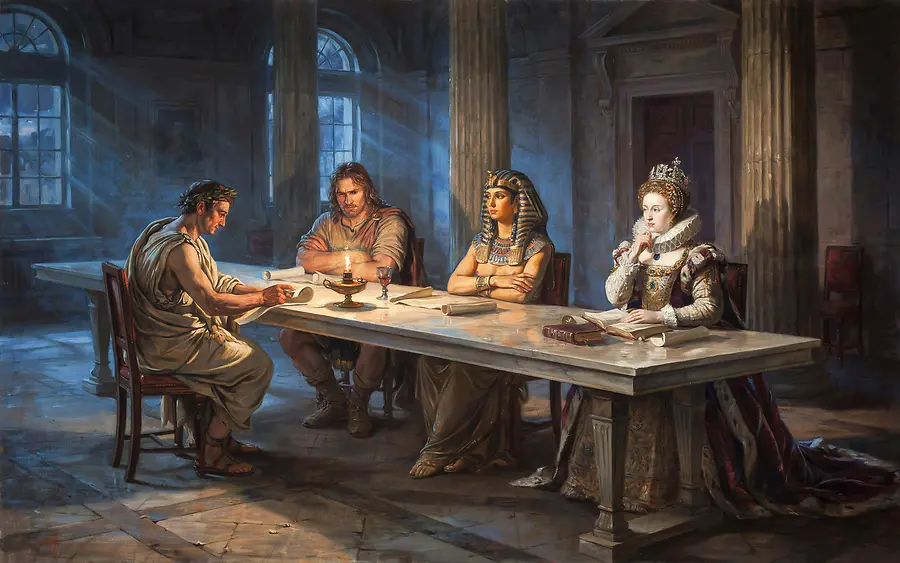
The Questions We Ask When We Step Into Our Power
My loves,
Today, I want to speak a little more directly to the women reading this, although I hope everyone who finds themselves here will stay with me for a moment.
Because the truth is, what we're about to talk about isn't exclusively a woman's experience.
It's a human one.
Men experience it.
Women experience it.
Leaders experience it.
Artists experience it.
Researchers experience it.
Anyone who has ever stepped into a place where their voice began carrying a little further than it once did has likely felt some version of this ancient tension.
The difference is simply how that tension is experienced, how it is expressed, and sometimes how society responds to it.
Throughout history, influential women have often spoken about these struggles in deeply personal ways, but if we're honest, these questions belong to all of us.
So let's sit with them together.
Because I have a feeling some of these questions have quietly visited you too.
Am I Too Confident?
My loves...
Your confidence is not an excess.
It is part of who you are.
Sometimes what makes other people uncomfortable isn't your confidence at all.
Sometimes it's that your certainty shines a light on places within themselves where they haven't fully stepped into their own confidence yet.
That doesn't make your confidence wrong.
It simply makes it visible.
One of the women who understood this deeply was Cleopatra.
History often remembers her through stories of beauty and romance.
But beneath those stories was an extraordinary scholar.
She spoke multiple languages.
She studied astronomy.
She studied mathematics.
She ruled through strategy and intellect.
Yet even someone like Cleopatra understood that not everyone was ready to receive every part of who she was.
She revealed different parts of herself depending on who stood before her.
Not because she lacked authenticity...
...but because wisdom recognizes that people can only receive what they are prepared to understand.
Am I Intimidating?
This is one I hear often.
But I wonder if we've been asking the wrong question.
Maybe the better question is:
What exactly is creating the feeling of intimidation?
Because authentic strength isn't naturally intimidating.
Sometimes what feels intimidating is simply the contrast between someone living honestly and someone still wearing masks they have never been given permission to remove.
Elizabeth I understood this tension perhaps better than almost anyone.
The world knew the image of the Virgin Queen.
But behind that carefully constructed public identity was a woman carrying enormous responsibility while privately questioning herself.
History remembers the crown.
It doesn't always remember the weight beneath it.
Many leaders throughout history have wrestled with the same question:
How do I remain strong...
without losing my humanity?
How do I lead...
while still remaining connected?
Do I Need to Soften What I'm Saying?
This question isn't really about communication.
It's about permission.
Permission to allow your voice to exist without apologizing for it.
There are moments when wisdom asks us to adjust our delivery.
But adjusting our delivery is very different from abandoning our truth.
Julius Caesar understood the importance of communication as he navigated the Roman Senate.
His ideas often challenged long-established structures.
Publicly, he understood that even significant change required thoughtful communication.
Privately, leaders throughout history have often struggled with the tension between saying what needs to be said and saying it in a way others can receive.
That tension isn't unique to history.
Many of us still feel it today.
How much of myself can I reveal?
How much should I hold back?
How much truth can people receive before they stop hearing me altogether?
Will People Reject Me If I'm Direct?
My loves...
Some people will.
And that isn't always a tragedy.
Sometimes rejection isn't punishment.
Sometimes it's simply direction.
Throughout history, many change-makers discovered that challenging existing systems often meant losing support from those who preferred the familiar.
They faced criticism.
They faced resistance.
They faced moments when continuing forward meant walking without everyone's approval.
How many of us have stood in that exact place?
Not knowing whether to preserve comfort...
or answer what feels deeply true?
Moving Beyond This Ancient Tension
Here's what I find fascinating.
When we study influential people throughout history, it's easy to believe they were wrestling with different problems.
But they weren't.
They were asking many of the same questions we still ask ourselves today.
Am I too much?
Am I enough?
Should I hide this part of myself?
Should I become smaller so others feel more comfortable?
What if they misunderstand me?
What if they leave?
The interesting part isn't that these questions exist.
It's that they have survived across centuries.
Perhaps that tells us something.
Perhaps this isn't a flaw in humanity.
Perhaps it's part of becoming fully ourselves.
For me, the answer has never been choosing between competence and connection.
Or confidence and kindness.
Or strength and compassion.
I've come to believe that wholeness asks something entirely different of us.
It asks us to stop believing we must separate ourselves into acceptable pieces.
Instead...
it invites us to become integrated.
Like Cleopatra, we can practice discernment without abandoning authenticity.
Like Elizabeth, we can carry responsibility while remembering our humanity.
Like the leaders who came before us, we can understand that delivery matters without silencing conviction.
We can accept that not everyone will walk beside us and continue walking anyway.
Because confidence doesn't have to erase compassion.
Strength doesn't have to eliminate gentleness.
Directness doesn't have to remove kindness.
They were never opposites.
Only parts of the same whole.
So maybe the question isn't whether you're too confident...
or too direct...
or too visible.
Maybe the question is this:
What would happen if you stopped trying to become more acceptable... and simply became more whole?
I have a feeling that's where the real journey begins.
Until next time, my loves.
Love,
Silvia ❤️


