
The Woman Behind the Title: Leading Through Self-Doubt
From Survivor to Leader: Finding Courage When You Don't Feel Ready

I am a... vice president. What in the world? Even writing those words feels strange. There are days when I walk into a meeting, make difficult decisions, lead a team, or stand in front of a room full of people, and a quiet voice inside me asks, "Who do you think you are?"
That voice has followed me for much of my life. I am a survivor of abuse. I have struggled with depression, anxiety, and the kind of self-doubt that can make even the smallest decisions feel overwhelming. I know what it feels like to question your worth, to wonder whether your voice matters, and to carry experiences that other people cannot see.
And yet, here I am.
Today, I serve as a Regional Vice President for Girl Scouts of Texas Oklahoma Plains. I lead people, navigate challenges, make decisions, and help create opportunities for the next generation of young women.
But the title hasn't magically erased the insecurities.
Imposter syndrome doesn't disappear when someone hands you a leadership position.
Sometimes, it gets louder. I am naturally shy. I am not the person who instinctively wants to grab a microphone or command a room. Yet my position requires me to speak at events, represent an organization, and confidently communicate with people who may have far more experience than I do.
Sometimes my heart races before I speak. Sometimes I replay conversations afterward, wondering whether I sounded intelligent enough, confident enough, or worthy of the position I hold.
But perhaps one of my greatest challenges has been learning how to require respect without losing the parts of myself that make me who I am.
I am a kind person. I care deeply about others. I want people to feel heard, appreciated, and supported. But I've learned that kindness can sometimes be mistaken for weakness, and being naturally quiet can lead others to underestimate your abilities.
For someone with my past, this becomes even more complicated.
When you've experienced abuse, standing up for yourself doesn't always come naturally. You can spend years learning to keep the peace, avoid conflict, and question whether your own feelings and opinions deserve space.
Then one day, you find yourself in a leadership position where you're expected to make decisions, establish boundaries, and confidently advocate for what you believe is right.
How do you become the authority in the room when you've spent so much of your life questioning your own voice?
That is something I am still figuring out.
I am learning that I can be kind without being a pushover, compassionate without being a people-pleaser, and confident without being the loudest person in the room.
I am also learning that not everyone has to agree with me, like my decisions, or approve of my leadership for me to be effective.
I don't have to become someone else to be a strong leader.
My experiences have shaped the way I lead. I understand that people carry invisible struggles. I know that confidence doesn't always come naturally and that encouragement can change someone's entire day.
I want the people I lead to feel valued, supported, and capable of more than they believe possible. Perhaps that desire comes from knowing what it feels like to need someone to believe in you.
I wish I could say that reaching this point in my career means I have conquered depression, anxiety, and self-doubt. I haven't. Some days are still hard. Some days I question everything.
But I am beginning to understand something important.
Courage isn't the absence of fear. Sometimes courage is simply showing up while you're still afraid.
It's speaking into the microphone with trembling hands. It's making the difficult decision when you're worried about being judged. It's accepting a leadership opportunity even when you don't feel completely ready.
And sometimes, it's looking in the mirror and reminding yourself that the woman staring back has survived things she once thought would break her.
I am still learning. Still healing. Still growing into the leader I want to become.
I don't share my story because I have everything figured out. I share it because somewhere there is another woman who is quietly questioning whether she is good enough.
Maybe she is recovering from a painful past. Maybe she is struggling with her mental health. Maybe she has been given an opportunity she doesn't believe she deserves.
To that woman, I want to say this:
You do not have to be the loudest woman in the room to have something worth saying.
You do not have to have a perfect past to build a meaningful future.
And you do not have to feel confident every single day to be capable of extraordinary things.
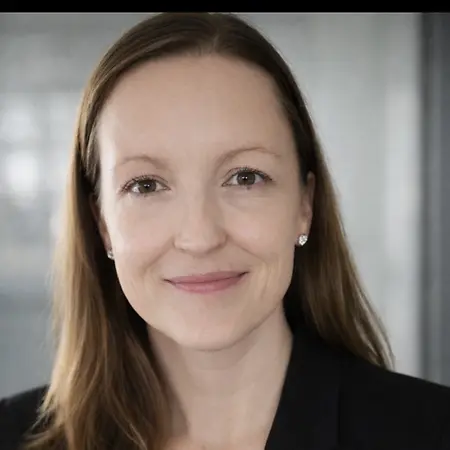
Carrie McEntyre is Regional Vice President for Girl Scouts of Texas Oklahoma Plains with nearly two decades of nonprofit and Girl Scout experience since 2007. She has held progressively responsible positions in girl programming, outdoor education, and mission delivery across multiple councils. McEntyre holds a B.S. in Biblical and Educational Studies and an M.S. in Nonprofit Management from Liberty University, and…





