Under-resourced University of Tampa Student Evacuation Experiences during Hurricane Milton
Many under resourced out-of-state UTampa residents had negative evacuation experiences due to their claimed lack of communication and help from the school.

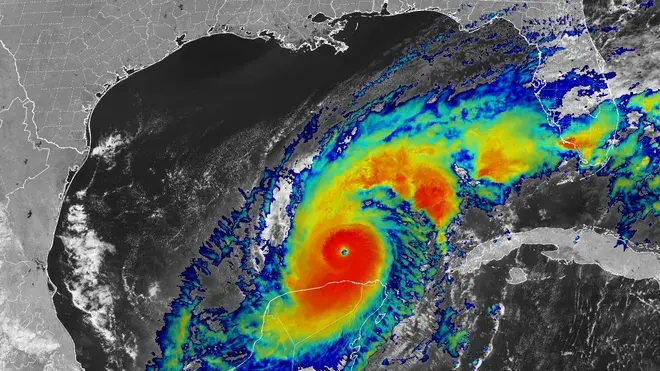
In early October of 2024, a category five hurricane, described as “The most intense Atlantic hurricane ever recorded over the Gulf of Mexico,” devastated Florida. Mandatory evacuations were in place for the Gulf Coast and parts of the Atlantic Coast.
Before the storm’s landfall, The City of Tampa reported on their website that mandatory evacuations were in place for Zones A and B, particularly in flood zones and coastal regions. The University of Tampa, located in Downtown Tampa, was in evacuation zone A.
Hurricane Milton made history at The University of Tampa.

University of Tampa during Hurricane Milton
Eric Cardenas, Assistant Vice President of Communications and Public Affairs, The University of Tampa shared, “Milton was the first time we totally evacuated campus, like even... Campus safety and faculty.”

Eric Cardenas Assistant Vice President of Communications and Public Affairs, The University of Tampa
Chaos was unleashed upon Tampa, and those who lacked the proper resources to evacuate suffered the most, specifically residents at The University of Tampa who reside out-of-state.
The last minute warning for immediate evacuation from the university disproportionately affected these Spartans.Underresourced out-of-state campus residents heavily rely on school alerts for their own safety in times of crisis and the school formulates their emergency messaging based upon the orders of Hillsborough County, creating an unavoidable lag.
Many students felt unsafe, anxious and scared during this event. They raced to fly back home being that they had no car or loved ones nearby. Under-resourced Spartans faced many challenges while evacuating.
Many UTampa residents were upset with the school’s crisis communication and felt unheard by campus faculty and staff during this event. They hope for an improved evacuation plan and communication for future hurricanes.
Finances and timely communication were some of the major challenges regarding student evacuation. UTampa Senior Vanessa Monniello lived on campus during Milton and had a negative experience.

Vanessa Moniello, UTampa Senior
“I evacuated back home to Long Island. Getting kicked off at the very last minute was very stressful. It made me feel uneasy to put a lot of stress on my transportation and you know financially as well. You can't plan for it… the tickets skyrocketed because everyone's just buying them last minute so regular $200 tickets back home were $1000,” Vanessa shared.
Vanessa feels her evacuation could have run smoother with clearer communication from UTampa. She emphasizes, “I was honestly disappointed with how the school handled it because we put our trust in them to tell us, keep us updated and be really transparent, but giving last-minute notice was really upsetting because it left all of us scrambling.”
The Minaret echoes Vanessa’s opinion, “Due to how fast the storm was approaching, many students were unable to book flights in advance. If UTampa notified students even a few days in advance that there was a strong chance they would close the school, then I feel that students wouldn’t have had an issue with the evacuation process.”
UTampa ROTC campus resident Jaden Workman wasn’t able to evacuate back home to Ohio due to the same financial reasons Vanessa faced (although she was able to fly home).
“The flights that Workman found cost $300, which had risen from its usual cost of $180 for a round-trip flight to Cleveland — an increasing trend that appeared in the cost of flights heading out of Tampa, despite airlines’ claims against the allegations,” The Daily Gamecock reported.
According to Boston 25 News, Maximus Mattuchio, a Junior at the University of Tampa, was fortunately able to evacuate from his dorm but hit road blocks on the way.
“With limited flights out of Tampa over the weekend, he drove with a friend and battled traffic to Orlando. He waited 12 hours to board a flight that arrived in Boston early Tuesday morning.”
Mattuchio’s mom emphasizes, “He was one of the last flights out on Monday night…We’re the lucky ones compared to everyone else.”
There are positive UTampa resident evacuation stories as well. UTampa Junior Jane Burns, who lived in Straz Hall during this event, had a smooth sailing evacuation process.

Jane Burns, UTampa Junior
She said, “We packed up our bags and we left within 24 hours of the announcement.”
Jane fortunately had a friend who lived an hour away from campus in Venice Beach, FL. She and her roommates evacuated together and made a vacation out of the event.
She expressed, “Tampa does a good job of warning the students. I'm definitely lucky. We were fine.”
The Oracle reported that 145 University of South Florida students evacuated with a small group of Tampa Spartans.They luckily seeked shelter at Jennings Middle School.
Medeiros De Campos, a Mass Communications major at USF, said, “I felt very safe and I knew everyone there was going through the same experience…It was like a community.”
Medeiros made her experience fun by evacuating with six of her friends.
One of her friends, Helena Gitotto, evacuated with Mederios.
She also enjoyed her experience, “I think that the staff there was so important to make us feel calm during the hurricane because everyone was so nice and positive. So, I think being with them was really, really calming.”
Despite student feelings and the lingering chaos during Hurricane Milton, the emergency communications team of UTampa tries their best to prioritize Spartan safety. It’s difficult to balance convenient evacuation processes with timeliness.
Eric expressed, “Yeah, that's really difficult because we don't want to create, you know, havoc.We don't want people all of a sudden getting scared if there's no need for that. It's always unpredictable how the hurricanes are going to affect us each year.”
Sarah Hart, Director of Residence Life, The University of Tampa added, “We want to communicate and be proactive, but we're also in a situation where we want to focus on the necessity and not always the, that might mean that we're not doing the same level of service or convenience. It doesn't mean that we're not going to make every effort, but we're trying to address the emergency.”

Sarah Hart, Director of Residence Life, The University of Tampa
The days leading up to the storm, the emergency communications team follows a particular hurricane matrix. They aim to remain steady despite the unpredictability of the storm.
Eric explained, “We kind of start putting that matrix in place, making sure the community knows we're monitoring it and then just after that, we continually update that letting people know if they need to do anything or our classes are cancelled or if we need to evacuate campus. So we may be communicating two or three times a day with that information. But it's always unpredictable how the hurricanes are going to affect us each year. We always meet in the summer to kind of go over the emergencies in general. So we're always trying to improve that process of communicating.”
His team follows orders from Hillsborough County in times of crisis.
Eric said, “We have a very close relationship with those people and departments, so they can help us communicate what we need to to students and faculty and staff.”
Sarah added, “Once a hurricane has been announced in the area, I'm actually a part of the university community meetings to an extent. And my role in that is that I'm interpreting what the university is planning to do and then crafting messages that are ultimately approved by the university that can go out to our residential students. Again, sometimes that requires waiting because we have to wait for Hillsborough County to ultimately make the decision on if we're going to be asked to evacuate, but also they're staging their shelters locally.”
Timely communication creates best-practice guidance; the number of UTAlert texts and emails sent to campus during and leading up to Hurricane Milton was minimal.
Students received two emails from UTAlert on Oct, 6 2024. One was sent at 9:30am and the other at 5:45pm. Milton was a forming tropical storm on this day.The emergency communications team was making students aware that they’re monitoring the severity of Milton.
The email urged for students to have preliminary evacuation plans in case Milton turns into a hurricane. Links regarding hurricane preparation help were provided.
The second email was sent following Milton’s hurricane transformation.
It read, “The Hillsborough County Emergency Operations Center may call for mandatory evacuations starting as early as tomorrow. If an evacuation is ordered, residence halls will close Tuesday, Oct. 8 at 9 a.m. We encourage students to begin making evacuation plans.”
On Oct, 7 2024 at 6pm, UT Alert ordered all Spartans to evacuate in 12 hours time. This struck panic in students, specifically ones from out-of-state since time was not on their side, along with flights being expensive and limited.
The email said, “The Hillsborough County Emergency Operations Center called for a mandatory evacuation of Evacuation Zones A and B earlier today.The evacuation is currently in effect for all UTampa academic, administrative and athletic facilities, and campus access is restricted. The University is working to evacuate all residential students by 6 a.m. tomorrow.”

One email was sent on Oct, 8 2024 at 1pm updating students on Milton.
It announced that the storm surge called for the closing and evacuation of campus. It also informed recipients that the university will be closed through that Friday, and it’ll reopen upon Hillsborough County’s order. Students and staff will be notified as soon as they’re given the okay to reopen and it’s safe to do so.
The next email read that classes will be cancelled until Monday and any changes or updates will be communicated along the way.
It also said, “We urge students, staff and faculty to check the UTampa website, social media and the local media for updates.You may also want to follow conditions on campus using UTampa’s weather station page or webcams.Updates will resume after the storm passes and campus has been initially assessed.”
A final email was sent on Oct, 11 2024 at 10am informing students to return back to campus starting Sunday, Oct, 13.

Only one text message was sent following Hurricane Milton’s passing, urging students to check their emails for post-storm resources.

Like Maximus, students chose to evacuate as soon as the preliminary possible evacuation notice was sent through UTAlert email; avoiding any chaos of the days before the storm such as traffic, ticket price increase and shortage.
Others left following the mandatory evacuation notice from the school; including Vanessa and Jane.Vanessa scrambled for plane tickets back home when Jane drove straight to Venice in a quick and smooth manner.
The remaining students stayed in the Tampa area after the evacuation announcement was made; some facing challenges on the way.They evacuated to hurricane proofed shelters such as Jaden’s ROTC connection and USF and Tampa Spartans found safety at a local middle school.
The number of school text messages versus emails sent to students is lacking although young adults tend to check their texts more often since emails can be easily missed or lost.
This alert system has the potential to be effective, but some aspects such as the emails, can be further adjusted to serve the Gen-Z population to create a smooth evacuation process for all Spartans. One way can be to repeat these alerts multiple times a day through social media and text messages.
Another potential solution is the announcing of each hurricane update through a PA system that blasts all throughout campus. Any audio playing, including inside classrooms, would be interrupted to bring every person’s attention to the information presented. This can keep everyone in the loop.
Along with the UTAlert systems, the UTampa emergency communications team works closely with campus Residence Life to keep students informed and safe during natural disasters.
Sarah said, “When our students are filling out their housing application, we also ask them to identify their hurricane evacuation plan.”
This evacuation plan is mentioned in the UT Alert emails. ResLife tries to prioritize reliable, steady and timely communication just as the emergency communications team does.
Repeatedly voicing the need for a pre-planned evacuation to students is vital to ensure smooth evacuations for everyone. As the UTAlert emails can easily get lost, ResLife notices can too. A potential improvement would be to remind students consistently through social media and text messages; just like the improvements for Eric’s team.
Sarah explained, “For Hurricane Milton specifically, we do have staff meetings so that our RAs are on the same page and that our information is consistent. We have emails that go out to all of our residential students. And one of those emails includes information about a Zoom meeting for students so that they also can have their questions answered by a member of our team. It's also recorded so that if students can't get to it, they also have an ability to access that recording so that we're trying again to be able to get to as many as we can.”
Making this zoom meeting mandatory and in-person for residents can strengthen future evacuation plans.To help further, ResLife members can drop-in as guest lecturers in classes to inform students of the school’s hurricane resources along with a workshop on formulating a solid evacuation plan.
Parental involvement and communication is also a key factor in proper hurricane preparedness. Some students may scramble for a last minute evacuation plan due to not using their parents as a resource. Many students look up to their parents. So, if they urge their children to take hurricane preparedness seriously, evacuation can become easy for all.
Sarah emphasized, “We also send out what we call a campus ESP message, which is a message to parents that says,‘Hey, your student was given information on the Zoom meeting’, so parents can also attend that.”
Hurricanes are unpredictable which can lead to last-minute evacuation plans. Failed student experiences serve as lessons for the next crisis. Negative experiences can be improved for the future by having preliminary plans in place in advance, checking in with ResLife, continually checking for UTAlerts via text message or email, and keeping parents involved.
For Eric and Sarah, their communication can be improved through accessible emergency messages such as campus-wide PA alert systems, texts and social media apps like Instagram and Tiktok. Hurricane resources and preparedness tips should repeatedly be mentioned to students in classes and around campus. Any ResLife evacuation-related meeting should be required for each resident to attend. All of these factors will aid both UTampa staff and students to a successful evacuation experience.
Sarah ends by saying, “Know your plan. And your plan should have different dimensions, thinking about multiple hurricanes and finances and family.”
For more information regarding Hurricane Milton, emergency communication techniques and hurricane preparedness, refer to UTampa’s website and The National Weather Service website.


