Understanding Airlines, Part I
Understanding Legacy Carriers, Low-Cost Airlines, and the Global Aviation Landscape

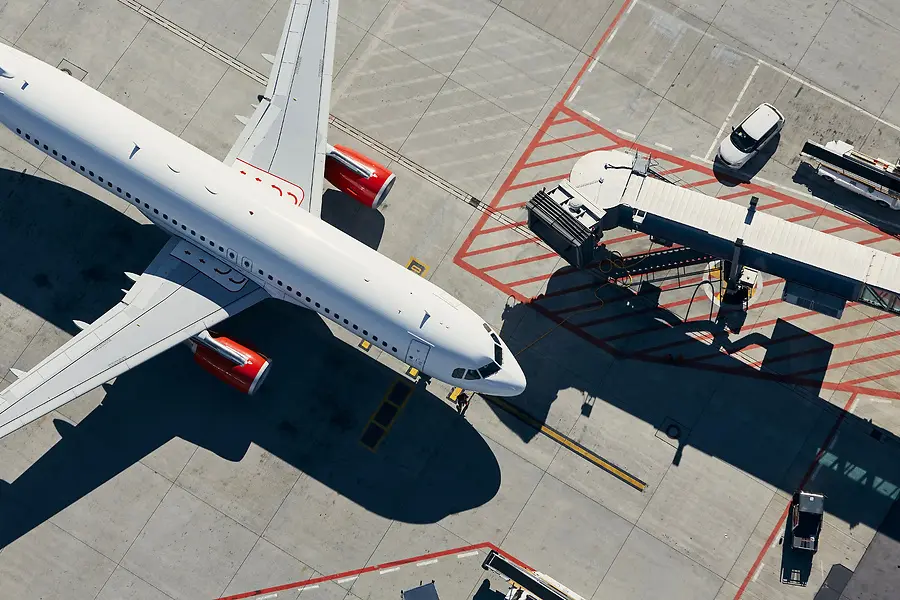
The last time we covered hotels and the broader hotel industry, this time, as promised, we are exploring the aviation sector globally, just as we did with hotels.
What Is a Legacy Carrier?
First, let's answer the question we've all heard: what on earth is a legacy carrier? To put it simply, "legacy carriers" are airlines that carry a country's legacy and national identity with them, much like flag carriers.
What Is a Flag Carrier?
Now, let's define a flag carrier. By today's standards, an airline doesn't need to be government-owned to be a flag carrier, which makes it more akin to a legacy carrier. Not that there is anything "simple" about a legacy carrier. Instead, it is defined by three main characteristics; the primary characteristic we'll start with is international representation: a given airline is the primary carrier representing its home country on the global stage. It often features national colors or a flag on its tail, also known as the livery.
By government designation and through history, these airlines were granted "preferential rights" for international routes. In many countries, even if the airline is now private, it remains the designated carrier for bilateral treaties-agreements between two countries on how many flights can operate between them.
In terms of national identity, legacy carriers are often seen as "too big to fail" because they are vital to the country's economy, tourism, and emergency logistics, such as repatriation flights.
LCCs and ULCCs
On the other side of the metaphorical coin are LCCs, or Low-Cost Carriers, and the more extreme version, ULCCs, or Ultra-Low-Cost Carriers. These airlines are notoriously famous (or infamous) for offering a "no-frills" experience.
The LCC concept works overall in Asian markets (AirAsia, Scoot, Peach, Air Japan, ZipAir, and more, seemingly every other year) and European markets (Ryanair, easyJet) compared to the "cattle-like" experience in the U.S. aviation market with airlines like Spirit and Frontier. Why? This concept works well in Europe and Asia primarily because no destination is more than two hours from the departure point.
That being said, AirAsia founded AirAsia X for long-haul international travel, but they are upfront about what passengers can expect: a seat, a thin cushion, and a buy-onboard menu for food. Scoot, while offering some long-haul service, plays a psychological role under its parent, Singapore Airlines. They offer a purposely low-quality service and hard product while advertising the "grown-up" luxurious Singapore Airlines model, funneling people toward SIA (Singapore Airlines IATA code). This is necessary, as Singapore is a city-state with zero domestic air travel, forcing them to corner a diverse portfolio of customers. Scoot is branded and marketed as a quirky, fun, youthful, hip airline (these are actual branding phrases from Scoot's marketing department), while Singapore Airlines maintains its haute couture feel, sophisticated brand appeal, and mature soft- and hard-product.
Most European LCCs do not offer long-haul international travel; only two exceptions come to mind. IAG-owned (International Airlines Group, the parent company of UK flag carrier British Airways, Spanish flag carrier Iberia Airlines, and Irish flag carrier Aer Lingus) Vueling, a low-cost subsidiary of IAG based in Spain, and French Bee, a specialized low-cost long-haul airline headquartered at Orly Airport just outside Paris, operating a fleet of specially configured Airbus A350 long-haul aircraft.
This covers only three out of five major classifications of airlines: flag, legacy, and LCCs.
The United States Is a Bit Different
Since the passage of the Airline Deregulation Act by Congress in 1978, the U.S. has no flag carrier, though it does have three legacy carriers: United, Delta, and American (though American is losing its legacy status-a story for another time).
At the same time, this act led to "open skies" and the development of numerous smaller airlines, such as Alaska, Hawaiian (now completing a merger), Southwest (another story for another time), JetBlue (now in a partnership with United to prevent bankruptcy), Sun Country, and Allegiant (now in a merger, with Allegiant currently owning the naming rights to the Raiders stadium in Las Vegas, hence Allegiant Stadium on the Strip).
Next time, we'll delve into the final two types of airlines: standard bearers and luxury-only carriers.
Remember, you can learn more by subscribing to Brooke In The Air Travel at brookeintheairtravel.net!