Unlocking Potential: Why Inclusive Education Is the Foundation of Educational Excellence
Transforming Educational Systems to Recognize and Nurture the Potential in Every Learner

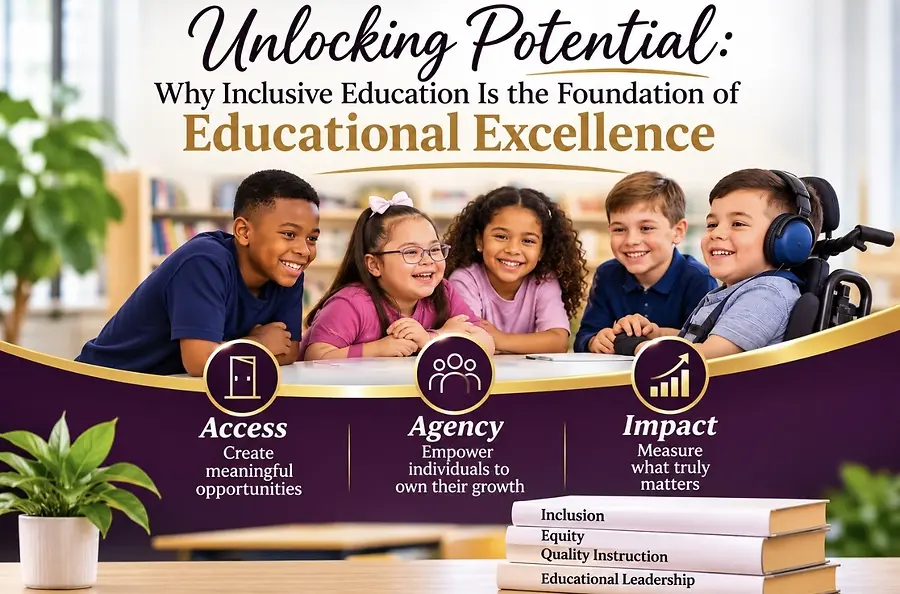
Every student enters a classroom with potential. The question is whether the educational systems we create are designed to recognize, nurture, and unlock that potential. As an educational leader, author, advocate, mother of nine, and grandmother of three, I have come to appreciate the profound significance of individuality. No two individuals learn, develop, communicate, or experience the world in exactly the same way. Yet, educational systems often expect students to demonstrate success within structures that were not intentionally designed to accommodate their differences.
This raises an important question: Are we preparing students to succeed within existing systems, or are we preparing our systems to support the success of every student? The distinction is fundamental to the future of education.
Redefining What Educational Excellence Means
For far too long, inclusion has been viewed as a specialized initiative rather than an essential component of quality education. Conversations about inclusive practices have frequently been confined to special education departments, individualized education programs, and discussions surrounding classroom placement. However, inclusion is not simply about where students receive instruction. It is about the quality of the instruction they receive, the opportunities available to them, the relationships they develop, and their ability to participate meaningfully in their educational experiences.
A student can be physically present in a classroom without being academically engaged, socially connected, or appropriately challenged. Presence alone does not constitute inclusion. True educational excellence requires us to create environments where learner variability is anticipated rather than treated as an exception. It requires educators to recognize that differences in ability, background, language, experience, and learning needs are not obstacles to effective instruction. Instead, they are opportunities to strengthen instructional design and expand our understanding of how students learn.
Quality instruction should never be a privilege determined by a student's educational label, disability status, or socioeconomic circumstances. It should be a fundamental expectation for every learner.
Moving Beyond Compliance Toward Meaningful Outcomes
Educational systems are often driven by accountability measures, regulatory requirements, performance indicators, and procedural expectations. Although these structures serve important purposes, they cannot independently guarantee meaningful learning. Compliance should be the foundation of educational excellence, not its ceiling. We must be willing to ask deeper questions. Are students developing transferable skills? Are they becoming more independent? Are they meaningfully engaged in rigorous learning experiences? Are educators equipped to respond effectively to diverse instructional needs? Are families recognized as valued partners?
These questions shift the conversation from whether educational requirements have been satisfied to whether educational experiences are genuinely improving lives. The greatest opportunity for educational leaders is to bridge the gap between policy, research, and classroom practice. This requires intentional collaboration, effective professional development, evidence-based instructional strategies, and a commitment to continuous improvement. Rather than simply asking educators to do more, we must build systems that empower them to do their work more effectively.
Access, Agency, and Impact: A Framework for Transformation
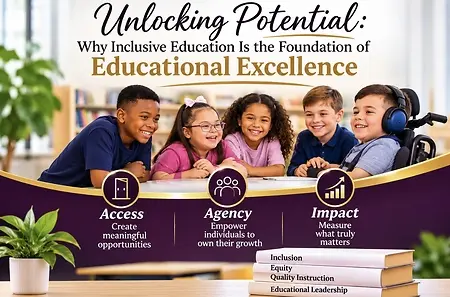
My philosophy of educational leadership is grounded in three foundational principles: Access, Agency, and Impact.
Access: Creating Meaningful Opportunities
Access extends beyond opening classroom doors. It involves removing barriers that prevent individuals from fully participating in educational experiences. Meaningful access requires intentional instructional design, accessible learning materials, appropriate supports, flexible teaching practices, and high expectations for all students. Equity does not mean providing everyone with identical resources. It means recognizing individual needs and ensuring that each person has the opportunities and support necessary to succeed.
When we design instruction with diverse learners in mind from the beginning, we create stronger learning environments for everyone.
Agency: Empowering Individuals to Own Their Growth
Education should not simply prepare students to follow directions or demonstrate mastery on assessments. It should empower them to think critically, make informed decisions, advocate for themselves, and actively participate in shaping their futures. Agency is equally important for educators. Teachers must be recognized as knowledgeable professionals capable of making informed instructional decisions, contributing to systemic improvement, and influencing educational outcomes.
Empowerment requires more than encouragement. It requires trust, resources, meaningful opportunities, and environments where individuals feel safe to innovate, reflect, and grow. When people develop a sense of ownership over learning and professional experiences, they become active contributors rather than passive participants.
Impact: Measuring What Truly Matters
Impact challenges us to look beyond intentions and evaluate outcomes. It is not enough to implement programs, conduct professional development, or introduce new initiatives. We must examine whether those efforts are producing meaningful improvements in instructional quality, student achievement, engagement, independence, and overall educational experiences. Effective leadership requires the willingness to reflect, adapt, and acknowledge when existing practices are not producing the desired results. Transformation occurs when our actions consistently align with our purpose.
Leadership Begins With Collective Responsibility
One of the most significant barriers to inclusive education is the fragmentation of responsibility. When students are viewed as belonging exclusively to particular teachers, departments, or programs, educational systems risk creating unnecessary divisions that limit collaboration and weaken instructional continuity.
Every student is everyone's responsibility.
General education teachers, special education professionals, instructional leaders, administrators, families, and community partners each contribute to the educational experience. Their collective knowledge and expertise should work together to support student success. Educational leaders must cultivate environments where collaboration is embedded into professional practice rather than treated as an additional responsibility. This means protecting time for meaningful collaboration, investing in educator development, encouraging reflective practices, and ensuring that instructional decisions remain centered on student needs.
The strength of an educational system is not determined solely by the accomplishments of individual professionals. It is determined by how effectively those professionals work together to create opportunities for every learner.
The Power of Recognizing Individual Potential
My experiences as a mother of nine and grandmother of three have reinforced my appreciation for individuality, perseverance, adaptability, and the importance of recognizing potential in others. Motherhood and educational leadership share a powerful lesson: supporting someone's growth requires understanding who they are rather than expecting them to conform to who we believe they should be.
Every individual has strengths, aspirations, challenges, and a unique path toward success. Our responsibility as leaders, educators, parents, and mentors is not to impose limitations based on perceived differences. It is to create conditions that allow individuals to discover their abilities, develop confidence, and pursue meaningful opportunities. This belief extends beyond education. It applies to workplaces, communities, families, and leadership spaces. When we recognize human potential rather than focusing exclusively on perceived limitations, we change the way we lead, communicate, teach, and serve.
Women as Architects of Meaningful Change
As women, we often navigate multiple responsibilities while pursuing personal aspirations, professional advancement, and opportunities to serve others. Our experiences can provide valuable perspectives on leadership, adaptability, advocacy, and transformation. However, women must also recognize that influence does not require sacrificing our identities, ambitions, or well-being. Leadership is not reserved for those who occupy executive positions. It begins with the courage to use our voices, challenge ineffective practices, advocate for meaningful change, and create opportunities for others.
Whether we are leading classrooms, organizations, businesses, communities, or families, we possess the ability to shape environments that either reinforce limitations or expand possibilities. The true measure of influence is not simply how far we advance individually, but what becomes possible for others because of our leadership.
Building a Legacy of Educational Transformation
The future of education requires more than new initiatives, emerging technologies, or revised policies. It requires a fundamental commitment to recognizing the value and potential of every learner. We must move from reactive practices to proactive instructional design, from isolated responsibilities to collective ownership, and from measuring participation alone to evaluating meaningful progress.
Educational excellence and inclusion are not competing priorities. Inclusion is an essential component of educational excellence. My mission, Empowering Educators. Transforming Lives., reflects my belief that sustainable educational transformation begins with investing in people. When educators are empowered, instructional practices improve and opportunities expand. When opportunities expand, lives can be transformed.
Ultimately, unlocking potential is not about changing individuals to fit existing systems. It is about transforming systems so that individuals have the opportunity to become everything they are capable of becoming. That is the kind of leadership I believe in. That is the kind of influence I strive to create. And that is the legacy I hope to leave for my children, grandchildren, and generations of learners to come.

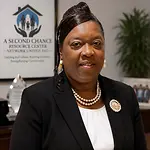
Dr. Lora H. Kennedy is an accomplished educational leader, author, speaker, advocate, and proud mother of nine children and grandmother of three. She is dedicated to empowering educators, advancing inclusive education, and transforming educational outcomes. With a professional background spanning school administration, instructional leadership, special education, and professional development, she brings a…