We are the Peri-Menopause Pioneers
Taking control of perimenopause: why your quality of life matters more than outdated medical standards.

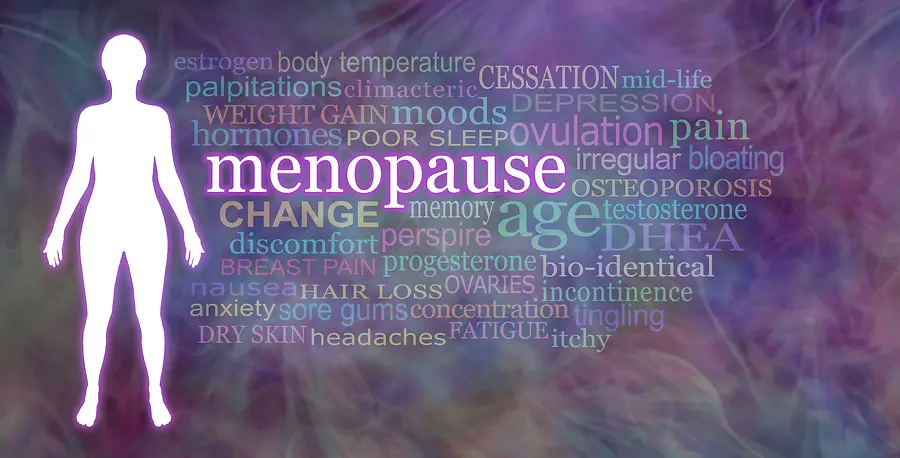
Perimenopause has been swept under the rug for far too long—much like mental health conversations in this country. Every woman will face it eventually, but for women who are building careers, leading teams, and showing up every day at full capacity, it can quietly become an Achilles' heel. Symptoms vary widely and shift over time, but the ones I hear most consistently from my circle of successful, badass women are the same two: plummeting energy levels and weight that seems to appear out of nowhere and refuse to leave.
Many of us think we have to white-knuckle this journey because our mothers did. But let's put that into perspective—our moms raised us without smartphones, Wi-Fi, or iPads. Nobody is suggesting we go back to brick phones and AOL dial-up just because that's how they survived. So why are we still accepting a standard of women's healthcare that hasn't evolved much further?
We deserve to take full advantage of the latest advancements in medicine as a reward for surviving encyclopedias and screeching dial-up internet. There are prescriptions, supplements, and creams that meaningfully relieve mood swings, hot flashes, and sleep disturbances. Yes, you too can be released from menopausal purgatory.
I slipped into perimenopause in my late 30s. I wasn't sleeping well, and by 5:00 a.m. I was drenching my pajamas in sweat—in the middle of an Alaskan winter, with temperatures remaining below zero for weeks at a time. I was wearing a light fleece while everyone else bundled up. At work, I'd climb a single flight of stairs to reach my office and arrive at my cubicle sweating as though I'd just finished a Zumba class.
On top of the sleepless nights and living inside what felt like my own personal Swedish sauna, I had gained a significant amount of weight. I told myself it was COVID, staying home, and the disruption of my normal routine—but the weight kept accumulating long after life returned to normal.
When I found myself distraught over buying larger clothes and seeing a number on the scale I'd never seen before, I finally said, "Okay. I need to talk to someone about this."
I sought out a women's health-focused functional medicine practice because my mom had a positive experience there. My previous encounters with traditional OB/GYN offices had felt frustratingly stuck in the past. We are out here inventing self-driving cars—why do my women's health appointments still feel like relics from another era?
I needed someone who would be proactive, willing to think outside the standard protocol, and, most importantly, willing to listen instead of simply handing me a prescription and showing me the door.
I found my medical magician.
She took detailed notes, printed research articles, and delivered the news gently but clearly: I had entered perimenopause. I was exhausted and anxious, battling major brain fog, struggling with depression, and literally burning up from the inside multiple times a day.
She prescribed a low dose of thyroid medication—thyroid issues run in my family—and added progesterone. For the first time in a long time, I felt genuinely heard. Within the first week, I was sleeping through the night again. My internal thermostat had turned down from a raging boil to a slow, manageable simmer.
It felt like coming back to myself.
(Worth noting: not all progesterone has to be taken orally. I have friends who swear by yam cream and other topical options that effectively ease their symptoms—options worth exploring with your healthcare provider.)
For a few years, I coasted comfortably on progesterone. Then I hit a wall.
The brain fog crept back. My energy tanked. My cycle became unpredictable.
The trouble was that my next annual appointment was months away, and all my recent bloodwork had come back "normal."
Normal.
Yet I felt anything but.
And when you don't have the energy to work out or prepare healthy meals, the weight cycle becomes vicious. "I guess I'll order takeout and eat it in bed again tonight" stops being a treat and starts becoming survival mode.
One night, while scrolling through my phone, I stumbled across a webinar hosted by a female physician specializing in perimenopause. She explained what I had been missing: the conversation isn't just about progesterone. It's about estrogen, testosterone, and the full hormonal picture. All of it needs to be in balance for you to feel like yourself again.
She had built an online wellness program offering hormone replacement therapy (HRT) through a whole-body, integrative approach, using bioidentical topical creams free from harsh chemical additives, mail-in saliva testing, and virtual appointments to adjust treatment protocols as needed.
No waiting rooms.
No outdated intake processes.
Just accessible, personalized care delivered to your door.
Not every medical provider agrees with HRT, including my own primary practitioner, whose specialty is thyroid health and who believes topical hormone creams are ineffective. That's how I originally found her.
But I am a believer.
The growing body of research supporting HRT—and its safety for many women without specific contraindications—is difficult to ignore.
My advice: do your own research. Read the studies. Ask the hard questions. Then advocate for yourself as if your quality of life depends on it—because it does.
If you don't have a doctor or practitioner who listens to you, takes your symptoms seriously, and is willing to explore options beyond the bare minimum, find another one.
Yes, starting over with a new provider is inconvenient. But this is your health, your energy, your mental clarity, and your future.
You wouldn't keep going back to a hairstylist who consistently gave you bad results. Why do we sometimes hold our medical care to a lower standard than our highlights?
We are women who have fought our way through male-dominated industries, navigated impossible standards, and built careers and lives we are proud of.
We did not come this far to be quietly sidelined by hormonal changes that are not only manageable but also treatable.
The conversation around perimenopause is finally getting louder, and we owe it to ourselves—and to the women coming up behind us—to keep that momentum going.
Talk about it.
At work.
With your friends.
With your daughters.
Normalize the conversation the same way we've normalized talking about mental health, nutrition, and fitness.
Because perimenopause doesn't care how senior your title is or how many goals you've crushed this quarter.
But with the right support, the right provider, and the right information, it doesn't have to slow you down, either.
Keep up the good fight out there.
We survived a man's world.
We are not going to be taken down by our own hormones.


