
A candid exploration of perimenopause in high-achieving women, revealing how modern medicine and proactive healthcare can transform this life stage from a struggle into a manageable transition.
Her Story
About Jennifer
My career in energy started the way a lot of good things do — through a connection. Twelve years ago, my mom knew someone looking for a quality administrative assistant in Alaska's oil and gas industry, and that one introduction set the course for everything that followed.
I showed up ready to work, and the quality inspectors I worked alongside quickly saw I was capable of more. During long 12-hour days in the field, they took me under their wing — teaching me how to read drawings, understand pipeline construction, and navigate the world of mechanical and electrical inspections. Alaska's regulatory environment is demanding, with layers of compliance and paperwork that can make or break a project, so I jumped in where I was needed: reviewing inspection documents, tracking spreadsheets, and making sure nothing slipped through the cracks. I was eager, coachable, and genuinely curious — and that combination opened more doors than I ever expected.
My early years were project-based, which meant riding the rhythm of contract work: when one project wrapped, I'd get laid off, dust myself off, and land somewhere new. I built a wide network along the way, and those relationships kept me moving forward. I even spent a year at BP's Whiting Refinery in Indiana when construction slowed in Alaska — a chapter that stretched me professionally and reminded me how transferable good work ethic really is.
When BP made the decision to exit Alaska and sell its operations to Hilcorp, I was part of the team that managed that transition — keeping ongoing projects organized and ensuring nothing was left behind. It was complex, high-stakes work, and it solidified my instinct for bringing order to complicated situations.
From there, I followed a trusted colleague into the renewable energy space. As Document Control Manager for a solar company, I built their entire document control program from the ground up — starting with nothing but a folder structure and turning it into a company-wide system of standards. I became a Procore administrator, implemented processes that hadn't existed before, and took real pride in creating something lasting.
A recent merger brought layoffs, and for the first time in a long while, I've given myself permission to pause. I'm taking time to clear my head, reflect on how far I've come, and get intentional about what's next — as Alaska's energy sector continues to grow, and the right opportunity takes shape.
Her Interview
Ten minutes with Jennifer
01What do you attribute your success to?
If I'm being honest about what's carried me through 12 years in a technically demanding, male-dominated industry, it comes down to two things: great mentors and the willingness to be coached.
I didn't come into oil and gas with an engineering degree or industry connections. I came in curious, hardworking, and humble enough to know I had a lot to learn. The inspectors who took me under their wing didn't have to invest in me — but they did. They answered my questions on 12-hour field days, walked me through drawings, explained the why behind the paperwork, and treated me like someone worth developing. That changed everything.
What I've come to believe is that mentorship isn't a soft concept — it's a business-critical one. In industries like oil and gas and energy, so much knowledge lives in people, not in manuals. It gets passed down through relationships, through someone deciding another person is worth their time. When that stops happening, the knowledge stops transferring — and the industry starts losing something it can't get back.
I carry that forward by being the kind of colleague who explains things, who answers questions without making someone feel small for asking, and who remembers what it felt like to be new. The industry gave me something invaluable. Paying it forward isn't just the right thing to do — it's how we keep the whole thing moving.
02What’s the best career advice you’ve ever received?
One of the best pieces of advice I've ever received is deceptively simple: every offer is negotiable.
It sounds obvious when you say it out loud, but for a lot of us — especially early in our careers, especially women — accepting what's handed to us feels safer than asking for more. We don't want to seem ungrateful. We don't want to lose the offer. We've been conditioned to be glad we were chosen at all.
But here's what I've learned: employers expect negotiation. The first offer is rarely the final one. And negotiation isn't just about salary — that's where most people stop, and it's where so much is left on the table. PTO, flexible scheduling, remote work options, professional development budgets, signing bonuses, title adjustments — these are all part of the package, and many of them can be moved even when the base number can't.
I've seen colleagues walk away from offers that were actually closer to what they wanted than they realized, simply because they didn't know they could ask. And I've seen others — including myself — secure more than the original offer just by being willing to have a calm, confident conversation.
You don't have to be aggressive. You don't have to have a perfect script. You just have to be willing to ask — and to know that the worst answer you'll get is "no," which puts you right back where you started. The ask itself costs nothing. What you don't ask for, you almost certainly won't receive.
03What advice would you give to young women entering your industry?
I would pass the same advice onto the next generation of women as stated above.
04What are the biggest challenges or opportunities in your field right now?
One of the biggest challenges I see in my field is one that doesn't get talked about enough: the persistent undervaluation of Document Control by the people at the top.
Document Control is not a clerical function. It is the backbone of how a project tracks its own history, maintains compliance, and protects itself legally and operationally. And yet, time and again, it's treated as an afterthought — something to bring in once things get complicated, rather than a foundational layer that should be present from day one.
The most costly mistake I see Project Managers make is looping in a Document Controller only after the project has already descended into chaos. By that point, documents are scattered, naming conventions are inconsistent, revision histories are a mess, and the DC is being asked to build a plane that's already in the air. What could have been a clean, well-structured system from the start becomes an expensive, time-consuming rescue operation — and ironically, it's often framed as a cost-saving measure to delay bringing that role on board.
The math doesn't hold up. Bringing Document Control in during pre-planning costs a fraction of what it takes to untangle a project mid-stream. A DC embedded early establishes naming conventions, filing structures, document workflows, and compliance checkpoints before there are hundreds — or thousands — of documents to retroactively organize. That's not overhead. That's infrastructure.
Until leadership starts treating Document Control as a pre-construction essential rather than a reactive hire, projects will keep paying the price — in time, in budget, and in the kind of compliance gaps that don't surface until the worst possible moment. The role deserves a seat at the table from the very first planning meeting. Not as an afterthought. As a foundation.
05What values are most important to you in your work and personal life?
At the core of everything I do — professionally and personally — are a handful of values I keep coming back to, no matter the industry, the role, or the season of life I'm in.
The first is mentorship and investing in people. My entire career exists because someone chose to invest in me when they didn't have to. That kind of generosity changes lives, and I don't take it lightly. I carry it forward by showing up as the kind of colleague who explains things patiently, who makes space for questions, and who remembers what it felt like to be new to something. I believe that knowledge shared is never knowledge lost.
Closely tied to that is coachability — a value I hold just as much for myself as I encourage in others. Staying open to feedback, to growth, and to being wrong has been one of the most professionally liberating choices I've made. The moment we decide we already know enough is the moment we stop becoming.
I also place tremendous value on integrity in my work. Document control, at its core, is about accuracy, accountability, and protecting the truth of what happened on a project. That requires a standard of care that doesn't cut corners, even when no one is watching. I bring that same standard to everything I do — if my name is on it, it's right.
And perhaps most personally: I believe in the power of relationships. My career has been built on them. The opportunities I've found, the transitions I've navigated, the bridges I've crossed from one industry to the next — almost all of it came through people who knew me, trusted me, and thought of me when it mattered. Showing up consistently, being someone people can count on, and nurturing those connections over time isn't just a professional strategy. It's who I am.
In my personal life, those same values show up in how I approach my health, my finances, and my future. I'm intentional. I ask questions. I do the research. And I'm not afraid to negotiate — for what I need, what I've earned, and where I'm going.
Her Content Hub
Articles by Jennifer
We are the Peri-Menopause Pioneers
Taking control of perimenopause: why your quality of life matters more than outdated medical standards.
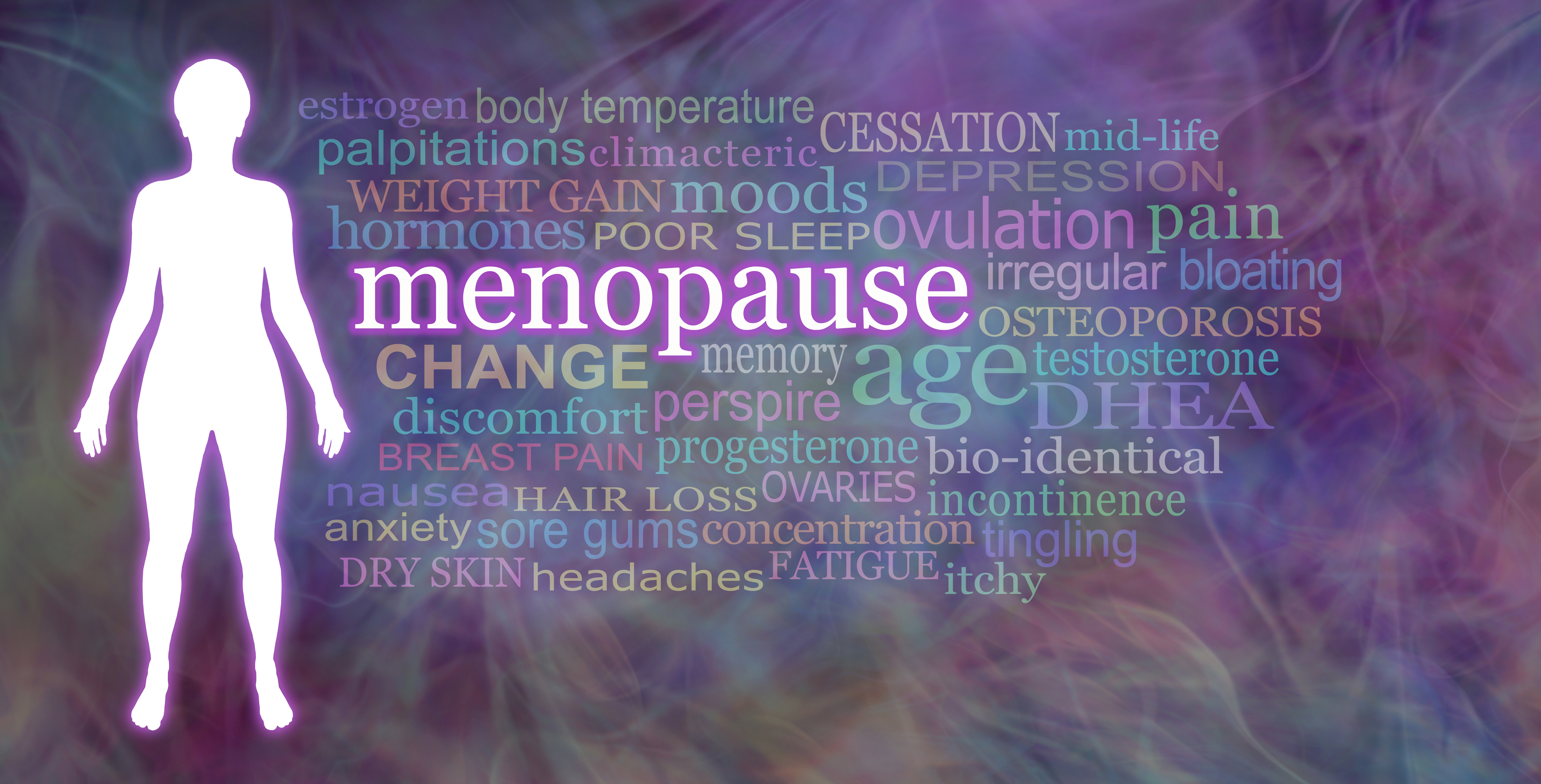
Perimenopause has been swept under the rug for far too long—much like mental health conversations in this country. Every woman will face it eventually, but for women who are building careers, leading teams, and showing up every day at full capacity, it can quietly become an Achilles' heel. Symptoms vary widely and shift over time, but the ones I hear most consistently from my circle of successful, badass women are the same two: plummeting energy levels and weight that seems to appear out of nowhere and refuse to leave.
Many of us think we have to white-knuckle this journey because our mothers did. But let's put that into perspective—our moms raised us without smartphones, Wi-Fi, or iPads. Nobody is suggesting we go back to brick phones and AOL dial-up just because that's how they survived. So why are we still accepting a standard of women's healthcare that hasn't evolved much further?
We deserve to take full advantage of the latest advancements in medicine as a reward for surviving encyclopedias and screeching dial-up internet. There are prescriptions, supplements, and creams that meaningfully relieve mood swings, hot flashes, and sleep disturbances. Yes, you too can be released from menopausal purgatory.
I slipped into perimenopause in my late 30s. I wasn't sleeping well, and by 5:00 a.m. I was drenching my pajamas in sweat—in the middle of an Alaskan winter, with temperatures remaining below zero for weeks at a time. I was wearing a light fleece while everyone else bundled up. At work, I'd climb a single flight of stairs to reach my office and arrive at my cubicle sweating as though I'd just finished a Zumba class.
On top of the sleepless nights and living inside what felt like my own personal Swedish sauna, I had gained a significant amount of weight. I told myself it was COVID, staying home, and the disruption of my normal routine—but the weight kept accumulating long after life returned to normal.
When I found myself distraught over buying larger clothes and seeing a number on the scale I'd never seen before, I finally said, "Okay. I need to talk to someone about this."
I sought out a women's health-focused functional medicine practice because my mom had a positive experience there. My previous encounters with traditional OB/GYN offices had felt frustratingly stuck in the past. We are out here inventing self-driving cars—why do my women's health appointments still feel like relics from another era?
I needed someone who would be proactive, willing to think outside the standard protocol, and, most importantly, willing to listen instead of simply handing me a prescription and showing me the door.
I found my medical magician.
She took detailed notes, printed research articles, and delivered the news gently but clearly: I had entered perimenopause. I was exhausted and anxious, battling major brain fog, struggling with depression, and literally burning up from the inside multiple times a day.
She prescribed a low dose of thyroid medication—thyroid issues run in my family—and added progesterone. For the first time in a long time, I felt genuinely heard. Within the first week, I was sleeping through the night again. My internal thermostat had turned down from a raging boil to a slow, manageable simmer.
It felt like coming back to myself.
(Worth noting: not all progesterone has to be taken orally. I have friends who swear by yam cream and other topical options that effectively ease their symptoms—options worth exploring with your healthcare provider.)
For a few years, I coasted comfortably on progesterone. Then I hit a wall.
The brain fog crept back. My energy tanked. My cycle became unpredictable.
The trouble was that my next annual appointment was months away, and all my recent bloodwork had come back "normal."
Normal.
Yet I felt anything but.
And when you don't have the energy to work out or prepare healthy meals, the weight cycle becomes vicious. "I guess I'll order takeout and eat it in bed again tonight" stops being a treat and starts becoming survival mode.
One night, while scrolling through my phone, I stumbled across a webinar hosted by a female physician specializing in perimenopause. She explained what I had been missing: the conversation isn't just about progesterone. It's about estrogen, testosterone, and the full hormonal picture. All of it needs to be in balance for you to feel like yourself again.
She had built an online wellness program offering hormone replacement therapy (HRT) through a whole-body, integrative approach, using bioidentical topical creams free from harsh chemical additives, mail-in saliva testing, and virtual appointments to adjust treatment protocols as needed.
No waiting rooms.
No outdated intake processes.
Just accessible, personalized care delivered to your door.
Not every medical provider agrees with HRT, including my own primary practitioner, whose specialty is thyroid health and who believes topical hormone creams are ineffective. That's how I originally found her.
But I am a believer.
The growing body of research supporting HRT—and its safety for many women without specific contraindications—is difficult to ignore.
My advice: do your own research. Read the studies. Ask the hard questions. Then advocate for yourself as if your quality of life depends on it—because it does.
If you don't have a doctor or practitioner who listens to you, takes your symptoms seriously, and is willing to explore options beyond the bare minimum, find another one.
Yes, starting over with a new provider is inconvenient. But this is your health, your energy, your mental clarity, and your future.
You wouldn't keep going back to a hairstylist who consistently gave you bad results. Why do we sometimes hold our medical care to a lower standard than our highlights?
We are women who have fought our way through male-dominated industries, navigated impossible standards, and built careers and lives we are proud of.
We did not come this far to be quietly sidelined by hormonal changes that are not only manageable but also treatable.
The conversation around perimenopause is finally getting louder, and we owe it to ourselves—and to the women coming up behind us—to keep that momentum going.
Talk about it.
At work.
With your friends.
With your daughters.
Normalize the conversation the same way we've normalized talking about mental health, nutrition, and fitness.
Because perimenopause doesn't care how senior your title is or how many goals you've crushed this quarter.
But with the right support, the right provider, and the right information, it doesn't have to slow you down, either.
Keep up the good fight out there.
We survived a man's world.
We are not going to be taken down by our own hormones.
Join Influential Women and start making an impact. Register now.