
What If Everyone Could Talk to the Customer?
How Intuit is empowering every employee to understand and serve customers at scale.


What if customer research weren't reserved for a handful of specialists but became something every employee could access and use to make better decisions?
At Intuit, that idea is rooted in our DNA.
Our co-founder, Scott Cook, championed a practice called Follow-Me-Home, encouraging employees to observe customers in their own environments and experience their challenges firsthand. The principle was simple: to build better solutions, we must first understand the people we serve.
But how do you turn a powerful philosophy into an everyday practice across a global organization? That question has shaped much of my work in building Intuit's global research ecosystem.
From a Philosophy to a Scalable Practice
At Intuit, customer obsession is everyone's responsibility. Yet connecting with customers traditionally often depended on a small number of research specialists and recruiters. If we wanted every employee to truly understand our customers, we needed to make those connections easier and more accessible.
One way we did this was by bringing Follow-Me-Home to life beyond its original concept. I worked on developing Intuit's Global Follow-Me-Home program, including its website, operating model, governance, participant strategy, and engagement coffee table books. We also published a book to help employees understand and practice the approach, with Scott Cook contributing the foreword.
For me, this was about more than documenting a program. It was about making a foundational part of Intuit's culture easier for employees to embrace, wherever they worked and whatever their role.
Because customer empathy shouldn't depend on your job title or whether you happen to work on a research team.
Democratizing Research Through Technology
Through our team, the Center of Customer Obsession (CoCO), we took that philosophy further, building a global research ecosystem designed to make customer knowledge accessible, actionable, and scalable.
We embraced self-service research through platforms like Great Question, which makes it easier for employees to connect with customers and conduct research without relying on a small, centralized team of research recruiters for every interaction.
By helping extend research access to hundreds of employees across Intuit, we expanded who could participate in understanding our customers. Employees could increasingly take ownership of connecting with customers directly, while our teams focused on providing the tools, expertise, governance, and guardrails that make research responsible and meaningful.
We set out to 10X customer obsession—not simply by doing more research ourselves, but by empowering more people across Intuit to participate in it.
Democratization doesn't mean turning everyone into a professional researcher. It means removing barriers to customer access and making customer understanding a capability everyone can practice.
And this work continues to evolve. Across the United States, Canada, and the United Kingdom, our teams keep improving the ecosystem, the platforms, and the overall experience to make it easier for anyone at Intuit to connect with customers, discover existing insights, and bring the customer perspective into everyday decisions.
Our ambition extends beyond any single tool: to make customer understanding an everyday part of how our organization thinks, builds, and innovates.
Scaling Technology Without Losing Empathy
Artificial intelligence offers exciting opportunities to accelerate research, synthesize information, and make insights easier to discover. I see AI as a force multiplier for our ecosystem, helping us spend less time navigating information and more time understanding customers.
But one principle remains non-negotiable for me: customer empathy cannot be outsourced.
Technology can help us process what customers tell us, but it cannot replace the human responsibility to listen, observe, and understand their experiences. The frustrations, workarounds, and unspoken needs we discover through genuine human connection can shape solutions in ways that data alone may not.
The opportunity isn't to choose between efficiency and empathy. It's to use technology to make human understanding more powerful.
Making Customer Obsession Everyone's Job
For me, leadership begins with a simple question: What are we solving for?
Building a global research ecosystem is ultimately about closing the distance between a company and its customers—between collecting feedback and truly understanding an experience, and between having information and acting on it.
What makes this work meaningful is that customer obsession isn't confined to a department or a team of experts. It belongs to everyone.
I'm proud to be part of building the infrastructure that helps bring Intuit's founding philosophy to life at scale. From making Follow-Me-Home easier to practice to democratizing research through self-service technology, the goal has remained consistent: help more employees understand the people they serve.
Because customer obsession isn't something we simply declare. It's something we build into how we work, the decisions we make, and the experiences we create.
I believe there's still so much more we can do as technology evolves and new possibilities emerge.
If you're building a research ecosystem, democratizing customer insights, or finding new ways to bring the voice of the customer into everyday decisions, I'd love to hear your story and connect. There's so much we can learn from one another.
After all, the more we share what we learn from customers, the better we can serve them.
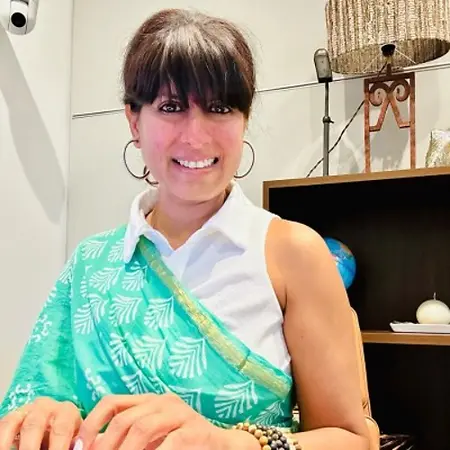
Navi Sekhon is a Global Research Operations Leader at Intuit, where she leads teams across the U.S., Canada, and the UK and helps shape an AI-powered customer insights ecosystem. With more than two decades of experience spanning hospitality, executive search, Talent Acquisition, and Research Operations, Navi has built her career at the intersection of people, customer experience, leadership, and innovation. Today,…





