What Spring Invites
Rediscovering Nature's Symphony: Finding Joy in Sound Despite Hearing Loss

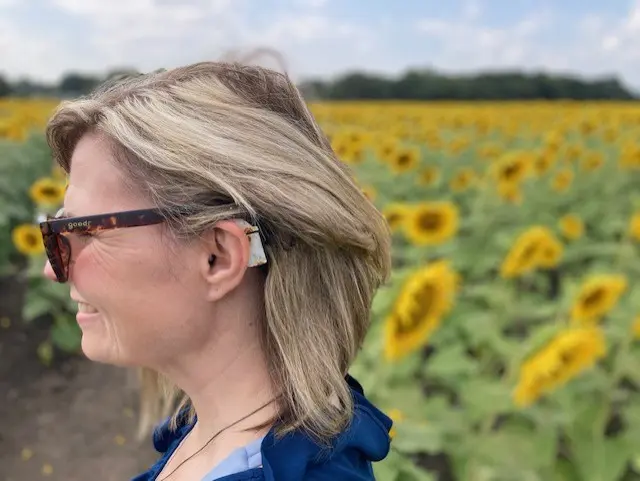
Spring is a time of renewal and growth that is ours for the taking. Hearing loss does not mean that our days of enjoying nature sounds are over.
I grew up on an 80-acre farm in central Oklahoma. The fastest way to town was a road covered in gravel and red clay dirt. The closest neighbors were a half-mile away, and we all survived on water from our individual wells. I guess you could say I grew up in the middle of nowhere. For a teen growing up in the early 1990s, living so far from town felt like social punishment. Few friends ventured into my neck of the woods to hang out, and everyone had a phone number that was long-distance. The only TV shows I could watch were on four grainy channels.
One thing about country life I enjoyed was the transformation of nature from winter to spring, when the buffalo grass shed its pale yellow dormancy and became vibrant Kelly green.
As an adult approaching middle age and now living near a city, I can still remember how sweet the wild hyacinth and white and purple prairie clover smelled. I remember how warm the breeze flowing through the field’s pecan trees felt. The once melodious rural sounds, however, are much quieter—the tree limbs in the breeze, the cricket chirps, and the loud squeaks of scissor-tailed flycatchers all softened into quiet.
Twenty-five years ago this spring, I was diagnosed with progressive bilateral sensorineural hearing loss. I had given birth to my first child that winter and developed tinnitus and an inability to hear high-frequency sounds, such as the ring of a phone, doorbell, or smoke alarm. My baby’s cries sounded muffled. The diagnosis brought waves of fear and uncertainty as I navigated being 27 years old with an incurable health condition.
In the chaos of those initial days and months following diagnosis, I made the decision not to purchase hearing aids because: 1) they were expensive and not covered by insurance, and 2) they stuck out like glaring neon lights with my short-cropped hair at the time.
And so I lived with diminishing sounds of nature. Birds grew silent. Cricket chirps disappeared. And I couldn’t clearly hear my young child’s first words. I began isolating myself from meeting up with friends or talking on the phone because I was embarrassed to ask for sentences to be repeated.
Two years later, I decided that the expense and perceived unattractiveness of hearing aids were worth it if it meant hearing my child speak to me. When I returned from the audiologist’s office with behind-the-ear hearing aids, I went to the backyard and sat on a gliding swing beneath an old oak tree. There, I heard the first chirps, bird songs, and wind in years. I closed my eyes and remembered my childhood on the farm. The sounds flowed through my battery-operated “second ears.”
If you or a loved one is living with hearing loss, we can still hear things—just differently, through hearing aids or cochlear implants. My advice is to find an outdoor space filled with nature sounds, take a deep breath, close your eyes, and listen. What do you hear? What memories do the sounds evoke? How do they make you feel?
“No matter how chaotic it is, wildflowers will still spring up in the middle of nowhere.” — Sheryl Crow


