
What the Storm Left Standing
A mother's journey through Hurricane Georges teaches her that kindness, like home itself, can survive the storm.

In September 1998, we were living in Ocean Springs. Hurricane Georges was tracking toward the Mississippi coast, and each new forecast made the eye sound closer. My husband was an anesthesiologist stationed at Keesler Air Force Base in Biloxi. He was on call the day the eye was expected to come ashore, and once the storm drew near, he could not leave the hospital. That left me alone with our five-month-old daughter and a decision I did not feel ready to make.
I kept turning it over: stay and ride it out in the house we knew, or leave. My husband wanted us to drive north toward Mobile. He said it plainly, the way he said most things when he was worried and trying not to show it. I packed diapers, a few changes of clothes, the car seat, and the small things that still felt like safety. Then I put the baby in the back and started north. I had never left a place with a child because of weather. Every mile, I wondered whether I was doing the right thing.
I found a hotel that still had a room. The lobby was full of people moving carefully, as if any sudden motion might give something away. I checked in with the baby on my hip, her head warm against my shoulder, and tried to keep my voice from shaking. I was a first-time mother in a strange place, nursing her when she woke, listening to the wind gather outside. I did not know what the night would ask of me.
Two older women on the same floor noticed us. They did not ask where I was from or whether anyone was coming for me. They simply stayed. One offered to hold the baby so I could close my eyes for a few minutes. They talked quietly about the drive, the rain, and children long grown. Other strangers checked on us from time to time—someone in the hallway, someone near the lobby—asking if we needed anything and pausing long enough to make sure we were all right.
The baby slept against one of the women while I sat nearby. Later, when the wind strengthened and the building seemed to lean, they were still there, checking on us without ceremony. I remember how steady their voices stayed. The storm did not feel smaller, but I was no longer entirely alone inside it.
By morning, the reports said Georges had come ashore near Biloxi. Ocean Springs had taken the hit we had watched approaching. My husband called when he could get through. The hospital was still standing. I stayed at the hotel another night. The roads were still uncertain, and part of me was afraid to leave the small circle of kindness those strangers had made.
When we drove back, the Biloxi coast looked broken open. Large houses that had stood along the water were shredded—walls gone, roofs peeled away, pieces of them scattered across the ground. Our neighborhood was covered in limbs and debris. Trees lay across yards and against fences; the usual shape of the streets was interrupted.
Yet when we turned onto our own street, the house was still there, intact except for the power being out. It stayed out for several days. Most of what had been in the refrigerator was lost. I stood in the driveway with the baby in my arms and felt, for a moment, how easily everything could have been different and how little I had known, as a first-time mother, about what would hold.
My husband came home when his shift finally ended. He was exhausted and quiet. We did not talk much about the hotel north of Mobile. At the time, I could not have clearly expressed what had happened there—how frightened I had been while deciding to leave because he asked me to, nursing our daughter alone while the eye of the storm came ashore, and how two women and other strangers had simply chosen, from time to time, not to leave me alone with that fear.
The houses along the coast had been taken apart. Ours had not. The kindness in that hotel room had been real, too. I still think of those people when I remember what the storm left standing. Some things are lost. Some things, somehow, are kept.
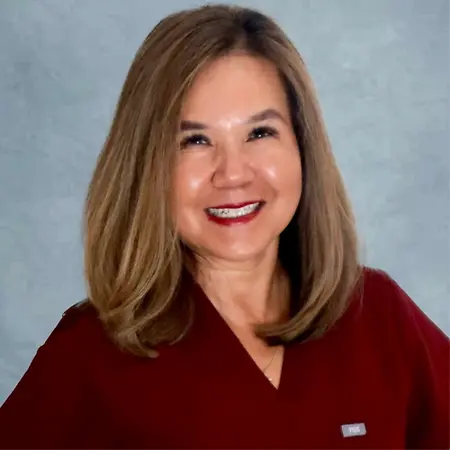
Angie Nordlie is a registered nurse and entrepreneur based in Scottsdale, Arizona with extensive healthcare experience across military, hospital, and outpatient settings. She founded DesertRN LLC, a mobile IV wellness business, after building expertise in medical nursing and pursuing continuous professional development. Her career reflects commitment to patient care, leadership, and entrepreneurship, complemented by…





