Lessons in Leadership: How Three Decades in Public Service Taught Me to Listen, Respect, and Keep Improving
Lessons from nearly three decades in public service: leading with empathy, curiosity, and a willingness to keep learning.

After nearly three decades in public service, I could probably make a long list of things the work has taught me.
Some came through training. Some through mentors. Some through getting things right. Quite a few came from getting something almost right and discovering there was still more to learn.
But the lessons that have stayed with me most are not really about programs, policy, or operations.
They are about people.
The Work Taught Me to Listen More Than I Talk
That sounds simple until you are the person expected to have the answer. Leadership can create an unspoken pressure to respond quickly, solve the problem, or demonstrate expertise. But some of the most useful information I have ever received came after I resisted the urge to speak and listened a little longer.
People closest to the work often know where the friction lives. Customers know where a process becomes confusing. Employees know which step creates unnecessary work. Community partners know where people disappear between systems.
Sometimes the answer is already in the room. Leadership simply has to make enough space to hear it.
The Work Also Taught Me to Respect People and Their Experience
I have spent much of my career working in programs that intersect with people during vulnerable moments in their lives. That proximity taught me very early not to confuse circumstances with capability.
Someone may need assistance today and still be extraordinarily resourceful, intelligent, ambitious, resilient, and capable.
That lesson has shaped the way I think about public service. We may understand a policy. We may know the system. But the person sitting across from us knows what it feels like to live with the consequences of both.
Their experience is expertise, too.
That is also why I try not to say, "I understand."
There are experiences I can empathize with without pretending they are mine.
Instead, I can listen. I can believe what someone tells me about their experience. I can ask better questions. And I can allow what I learn to influence what happens next.
The Work Taught Me to Lead With a Yes
Not a careless yes. Not a yes that ignores rules, resources, or consequences.
A possibility yes.
Before deciding something cannot be done, I want to understand what actually prevents it. Is the barrier required? Is it technical? Financial? Procedural? Or have we simply inherited a way of doing something and stopped asking why?
Some of the work I am most proud of began because someone was willing to ask, What would it take to make this possible?
But experience has also taught me that leadership sometimes requires a very clear no.
Every good idea is not the right idea for right now.
There will always be more worthwhile work than there is time, money, capacity, or attention. Part of leadership is recognizing that saying yes to everything eventually means doing too many things poorly.
I Have Learned to Appreciate Phases
Do what we can do well now. Learn from it. Build the next piece. Improve it.
Because one of my favorite truths about innovation is this:
It is always perfect until Version 2.
Then you discover what you did not know when you built Version 1.
And that is not failure. That is learning.
The Work Has Taught Me That When Something Doesn't Make It Better, Keep Digging
A new process is not automatically an improvement. Neither is new technology, another form, another meeting, another layer of review, or another initiative.
Better should mean something.
Did we make the experience easier? Did we reduce unnecessary work? Did we improve accuracy? Did we create clarity? Did we strengthen the people doing the work? Did the solution actually address the problem underneath the problem?
If not, I am probably going to keep asking questions.
Maybe the Greatest Lesson the Work Has Taught Me Is to Keep an Empathetic Heart and a Curious Mind at the Same Time
Empathy without action can become sentiment.
Expertise without empathy can become distance.
But when we are willing to listen, respect experience, question what we have inherited, acknowledge our limits, and keep improving what we build, something different becomes possible.
We begin to see people differently.
We begin to see problems differently.
And eventually, we begin to see our own role differently, too.
After all these years, I am less interested in being the person with every answer.
I would rather be the person willing to listen long enough, ask the right questions, find the responsible yes, recognize when the answer must be no, and keep digging until what we build actually makes something better.
And when we think we finally got it perfect?
Well.
There is always Version 2.
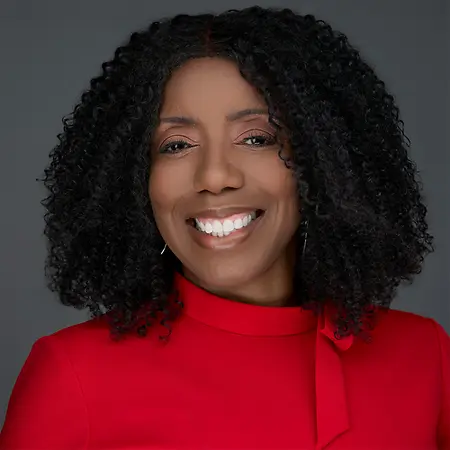
Michele B. Thomas is a public-sector leader and strategist with more than 25 years of experience advancing food and nutrition assistance programs and strengthening the systems that connect individuals and families to essential resources. As Food and Nutrition Assistance Manager for the Commonwealth of Virginia, she works at the intersection of policy, program administration, innovation, and community engagement,…