What's the Point of High School?
How a COVID-19 Crisis Led One Teacher to Rediscover Her Purpose and Transform Her Practice

Rediscovering the Point of High School: Finding My WHY
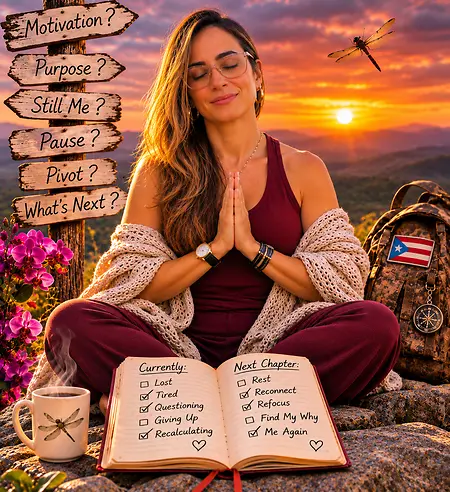
I experienced my first real professional existential crisis in April 2020 during the COVID-19 shutdown. I was a high school English teacher looking forward to the celebrations and milestones that come at the end of a school year, especially graduation. State testing was just around the corner, and we all worked so hard to prepare our students for the assessments and opportunities that lay ahead. But from one day to the next, our world as we knew it changed. Like everyone experiencing this unknown crisis, I was faced with uncertainty and more questions than answers. But one question kept rising to the surface: What is the point of high school?
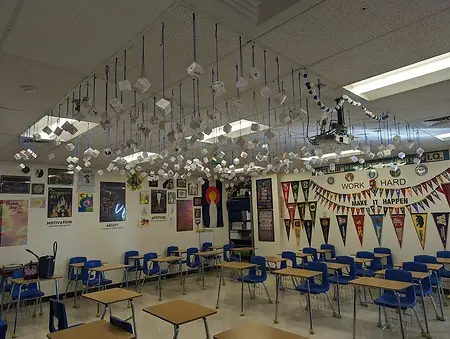
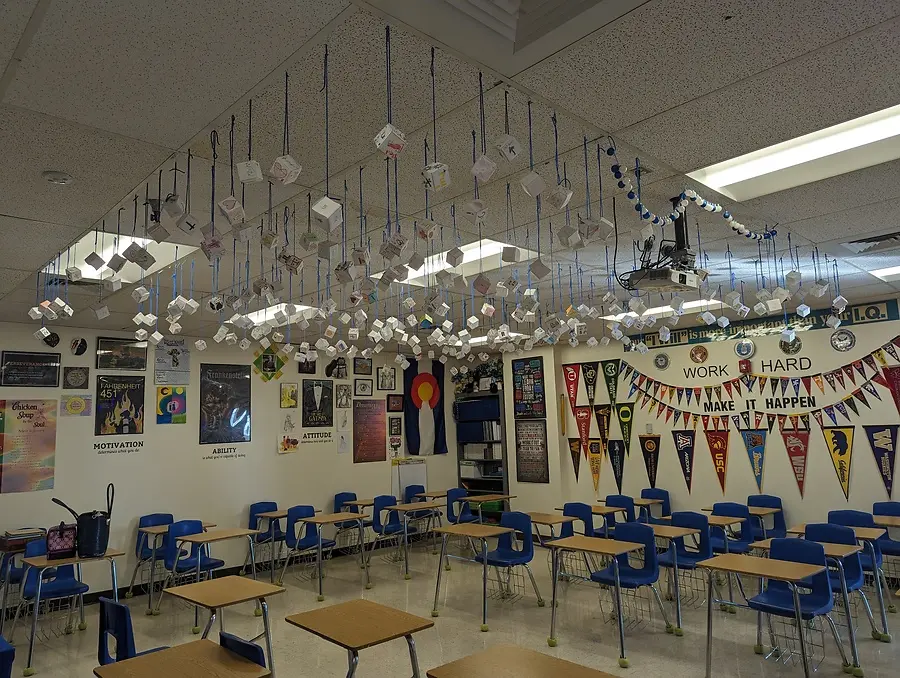
After nearly two decades of working with high school students, I struggled immensely with moving from my physical classroom—a nurturing, welcoming, and engaging environment—to a cold, empty, and faceless digital Google Classroom. I had spent months establishing a classroom culture built on relationships, high expectations, and productive struggle. My students knew and practiced those expectations because I had set the tone at the beginning of the year and maintained it throughout. Suddenly, I had to figure out how to maintain that culture using a screen.
I knew I needed to evolve as an educator and adapt to these unprecedented circumstances, but I didn't want to lose sight of my core values or, more importantly, my WHY.
I asked myself: Why am I a high school English Language Arts teacher? Why do I make the instructional choices I make? Why do I care so much about my students? Why do I support my colleagues? Why do I do this?
I needed to experience this professional existential crisis to better understand and accept myself as an educator. That acceptance allowed me to recognize my strengths, weaknesses, and challenges so I could grow, improve, and return more skilled in my craft.
After living through the most challenging year of my career, I found clarity and purpose. I rediscovered my WHY—not as a slogan or cliché, but as a truth by which I live.
My WHY is simple: I want to make a difference.
I've always wanted to help others realize their potential so they can achieve their goals and make a difference, too—in their communities, their families, and their lives. I've grown up and participated in my community, and I know the struggles my town faces. What better way for me to give back than through public education?
Being a teacher isn't just a job.
It's my career.
It's my vocation.
It's my calling.
My WHY sits in front of me on weekdays and is in my heart on weekends. My WHY asks questions, laughs, cries, complains, and sometimes gets in trouble. My WHY is not disappointing those who trust me with their children's education.
My WHY is our future.
Each day I walk into the classroom, I believe I'll make a difference—maybe small, maybe life-changing. And if I can look in the mirror at the end of each day and say, "I did my best for them," then I know I'm living my WHY.
This is what keeps me showing up and persevering through shutdowns, setbacks, state assessments, new initiatives, changing directions, and anything else that may be thrown my way.
Rediscovering the Point of High School
Once I rediscovered my WHY, I knew I needed to focus on the HOW. How do I teach English Language Arts? How do I make instructional choices? How do I care about my students? How do I support my colleagues?
I survived distance learning. My students survived distance learning. My colleagues survived it as well. But distance learning became more than a challenge to overcome. It was a springboard for professional transformation and an opportunity to develop deeper, more meaningful, and relevant learning experiences.
The pandemic forced me to reflect on how my own education had prepared me for life in the 20th century. Life looks very different for today's 21st-century students, and I began to question whether the traditional educational experiences that had shaped me were preparing them for the world they would inherit. I watched my daughter, one of more than 200 sophomores at the school where I taught, become increasingly frustrated, disengaged, and disconnected from learning. If she was struggling to read material, watch videos, and complete homework on a 12-inch screen, I knew my students were likely experiencing many of the same challenges.
At least my daughter had me at home to keep her company and answer questions. I couldn't say the same for all of her peers.
I was determined to create learning experiences that were relevant, engaging, and offered some stability and familiarity to students isolated from the world they once knew. I taught myself how to use the technology available to me, experimented with digital platforms, and tried to make my virtual classroom feel as much like our physical classroom as possible. I talked to students as if they were sitting in front of me, maintained high academic expectations, and continued communicating with them.
I thought my efforts were in vain until we began having conversations similar to those we had in the physical classroom. Students were engaging in discussions, completing assignments, and getting excited about the next lesson.
"Ms. Jesik, is it fine if I put the answers on a separate Google doc?"
"Filled in the answers, I hope it saves and you can see it."
"I miss you, Ms. Jesik."
Those interactions—the questions, the laughter, the tears, even the emojis—reminded me that my presence and my WHY were living through a digital classroom.
I learned that the most important aspect of high school, the point of high school, is to teach students essential life skills: productive struggle, critical thinking, problem-solving, and effective communication. These skills matter regardless of the content area.
Content matters, but its greatest value is realized when students learn to use that knowledge to think critically, solve problems, communicate effectively, and navigate challenges with confidence.
I don't believe it is my job to prepare students for the rest of their lives. In fact, I think it would be arrogant to assume I could. I don't know what their futures will hold, and I can't possibly prepare them for every challenge or decision they will face. My responsibility is to prepare them for what's immediately ahead: the next grade level, a job, or the first six months after graduation. If I can help them become critical thinkers, problem-solvers, effective communicators, and resilient individuals along the way, then I have given them tools they can carry into whatever comes next.
The world is constantly changing. Students need more than the ability to recall information, memorize facts, and recite equations. They need to learn how to think critically, communicate effectively, adapt confidently to change, and persist through challenges so they can understand, apply, and explain why what they learn matters. If they can practice resilience and coping skills through safe, productive struggle while learning content in my classroom, then I have been successful as a teacher.
I now fully understand the point of high school: it is preparing aspiring adults for what is next.
From WHY to HOW
My professional existential crisis allowed me to stop searching for the student achievement silver bullet—which, by the way, doesn't exist—and begin looking within myself to realize I already have what I need to be a successful teacher: compassion, determination, humility, patience, and love.
I have been provided with resources, tools, and programs to help me become a better and stronger teacher, no doubt about that. But I learned how to use everything provided to me much more intentionally and strategically once my WHY was clear.
I practiced using data with intention, internalized lessons to anticipate misconceptions and scaffold instruction, incorporated social-emotional learning into the curriculum, implemented instructional strategies, and reflected on how building relationships is the foundation for any successful classroom setting.
I was no longer focused on having students simply identify and explain metaphors in literature or regurgitate punctuation rules. Instead, I wanted them to understand why the author chose a particular metaphor and how punctuation shapes meaning and tone, allowing writers to communicate experiences and connect with their audiences.
The adjustments I made may seem small, but they matter. I wanted students to move beyond identifying what they were learning and begin understanding why it mattered and how they could apply it.
When I began supporting other educators, I realized that rediscovering our WHY is not just a personal exercise. It is an essential part of professional growth. We spend so much time discussing what teachers should do, which strategies they should implement, and which initiatives they should embrace that we sometimes overlook the most important question: Why?
When educators understand what they believe about learning, students, and their responsibility as professionals, they can make more intentional instructional decisions. The HOW becomes much clearer.
Regardless of the latest educational trend or gimmick, students need essential life skills to succeed in college, career, family, and life. Our responsibility is to create meaningful, supportive opportunities for students to develop and practice those skills, take academic risks, and engage in productive struggle while learning content.
Once teachers understand their WHY, they can focus on their HOW, gaining a new perspective on their chosen profession and a clearer sense of mission.
Understanding my WHY reminds me that my purpose is not to teach programs or platforms, but to teach the students who sit in front of me each day—and stay in my heart long after the bell rings.
I believe that educators must look within themselves to understand their WHY. Do we live what we believe? Do we practice what we preach? Do we walk the walk and talk the talk?
My WHY reminds me that families trust me—sometimes without even meeting me—with their child's education. That is a responsibility I do not take lightly. For nine months out of the year, my priority is my students' learning, safety, and success.
I may never know the full impact of a lesson, a conversation, or a moment when a student finally realizes their potential. But I know why I continue to show up.
I want to make a difference.
Maybe small. Maybe life-changing.
And if I can look in the mirror at the end of each day and honestly say, "I did my best for them," then I know I'm living my WHY.
Every student matters, and every student deserves our best.

Shaynee Jesik is an accomplished educator with 28 years of secondary education experience in Colorado, specializing in curriculum development and literacy instruction. She currently serves as a Secondary Educator and Instructional Coach at Pueblo Central High School in Pueblo School District No. 60, designing interdisciplinary curriculum and mentoring teachers. Recognized for her expertise in curriculum,…