
When Cases Go Cold, Families Don't: The Human Cost of Unsolved Cases
Understanding the ongoing struggle of families seeking justice for unsolved homicides.
When Cases Go Cold, Families Don't: The Human Cost of Unsolved Cases
There is a reality that families of unsolved homicide victims understand all too well: the world continues moving forward, even when a part of yours feels permanently suspended in time.
Days turn into months. Months become years. News coverage fades, public attention shifts, and life continues around you. Yet the questions remain unanswered, the loss remains deeply personal, and the desire for justice never disappears.
When a homicide remains unsolved, it is often described as a cold case. But for the families left behind, there is nothing cold about it. The grief, uncertainty, frustration, and hope are very much alive.
I know this reality because I live it.
On July 18, 2021, my 23-year-old daughter, Destiny C. McClain, was murdered in Phoenix, Arizona. More than five years later, her case remains unsolved.
In the years since losing Destiny, my personal journey has led me into victim advocacy, where I have had the opportunity to connect with other families, support victims and survivors, and participate in efforts to bring greater attention and resources to unresolved cases.
These experiences have reinforced something I believe more people need to understand: when an investigation remains unresolved, the impact extends far beyond the case itself.
Behind every case number is a human being whose life mattered and a family whose life was forever changed.
The Emotional Weight of Unanswered Questions
Losing someone to violence is devastating. Losing someone to violence without knowing who is responsible adds another layer of uncertainty that can be difficult for others to fully understand.
There are questions that families carry every day.
Who did this? Why did it happen? Does someone know something they have not shared? Will there ever be an arrest? Will we ever see accountability?
For families of missing persons, there may also be the agonizing uncertainty of not knowing what happened to their loved one or whether they will ever return home.
These questions do not simply disappear with time.
People often speak about grief as though it follows a predictable path, with a beginning, middle, and eventual resolution. But grief does not operate according to a schedule, and the absence of answers can make the experience even more complicated.
Families learn to continue living, working, raising children, celebrating milestones, and participating in everyday life while carrying questions that remain unresolved.
Moving forward does not mean forgetting, and finding moments of happiness does not mean the pain has disappeared.
It means learning to live with a reality we never wanted.
The Difference Between a Case and a Life
In public discussions about crime, it is easy for victims to become statistics.
We hear about homicide rates, clearance rates, investigative backlogs, and the number of cases awaiting resolution.
These numbers are important because they help us understand the scope of the challenges facing communities and law enforcement agencies.
But they never tell the complete story.
A case file cannot fully capture someone's personality, dreams, accomplishments, relationships, or the future they should have had.
It cannot describe the sound of their laughter, the traditions they shared with family, or the countless everyday moments that are now memories.
Destiny was more than the circumstances of her death. She was my daughter, a sister, a friend, and a young woman with dreams, relationships, and a life that mattered.
Every family I have encountered through advocacy has its own version of this reality.
They are not simply seeking justice for a case number. They are seeking justice for someone they love.
Our loved ones deserve to be remembered for how they lived, not only for how they died.
That distinction is important because meaningful victim advocacy must always recognize the humanity behind every investigation.
Communication Is Not a Luxury. It Is a Necessity.
One of the issues that frequently comes up in conversations among families of unresolved cases is communication.
For families waiting for answers, uncertainty can be one of the most difficult aspects of the experience.
Not every investigation will produce new information each week or even each month. Families understand that some cases are complex, evidence may be limited, and investigative progress can take time.
However, the absence of significant developments does not eliminate the need for communication.
Families deserve to know that their loved one's case has not been forgotten.
They deserve respectful treatment, honest information when it can be shared, and a reasonable understanding of what to expect throughout the investigative process.
Of course, there are circumstances in which investigators cannot disclose certain details without potentially compromising an active investigation. I recognize and respect those limitations.
But there is a difference between protecting sensitive information and leaving families feeling disconnected from the process.
I am grateful to have maintained communication with the detective assigned to Destiny's case. I also recognize that not every family has had the same experience.
Through advocacy, I have become increasingly aware of how important it is for agencies to establish consistent, compassionate communication practices that recognize the needs of surviving family members.
Families should not have to feel that they are asking for too much simply because they want to know whether efforts to find answers are continuing.
The Importance of Resources and Accountability
Unresolved cases are not simply a matter of families waiting for time to pass.
Investigations require resources.
Dedicated personnel, forensic testing, technology, training, information sharing, and sufficient time to review evidence can all play important roles in advancing investigations.
As investigative techniques evolve, cases that once appeared impossible to solve may present new opportunities for examination.
Advances in DNA analysis, forensic science, and investigative genealogy have demonstrated the potential for new technology to assist investigators in certain cases.
But technology alone is not enough.
Law enforcement agencies must also have the staffing, funding, training, and support necessary to evaluate evidence, pursue leads, and make effective use of available tools.
This is why I have become involved in advocacy efforts calling for greater attention and dedicated resources for unresolved homicides and missing persons cases in Arizona.
In September 2026, I joined other families and advocates at the Arizona State Capitol to bring attention to the challenges surrounding unresolved cases.
That same month, Arizona officially recognized Unresolved Case Awareness Week and National Cold Case Month, acknowledging the importance of continued investigative efforts and support for affected families.
These efforts represent opportunities to move important conversations forward.
However, proclamations and awareness initiatives should be viewed as starting points, not final accomplishments.
Real progress requires sustained attention, thoughtful policy discussions, appropriate funding, and accountability in how resources are used.
Families should not have to rely solely on media attention or their ability to maintain a public presence to keep their loved one's case from being overlooked.
Every victim deserves a meaningful effort toward justice.
The Families Who Become Advocates
One of the things I have come to recognize through my own experience is how many families find themselves becoming advocates under circumstances they never would have chosen.
Before losing Destiny, I never imagined that I would be participating in conversations about investigative resources, victim services, unresolved cases, or the challenges families encounter within the criminal justice system.
I never anticipated speaking publicly about these issues, connecting with other families affected by violent crime, or working alongside organizations committed to improving support for victims and survivors.
Yet these experiences have become an important part of my life.
Through my volunteer work as a victim advocate, I have had opportunities to support individuals navigating difficult circumstances, including attending court proceedings and providing a compassionate presence during challenging moments.
I have also connected with families whose determination, courage, and commitment to their loved ones continue to inspire me.
Many of these individuals have spent years searching for answers, contacting agencies, sharing information, organizing awareness initiatives, and advocating for changes they hope will benefit other families.
Their persistence is remarkable, but it also raises an important question.
Why must grieving families work so hard to ensure their loved ones remain visible?
Advocacy can be meaningful and empowering, but it can also be emotionally demanding.
Not every family has the time, resources, emotional capacity, or desire to become a public advocate. Some may prefer to grieve privately, while others may be unable to participate in awareness efforts because of employment, caregiving responsibilities, or other circumstances.
Their absence from the public conversation should never be mistaken for a lack of concern or commitment.
Every family deserves compassion and support, whether they choose to speak publicly or remain private.
Awareness Must Lead to Continued Action
Public awareness plays an important role in unresolved cases.
Media coverage, community events, public appeals, and awareness campaigns can help keep cases visible and may encourage individuals with information to come forward.
I have seen firsthand the value of media professionals who remain committed to telling victims' stories and ensuring families are not forgotten.
However, awareness must be accompanied by meaningful action.
It is not enough to acknowledge that unresolved cases exist. We must also examine the challenges that prevent progress and identify opportunities for improvement.
That includes supporting investigative resources, encouraging collaboration among agencies, strengthening communication with families, and recognizing the importance of victim-centered practices.
It also means understanding that the needs of families do not end when a news story disappears from public attention.
The emotional, financial, and practical consequences of violent crime can continue for years.
Families may need assistance navigating available victim services, understanding the criminal justice process, accessing counseling and support, or connecting with organizations that understand their experiences.
A compassionate system must recognize these needs and respond to them with consistency and respect.
Justice Should Not Depend on Visibility
One of my greatest concerns is that some cases receive substantial public attention while others receive very little.
Certain stories become widely known through extensive media coverage and community interest. Others struggle to receive even a fraction of that attention.
Yet the value of a person's life is not determined by how many news stories are written, how many social media posts are shared, or how many people attend a vigil.
Every person matters.
Every family deserves to be treated with dignity.
Every unresolved case deserves appropriate investigative consideration.
As a community, we must resist the idea that visibility determines importance.
Advocacy should include efforts to support families whose stories are not widely known, whose resources may be limited, and whose loved ones have been missing or have gone without justice for many years.
The pursuit of answers should not depend on a family's ability to generate public attention.
What Meaningful Support Really Looks Like
People often want to help families affected by unsolved cases but may not know what to say or do.
Support does not always require a public demonstration or a major commitment.
Sometimes it begins with listening.
Remembering a loved one's name, checking in with a family, sharing verified information about a case, attending a community awareness event, or supporting organizations that provide victim services can all make a difference.
For those in positions of professional or community leadership, meaningful support may also involve advocating for appropriate resources, improving access to information, and encouraging policies that prioritize victims and survivors.
It is important to remember that families are not looking for sympathy every moment of their lives.
They are people navigating an experience that has permanently changed them, and they deserve respect, understanding, and opportunities to be heard without being defined entirely by their loss.
Compassion should be reflected in how we treat people, not simply in what we say to them.
The Work Must Continue
More than five years have passed since Destiny was murdered.
During that time, I have continued my professional career, established Our Destiny Our Future Foundation, expanded my involvement in victim advocacy, and found opportunities to support others who are navigating their own difficult experiences.
I am proud of the work I have been able to do, the relationships I have developed, and the opportunities I have had to contribute to conversations about victims' rights and unresolved cases.
But I would never want anyone to mistake that progress for an absence of grief or a diminished desire for answers.
My life continues, but my daughter's case remains unsolved.
Both realities exist at the same time.
Through advocacy, I have learned that families can experience joy, pursue professional goals, contribute to their communities, and build meaningful lives while still carrying the pain of unanswered questions.
Our lives are not defined solely by what happened to our loved ones, but those experiences will always be part of our stories.
When I speak about unresolved cases, I am not asking for special treatment. I am asking that we recognize the human beings behind the investigations and the families who continue living with their absence.
I am asking for thoughtful communication, sustained resources, accountability, and the willingness to continue pursuing answers even when years have passed.
Most importantly, I am asking that we never become so accustomed to hearing the words cold case that we forget what those words mean to the people left behind.
A case may grow cold in the eyes of the system, but the love families carry, the questions they live with, and their hope for justice do not.
For families like mine, the passage of time does not close the case.
And until there are answers, the need for compassion, attention, and meaningful action remains.
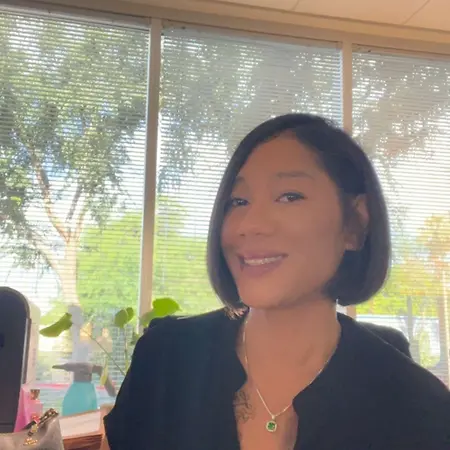
She is an accomplished professional, nonprofit leader, and credentialed victim advocate with a diverse background in organizational management, community engagement, and public service. With more than 30 years of experience in the title and escrow industry, she has developed extensive expertise in operations, problem-solving, communication, and strategic planning. Throughout her professional career, she has…





