When History Opens the Door: A Defining Moment for Black Women in America
From enslavement to the governor's mansion: celebrating Black women's triumphs and the generations whose sacrifices made them possible.
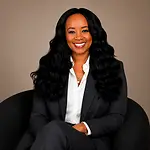
On November 3, 2026, history was made.
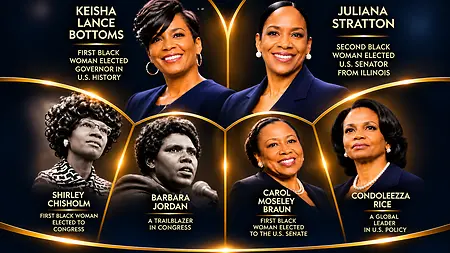
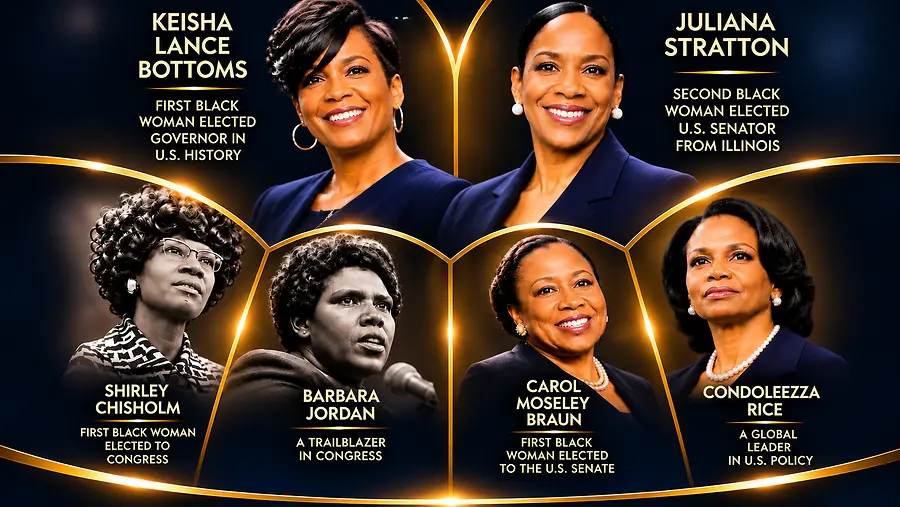
Keisha Lance Bottoms was elected Governor of Georgia, becoming the first Black woman elected governor in American history. On that same day, Juliana Stratton was elected to the United States Senate from Illinois.
Two women. Two extraordinary milestones. Two moments that generations of Black women could only dream of witnessing.
But as I reflected on these victories, I found myself thinking about something far deeper than election results.
I thought about the ancestors who came before them.
I thought about the generations of Black women who prayed, sacrificed, worked, and persevered so that their children and grandchildren might experience opportunities they themselves were denied.
And I thought about how many of us are living in the answered prayers of people who never had the opportunity to see what their sacrifices would make possible.
As a Black woman, a mother, an executive business partner, and an entrepreneur, I felt an extraordinary sense of pride.
Not because history suddenly became perfect on November 3.
Not because every barrier facing Black women has disappeared.
But because sometimes a single moment reminds us just how far a family, a generation, and a people can travel.
And sometimes, when history opens a door, it reminds us of every woman who helped make that moment possible.
From Enslavement to the Governor's Mansion
In 1860, a Black man named Sheppard Peek was enslaved in Crawfordville, Georgia.
Historical records documented a time when his life was treated as property. On a surviving document, he signed his name with an X.
More than 160 years later, his great-great-granddaughter, Keisha Lance Bottoms, was elected governor of the very state where he had been enslaved.
Let that settle for a moment.
A man whose freedom was denied in Georgia became the ancestor of a woman elected to lead Georgia.
From being recorded as property to having a descendant become governor.
From generations denied political power to a woman entrusted with leading an entire state.
I cannot help but wonder what Sheppard Peek would think if he could witness this moment.
Could he have imagined that one day his great-great-granddaughter would stand before the people of Georgia as their elected governor?
Could he have imagined how far his family would travel?
We cannot know what he dreamed or prayed for.
But we can recognize the extraordinary distance between his life and hers.
Keisha Lance Bottoms' achievement is her own. It reflects her preparation, her public service, her leadership, and the journey that brought her to this historic moment.
Yet her family's history gives that achievement an even deeper meaning.
Because behind her victory are generations whose lives were shaped by circumstances she did not choose, but whose perseverance became part of the foundation upon which she would build.
And as I think about that journey, I am reminded that sometimes God allows us to witness the fulfillment of possibilities that earlier generations never lived to see.
Another Family Story, Another Historic Door
On that same November day, Juliana Stratton made history in Illinois.
Her election to the United States Senate represents another milestone for Black women in American leadership.
But what moved me most was the story of her family.
Stratton's great-great-grandfather, William Stephens, was born into slavery.
Following emancipation, he and his twin brother helped establish a community in Mississippi where families could build lives, own land, worship, and pursue education.
Generations later, his great-great-granddaughter was elected to serve in the United States Senate.
Stratton has reflected on the history of the Senate seat she won, a seat once contested by Abraham Lincoln and Stephen Douglas during a period when slavery divided the nation.
Now, a descendant of an enslaved man will hold that seat.
I think about these two family stories together.
Sheppard Peek and William Stephens lived during a period when their freedom and opportunities were profoundly restricted.
Their great-great-granddaughters have now reached positions of leadership that would have been unimaginable to many people of their time.
And what strikes me is not simply the titles these women will hold.
It is the generations between those two points in history.
The sacrifices.
The struggles.
The faith.
The families who continued moving forward, even when the path ahead was uncertain.
Those are the stories that move me.
Because they remind us that the progress we witness today did not begin with us.
The Women Who Made Our Tomorrows Possible
When I think about the women who came before us, I do not think only about the names recorded in history books.
I think about our mothers.
Our grandmothers.
Our great-grandmothers.
Women who raised families while working long hours.
Women who pursued education when opportunities were limited.
Women who encouraged their daughters to dream beyond the circumstances they themselves had experienced.
Women who prayed over their children and grandchildren, asking God to protect them, guide them, and open doors they could not open on their own.
I think about the women whose names we know.
- Shirley Chisholm, who became the first Black woman elected to Congress.
- Barbara Jordan, whose intelligence, leadership, and powerful voice left an enduring mark on American public life.
- Carol Moseley Braun, who became the first Black woman elected to the United States Senate.
- Condoleezza Rice, who became the first Black woman to serve as United States secretary of state.
Their journeys were different, and so were their contributions. But each expanded the visibility of Black women in spaces where their leadership had historically been limited.
And then I think about the women whose names we may never know.
- The woman who worked two jobs to help her daughter attend college.
- The grandmother who made sure her grandchildren understood the importance of education.
- The mother who held her family together during seasons of uncertainty.
- The woman who quietly mentored someone younger, shared an opportunity, or encouraged another woman not to give up.
Those women helped shape history, too.
They may never have stood before cameras or delivered a victory speech.
But they helped build the foundation upon which future generations would stand.
And that is why I believe legacy is about more than the recognition we receive during our lifetime.
It is also about what becomes possible for someone else because we were here.
The Doors We Are Still Working to Open
I have spent much of my professional life navigating corporate America, working alongside senior executives, building relationships, supporting leadership, and learning what it takes to succeed in demanding environments.
I have experienced opportunities that helped me grow.
I have also experienced unexpected setbacks, including layoffs that required me to reassess my plans and begin again.
Those experiences have shaped how I view success, resilience, and the importance of having people who recognize your potential.
They have also taught me that a closed door does not always mean the end of your journey.
Sometimes it means you must find another entrance.
Sometimes it means you must create an opportunity that did not previously exist.
And sometimes it means trusting God through a season when you cannot yet understand what He is preparing you for.
That does not mean the disappointment disappears.
It does not mean rebuilding is easy.
And it certainly does not mean every setback automatically leads to something better.
But I have learned that we cannot allow one difficult chapter to convince us that everything we have worked toward has lost its meaning.
When I look at Keisha Lance Bottoms and Juliana Stratton, I see women whose achievements remind us what preparation, perseverance, and opportunity can make possible.
And I also think about the women whose professional accomplishments may never receive national attention.
The women who are still waiting for someone to recognize their leadership.
The women who are rebuilding after a layoff.
The women who are changing careers, returning to school, launching businesses, or pursuing opportunities they once thought were beyond their reach.
Their journeys matter, too.
Because opening doors must mean more than celebrating the women who have already walked through them.
It must also mean helping create opportunities for the women coming behind us.
A Reminder That Every Victory Matters
Recently, I wrote an article for Influential Women titled "700,000 Black Women—More Than a Statistic."
I wrote about the hundreds of thousands of Black women affected by workforce displacement and the personal realities behind those numbers.
Behind every statistic is a woman with a life, a career, responsibilities, aspirations, and people depending on her.
And just today, I came across a LinkedIn post that reminded me why those stories matter so much.
A woman shared on LinkedIn that in December 2025, just two weeks before Christmas, she learned her position was being eliminated because of an acquisition.
After months of updating her résumé, submitting applications, attending interviews, receiving rejection emails, and enduring sleepless nights, she finally had something wonderful to celebrate.
She had secured a new position she was proud of.
Her story immediately brought me back to the Black women I had written about just last week. Here was a woman whose career had been interrupted in 2025, now celebrating a new beginning and encouraging others navigating layoffs and career transitions not to give up.
After all the applications.
After all the interviews.
After all the waiting.
She could finally say, "I got the job."
I felt proud of her.
Proud that she kept going.
Proud that she did not allow the disappointments along the way to convince her that the opportunity she wanted was no longer possible.
And I thought about how many women are still waiting to experience that same feeling.
Sometimes history is made in a governor's mansion.
Sometimes it is made in the United States Senate.
And sometimes, a woman's personal victory is simply receiving the opportunity she has been praying for and working toward.
That victory may never appear in a history book.
But to her and her family, it may change everything.
And that deserves to be celebrated, too.
When God Opens the Door
As I reflect on these historic moments, I keep returning to the same thought.
We do not always know what God is preparing us for.
There have been seasons in my own life when I could not understand why certain doors closed.
Seasons when I prayed for direction.
Seasons when I had to trust God even though I could not see what was waiting on the other side of my circumstances.
And seasons when I had to remind myself that my present situation did not determine the possibilities of my future.
I have learned that faith does not mean we never experience disappointment.
It means we continue trusting God even when the journey looks different from what we planned.
It means doing our part, preparing ourselves, using the gifts we have been given, and remaining open to opportunities we may not yet recognize.
When I think about the generations separating Sheppard Peek from Keisha Lance Bottoms and William Stephens from Juliana Stratton, I am reminded that some of the most meaningful changes in a family's story unfold over generations.
We may not live to see every result of the work we do today.
We may not witness every door that opens because of the sacrifices we make.
But that does not make our contributions any less important.
And it does not mean God has finished working in our lives.
History Is Still Being Written
November 3, 2026, gave us a moment worth remembering.
Keisha Lance Bottoms made history in Georgia.
Juliana Stratton made history in Illinois.
And through their achievements, we were reminded of the generations whose struggles, sacrifices, and determination helped create the possibilities we see today.
I celebrate these women.
I celebrate the ancestors whose stories are woven into their journeys.
I celebrate the mothers, grandmothers, mentors, and trailblazers who helped open doors for others.
And I celebrate the woman who finally received the job offer she had been waiting for.
Because every victory has a story behind it.
Some are witnessed by millions.
Others are celebrated quietly around a kitchen table, through a phone call to a loved one, or in a prayer of gratitude.
But each can represent a meaningful turning point in someone's life.
To every Black woman who is still waiting for her opportunity, rebuilding after a setback, or wondering whether her next chapter will ever begin, I want to leave you with this:
Do not give up on yourself.
Do not underestimate what you have already overcome.
And do not allow the doors that have closed to convince you that no others will ever open.
Keep learning. Keep preparing. Keep moving forward.
Keep your faith in God, even when you cannot see the entire path ahead.
Our ancestors helped lay a foundation they might never have imagined would lead to moments like these.
Today, we have the responsibility and the opportunity to continue building upon it.
And perhaps one day, generations from now, someone will look back at the lives we lived, the sacrifices we made, and the doors we helped open.
And they will understand that we, too, were part of something greater than ourselves.
History was made on November 3, 2026. But God is not finished with our stories, and the next chapter is still being written.

Charlotte Howard's professional journey has been shaped by resilience, curiosity, and the willingness to embrace opportunities beyond her comfort zone. Beginning her career as a receptionist, she learned early that professional growth is not defined by a job title, but by the initiative to learn, the courage to take on new challenges, and the relationships built along the way. Throughout her career, Charlotte has…