When Science, Play, and Connection Become Preventive Care.
Building trauma-informed spaces where science, play, and connection become tools for healing and community well-being.

By Alia Zaidi
Founder, Up & Atom Foundation | Creator, Spokane Inner Peace Park
Human beings don’t thrive on productivity alone. We thrive on curiosity, connection, and environments that allow us to feel safe, engaged, and seen.
Roots in Development, Not Crisis
For much of my career, I worked in high-performance environments where efficiency, metrics, and results defined success. Later, through lived experience and community work, I came to understand something just as critical: mental well-being is shaped long before crisis intervention is ever needed.
My roots are in child development, where play is understood not as entertainment, but as a primary language of learning. Before we can articulate emotion, we regulate it through movement, exploration, creativity, and interaction. That truth does not disappear in adulthood—it simply becomes easier to overlook.
Trauma Is Often Cumulative, Not Isolated
Living with long-term, complex PTSD shaped my understanding of how environments influence regulation, learning, and connection. Trauma is frequently misunderstood as a single defining event, when many people experience it as layered and cumulative over time. For those individuals, healing rarely happens in isolation or through one-off interventions. It happens through consistent access to supportive spaces that encourage curiosity, grounding, and connection.
Science as an Invitation, Not a Barrier
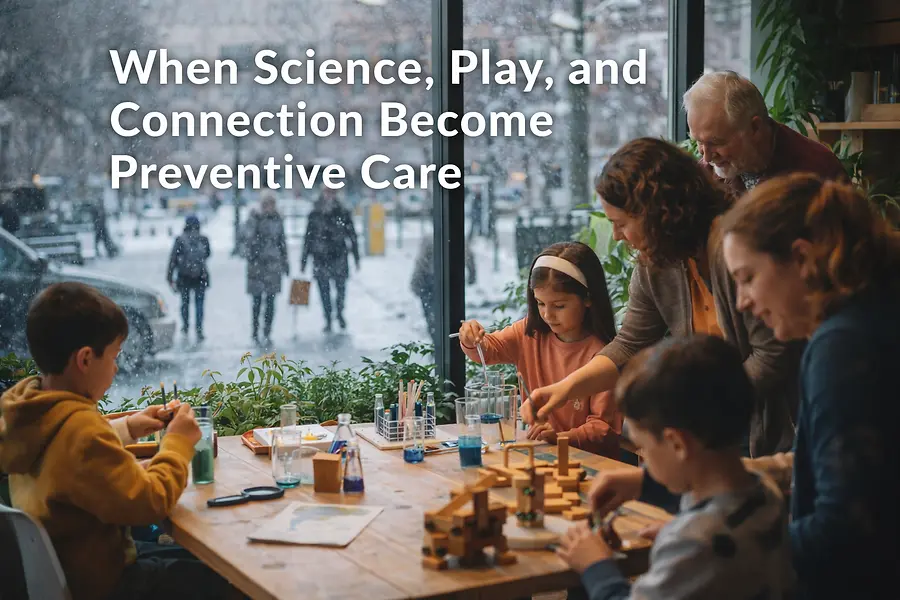
Science is often framed as academic or technical, something reserved for classrooms or careers. But at its core, science is curiosity in action. It invites questions, experimentation, and engagement with the world. When science is paired with creativity and play, it becomes accessible—not just for children, but for adults who may have lost touch with that sense of wonder.
Winter Isolation Is a Regional Reality
In Spokane and across the Inland Northwest, long winters quietly intensify isolation. Reduced daylight, fewer gathering spaces, and limited opportunities for movement and connection impact mental well-being across all ages. What many communities lack are non-clinical, non-transactional spaces designed to foster connection regardless of income, background, or diagnosis.
From Idea to Infrastructure
That belief led me to create Spokane Inner Peace Park, the flagship project of the Up & Atom Foundation. The vision is simple but ambitious: to build STEAM-focused, trauma-informed community spaces where science, imagination, and play function as preventive tools for mental health and social isolation. Spaces where children explore freely. Spaces where adults rediscover curiosity. Spaces where connection is intentionally built into the environment.
“Connection, curiosity, and creativity are not extras. They are foundational to community health.”
— Alia Z.
I do TED Talks, public speaking, and I am always open to conversation and collaboration. Reach out to me at: TheCometCrew@SpokaneInnerPeace.org
Copyright Reserved 2025


