
Who Speaks for the Scholars ?
Navigating the tension between political authority and educational leadership to protect learner interests.
Who speaks for the learner when politics takes the lead?
The politician announcing another educational reform? The policymaker developing legislation? The superintendent navigating competing priorities? The principal expected to implement another initiative? Or the educator standing before scholars whose futures will be shaped by decisions made far beyond the classroom?
Perhaps all of them.
But here is where things become interesting.
Who really has the loudest voice, and whose voice is being drowned out?
Trying to take politics out of education is pointless.
Education is inherently political. Societies must decide what knowledge is valued, how resources are distributed, who has access to learning opportunities, and what outcomes educational institutions are expected to produce.
Economics, cultural values, historical circumstances, and political priorities influence these decisions.
But there is a difference between political involvement and political interference.
And, oh, what a difference it can make!
Political involvement can establish the conditions for educational improvement. Political interference can compromise the very conditions necessary to sustain it.
Political involvement includes legislation, public investment, democratic oversight, and policies aimed at expanding educational opportunities.
Political interference occurs when partisan interests, favoritism, personal agendas, or inappropriate external pressures compromise professional judgment, equitable decision-making, institutional integrity, or learners' interests.
Now, I am not suggesting that every political disagreement constitutes interference. Competing philosophies, priorities, and interpretations of evidence shape educational policies. That is part of democratic governance.
But surely we can agree that educational decisions must be transparent, informed, equitable, and accountable to the people they affect.
And therein lies the challenge.
Who is holding the decision-makers accountable when the consequences of their decisions are experienced by people with little authority to change them?
Consider the educator implementing a policy developed without meaningful classroom consultation.
Consider the principal expected to improve achievement while navigating staffing shortages, resource limitations, and competing administrative demands.
Consider the parent whose child needs additional support but whose access to services depends upon the resources available in a particular school or community.
And consider the scholar whose educational experience becomes the testing ground for yet another reform that may disappear when the next administration assumes office.
What exactly are we doing?
Are we developing sustainable educational systems, or are we repeatedly rebuilding institutions around changing political priorities?
And who pays the price when the rebuilding never seems to end?
The scholars cannot put their learning on hold while we sort out our politics!
According to UNESCO's 2024/5 Global Education Monitoring Report: Leadership in Education—Lead for Learning, 51% of education ministers in its international analysis had left office within two years of their appointment.
Think about that.
The finding, drawn from 1,412 ministers across 211 education systems between 2010 and 2023, raises serious questions about continuity in educational leadership.
Now, imagine attempting to implement a meaningful ten-year educational improvement strategy in an environment where political leadership may change repeatedly before the intended outcomes can be realized.
What happens to institutional memory?
What happens to professional development investments?
What happens to long-term literacy initiatives, school improvement plans, and relationships established with communities?
And what happens to the scholars whose educational journeys cannot simply be placed on hold while another administration determines its priorities?
Let us be clear. Leadership transitions are sometimes necessary and can create opportunities for meaningful improvement.
But educational progress should not depend entirely upon who occupies a particular office.
A change in leadership should not automatically mean a change in educational purpose.
And that brings me to sustainability.
We hear the word everywhere.
Sustainable development. Sustainable funding. Sustainable educational improvement.
But what exactly are we sustaining?
A policy?
A program?
A position?
An institution?
Or the opportunity for every learner to receive a quality education regardless of who holds political or administrative authority?
The United Nations Sustainable Development Goal 4 calls for inclusive and equitable quality education and lifelong learning opportunities for all.
Beautiful!
But those aspirations require more than enrollment targets, impressive policy documents, and ambitious political declarations.
They require educational systems capable of sustaining meaningful learning opportunities despite leadership transitions, economic pressures, demographic changes, and emerging challenges.
And yes, that requires money.
Money matters!
We need qualified educators, appropriate instructional resources, accessible facilities, technology, professional development, and specialized services.
But money without effective governance may produce expenditure without meaningful improvement.
And passion without adequate institutional support can become exhaustion.
Oh yes, exhaustion!
Because somewhere in all these conversations about educational improvement, we seem to forget the human beings expected to deliver it.
The educators.
Those who plan lessons, assess learning, differentiate instruction, communicate with families, support struggling scholars, attend meetings, complete reports, and somehow find the time and resources to make learning meaningful.
And then, when institutional resources fall short, some reach into their own pockets to provide what their scholars need.
How long are we going to celebrate this generosity without questioning why it has become necessary?
We must stop treating personal sacrifice as a sustainable strategy for educational financing.
Educators who spend their own earnings to provide essential classroom resources may demonstrate extraordinary commitment, but their generosity should never become a substitute for institutional responsibility.
And what about their well-being?
RAND's 2025 State of the American Teacher research found that 46% of surveyed U.S. teachers reported that their jobs left them too tired to participate in activities in their private lives, compared with 13% of comparable working adults.
Forty-six percent!
Now, those findings concern American teachers and should not be generalized to every education system. But they raise a question that educational leaders everywhere should be prepared to consider.
How can we expect educators to sustain excellence when the conditions under which they work are not themselves sustainable?
We cannot build sustainable educational systems upon the perpetual exhaustion of educators.
And neither can we assume that educational leadership is effective simply because a school or district appears administratively organized.
There is a difference between managing compliance and leading improvement.
A school may submit every report on time, complete every mandated professional development session, and produce an impressive strategic plan.
Wonderful!
But are scholars learning?
Are educators developing professionally?
Are families meaningfully engaged?
Does credible evidence inform decisions?
And are leaders creating the conditions necessary for improvement to continue after they have departed?
Because if the paperwork is magnificent but the learning is not, what exactly are we celebrating?
These are the questions that should occupy our educational leadership discussions.
Not simply whether a task was completed, but whether its completion contributed to meaningful educational improvement.
And here is something else we must confront.
Accountability must travel in every direction that authority travels.
If policymakers establish standards, they must consider the resources and implementation conditions necessary to achieve them.
If district leaders demand improved outcomes, they must examine whether schools have the staffing, professional support, and institutional capacity required.
If principals expect instructional excellence, they must cultivate environments where educators can exercise professional judgment, collaborate, innovate, and continue learning.
And if educators expect scholars to demonstrate perseverance, responsibility, and academic growth, we must also examine how effectively we model those expectations.
We are all educational leaders.
Yes, all of us!
But leadership without support becomes a burden, just as authority without accountability becomes a risk.
And while we are discussing accountability, let us talk about families.
Because I have never understood how we can claim to be committed to educational improvement while overlooking some of the most important people in a scholar's educational journey.
Parents. Scholars' families!
Too often, educational systems approach family engagement by focusing on attendance at meetings, participation in school events, or compliance with homework expectations.
But what happens when families are treated as genuine partners in educational planning, implementation, and improvement?
What happens when schools recognize that families bring cultural knowledge, lived experiences, aspirations, and expertise about their children that cannot be captured by assessment data alone?
And what happens when educational policies are developed with communities rather than merely delivered to them?
Meaningful family engagement is not a decorative component of school improvement.
It is an essential part of developing trust, strengthening educational relationships, and creating conditions for long-term progress.
We must move beyond deficit-based assumptions that equate socioeconomic disadvantage with a lack of educational interest or family commitment.
A parent's inability to attend a meeting does not automatically mean a lack of concern.
A family's financial circumstances do not determine the value of its contribution.
And a scholar's address should never become a reflection of that scholar's potential.
Families may face financial barriers to participation even as they remain deeply invested in their children's futures.
Sustainable educational leadership must recognize those realities and respond with respect, flexibility, and genuine collaboration.
Education does not begin when a child enters the schoolyard, and it certainly does not end when the school bell rings.
So, where does all of this leave us?
Political involvement is unavoidable.
Political interference is not inevitable.
And sustainable educational improvement must never depend solely upon the tenure, personality, political affiliation, or preferences of one individual.
It must be embedded in institutions, professional practices, community relationships, and a shared commitment to educational purpose.
I dare to believe that we can develop educational systems where political leadership strengthens rather than destabilizes professional practice.
Where resources follow educational needs rather than institutional privilege.
Where educators are supported rather than expected to sacrifice indefinitely.
Where families are respected as partners rather than viewed through the limitations of their circumstances.
And where scholars are recognized not simply as future workers or economic contributors, but as human beings whose potential deserves intentional cultivation.
I am not suggesting that education can exist without politics.
Nor am I suggesting that every politician, policymaker, or educational administrator is motivated by personal interests.
People are serving within these systems who are genuinely committed to educational excellence.
People with passion.
People with integrity.
People with purpose.
But good intentions cannot excuse poor decisions, and political authority should never place anyone beyond meaningful accountability.
Because ultimately, the question is not whether politics belongs in education.
The question is whether those entrusted with political and educational authority are prepared to exercise that authority in service of the people whose futures depend upon it.
And if we are genuinely committed to sustainable education, that is a question we must never stop asking.
So, "When politics takes the lead, who speaks for the scholars?"
We all should.
And perhaps more importantly, we must create educational systems in which learners themselves are heard.
Sail On. Soar Above. Be Magnificent.
© Michelle K. Agard | The Magnificence Framework™
References
RAND. (2025). To make teaching sustainable, help teachers balance work and personal demands: Findings from the 2025 State of the American Teacher Survey. https://doi.org/10.7249/RRA1108-20
UNESCO. (2024/5). Global Education Monitoring Report: Education leadership—Lead for learning. https://www.unesco.org/reports/gem-report/en/2024
United Nations. (n.d.). Goal 4: Ensure inclusive and equitable quality education and promote lifelong learning opportunities for all. https://sdgs.un.org/goals/goal4
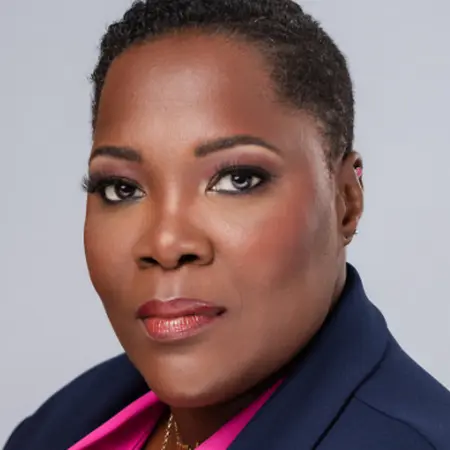
Michelle K. Agard, M.A. Ed, is an educational leader, consultant, and entrepreneur with more than 36 years of experience spanning teaching, educational leadership, curriculum development, educational policy, and strategic planning across the United States and the Caribbean. She is the CEO & Educational Consultant for Brevard Academic Consulting Group and Founder & CEO of KB BEST Educational Services, the foundation…