WHY ARE WE DIVIDED?
How invisible psychological boundaries between "us" and "them" fuel prejudice, and why curiosity is the key to breaking them down.

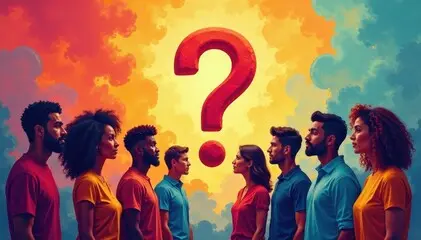
Have you ever wondered why you sometimes feel uncomfortable around people you don't even know, people you've never met before, simply because they are different from you?
The answer may be surprisingly simple: separation.
We divide our social world into "us" versus "them." These divisions create invisible psychological boundaries that keep us apart and prevent us from getting to know one another.
Let me give you an example.
Imagine this scene: A beautiful rain fills the air with the fresh scent of the garden as a wealthy family admires it from their luxurious home atop a hill. Meanwhile, down below, a poor family is struggling to survive a devastating flood. Filthy sewage water is pouring into their home. Their daughter sits on top of a toilet as sewage water violently erupts beneath her. Their home is destroyed. Their dignity is washed away.
Does this scene sound familiar? It's from Parasite, the Oscar-winning film directed by one of my favorite directors, Bong Joon-ho.
You might think Parasite is simply a movie about wealth and social class.
But it's also about something much deeper: the invisible psychological boundaries between "us" and "them."
What Happens When We Are Divided?
In his classic book, The Nature of Prejudice, social psychologist Gordon Allport explained how social divisions can fuel tension, hostility, and exclusion and, in their most extreme forms, contribute to warfare, enslavement, persecution, and oppression.
A social psychology experiment conducted in the 1950s in Oklahoma showed us how this tension and hostility grow when we are divided. Muzafer Sherif, who was born in İzmir, Turkey, brought a group of young boys to a summer camp. Initially, the boys formed friendships and enjoyed their time together. But then something changed. The boys were divided into two groups and placed in fierce competition with one another. It was a zero-sum game, meaning that only one group could win. Rewards were limited. What happened next was remarkable.
These seemingly friendly, well-behaved boys began insulting one another, calling each other names, and even becoming aggressive and hostile.
What Does This Experiment Tell Us About Human Nature?
When we divide people into groups and make them compete over limited resources, even ordinary people can quickly develop hostility toward one another.
Don't we see this pattern throughout human history? Many wars, international conflicts, and social tensions are fueled, at least in part, by competition over scarce resources.
Remember the COVID-19 pandemic, when toilet paper suddenly became scarce? Let's remember the irrational behaviors, physical attacks, and panic-buying in stores when we felt we were under threat. People were fighting in stores over the last few rolls on the shelves! Polite and considerate people became enemies over toilet paper. It may sound almost funny now, but it illustrates something important:
When resources feel threatened, fear and competition can bring out the worst in us.
That's why it's so important to understand where our fears, anxieties, and feelings of threat come from, especially when we encounter people who seem different from us.
So, the next time you feel uncomfortable around someone simply because they are different, pause and be curious.
Ask yourself:
What is triggering this discomfort? Am I seeing this person as a threat because of who they really are, or because I've learned to see them as part of "them" rather than "us"?
Because sometimes, curiosity is the first step toward breaking down the boundaries between "us" and "them." And that curiosity may be the beginning of a powerful transformation.
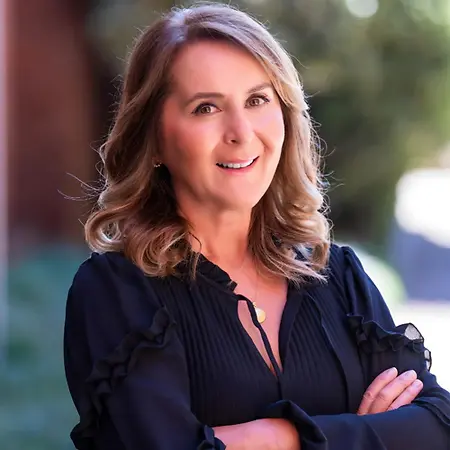
Dr. Nurcan Ensari is a Distinguished Professor at Alliant International University with 30+ years in higher education, specializing in social and organizational psychology. She established Turkey's first Applied Industrial and Organizational Psychology master's program and directs the SPARKS-USA Leadership Development Program, empowering multicultural and immigrant women to realize their leadership potential. She…