
Explore how invisible psychological boundaries between "us" and "them" fuel prejudice, hostility, and social division. Discover why curiosity and empathy are essential for breaking down these barriers and transforming our relationships with those different from us.
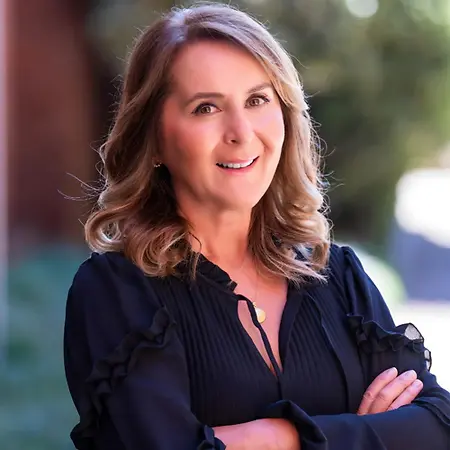
Verified Member
Influential Woman · Higher Education (Psychology)
Nurcan Ensari, Ph.D.
Distinguished Professor of Psychology, Alliant International University-Los Angeles
Mission Viejo, CA 92692
25Years experience
1Article published
6Awards received
Her Story
About Nurcan
Dr. Nurcan Ensari is a Distinguished Professor at Alliant International University’s California School of Professional Psychology, where she has served since 2001. A social and organizational psychologist, researcher, and author, she brings more than 30 years of experience in higher education, teaching, mentoring, and cross-cultural research. She earned her Ph.D. and Master of Science in Social Psychology from the University of Southern California. Her academic work focuses on intergroup relations, leadership, conflict management, diversity, and understanding human behavior across cultural contexts. She also previously served as a postdoctoral fellow at Claremont McKenna College and held academic and leadership positions internationally, including in Hong Kong and Türkiye. Throughout her career, Dr. Ensari has made significant contributions to organizational psychology, leadership education, and psychological research. Originally from Türkiye, she played a key role in establishing the country's first master's program in Applied Industrial and Organizational Psychology. Her research examines how personalization and meaningful interpersonal connections can reduce prejudice, strengthen relationships, and bridge social divides. She has authored scholarly publications, including contributions to the *Encyclopedia of Mental Health* and the *SAGE Encyclopedia of Leadership Studies*, where she explored Atatürk's transformational leadership. She is also a recipient of the Alliant Equity and Inclusion Fellowship and serves on the board of the Society for the Psychology of Women. In addition to her academic responsibilities, Dr. Ensari is the Director of the SPARKS-USA Leadership Development Program through the Turkish Women's Initiative. This initiative empowers immigrant and multicultural women by helping them strengthen their leadership, communication, professional networking, and career development skills. Drawing on her own experience as an immigrant, she is passionate about creating opportunities for women to build confidence, establish meaningful connections, and achieve professional success. Through her teaching, research, writing, and community leadership, Dr. Ensari remains committed to advancing inclusion, fostering cross-cultural understanding, and translating psychological research into practical ways to improve people's lives.
She is the author of a book, "Personalization: The Science of Reducing Bias and Building Inclusive Cultures", published by Emerald/Wiley Publishing, which introduces a comprehensive psychological framework for personalization, prejudice reduction, and building connections across social and cultural divides.
Her Interview
Ten minutes with Nurcan
01What do you attribute your success to?
I attribute my success to a combination of intellectual curiosity, perseverance, resilience, inspiring mentorship, and a strong sense of purpose. Growing up in Türkiye, where traditional gender expectations often challenged women's professional aspirations, I learned early on the importance of education, determination, and believing in my own potential.
My journey as an immigrant woman pursuing an academic career in the United States was not without obstacles. Navigating cultural differences, financial challenges, and the demands of motherhood while establishing myself as a scholar required discipline, adaptability, and the courage to step beyond my comfort zone. I also owe much of my academic success to my mentor, Professor Norman Miller, whose guidance, encouragement, and belief in my abilities profoundly shaped my professional identity. His influence inspired me to become a mentor who recognizes and nurtures the potential in others.
Above all, I believe my success stems from aligning my professional aspirations with a deeper sense of purpose. I have never viewed success solely in terms of titles, publications, or professional recognition. For me, true success lies in creating meaningful opportunities for others, challenging societal barriers, advancing knowledge, and leaving a lasting positive impact.
Success is not simply about how far we have come, but how many others we have empowered along the way.
02What’s the best career advice you’ve ever received?
Never allow the limitations others place on you to become the limitations you place on yourself.
As an immigrant woman pursuing an academic career in a foreign country, I often found myself in environments where I had to work harder to establish my credibility. Over the years, I have learned not to wait for ideal circumstances or external validation to pursue my aspirations. Opportunities are not always given to us; sometimes, we have to create them ourselves. I also believe that a fulfilling career is not simply about accumulating accomplishments but about aligning your professional ambitions with a greater purpose.
Pursue excellence, but let your legacy be defined not only by what you achieve, but also by what you enable others to achieve.
03What advice would you give to young women entering your industry?
My advice to young women entering academia and psychology is to never underestimate your potential or allow societal expectations to define the boundaries of your aspirations. Growth often begins when we step outside our comfort zones.
Seek mentors who challenge you intellectually, recognize your potential, and advocate for your growth. Build meaningful professional networks, develop your own voice, and have the courage to express your ideas, even when they challenge conventional thinking.
As women, we sometimes feel compelled to conform to established leadership prototypes to demonstrate our competence. However, leadership does not require sacrificing our authenticity. Empathy, compassion, collaboration, and intellectual strength can coexist.
Be ambitious, but also be patient and compassionate with yourself. Rejection, setbacks, and self-doubt are inevitable parts of professional development, not indicators of your worth or capabilities. Recognize that success is rarely a linear journey.
Finally, as you advance in your career, create opportunities for other women. Share your knowledge, become a mentor, and challenge institutional barriers that limit women's advancement.
Aspire to transform those systems so that the women who follow you encounter fewer barriers than you did.
04What are the biggest challenges or opportunities in your field right now?
One of the greatest challenges facing psychology today is the increasing social, cultural, and ideological polarization of our society. Despite being more digitally connected than ever, we are becoming increasingly disconnected at a human level. Addressing prejudice, declining interpersonal trust, and rigid social categorization presents both a significant challenge and an opportunity for social psychology to contribute meaningful, evidence-based solutions.
Another major challenge is the rapid advancement of artificial intelligence and its implications for education, leadership, employment, and human relationships. While AI offers tremendous opportunities for innovation, we must ensure that technological progress does not come at the expense of human connection, critical thinking, creativity, or ethical judgment.
There is also a growing opportunity to rethink leadership and organizational cultures. Despite decades of progress, women and individuals from underrepresented backgrounds continue to encounter systemic barriers. Organizational psychology can play a critical role in developing more inclusive leadership models, promoting psychological safety, and creating environments where diverse perspectives are genuinely valued. Through my research and my recent book on personalization and prejudice reduction, I hope to contribute to bridging the gap between psychological science and real-world applications.
05What values are most important to you in your work and personal life?
Integrity, compassion, justice, intellectual curiosity, and purpose.
Integrity means remaining true to my principles, even when doing so is inconvenient or requires challenging established norms. I believe that credibility is built not only through accomplishments but through consistency between our words and actions.
Compassion and justice are central to my work as a social psychologist. I believe every individual deserves to be seen beyond the social categories, stereotypes, and assumptions imposed upon them. This conviction has shaped my research on prejudice reduction, inclusion, and women's leadership.
Intellectual curiosity keeps me committed to lifelong learning. I value the humility to question my own assumptions, consider different perspectives, and recognize that there is always more to discover.
In my personal life, I deeply value family, gratitude, meaningful relationships, and generosity. I believe that what we give to others is ultimately more significant than what we accumulate for ourselves.
Above all, I value living with purpose and leaving a meaningful impact. For me, a fulfilling life is not measured solely by professional achievements or recognition, but by the lives we touch, the opportunities we create for others, and the positive change we leave behind.
Her Content Hub
Articles by Nurcan
WHY ARE WE DIVIDED?
How invisible psychological boundaries between "us" and "them" fuel prejudice, and why curiosity is the key to breaking them down.

Have you ever wondered why you sometimes feel uncomfortable around people you don't even know, people you've never met before, simply because they are different from you?
The answer may be surprisingly simple: separation.
We divide our social world into "us" versus "them." These divisions create invisible psychological boundaries that keep us apart and prevent us from getting to know one another.
Let me give you an example.
Imagine this scene: A beautiful rain fills the air with the fresh scent of the garden as a wealthy family admires it from their luxurious home atop a hill. Meanwhile, down below, a poor family is struggling to survive a devastating flood. Filthy sewage water is pouring into their home. Their daughter sits on top of a toilet as sewage water violently erupts beneath her. Their home is destroyed. Their dignity is washed away.
Does this scene sound familiar? It's from Parasite, the Oscar-winning film directed by one of my favorite directors, Bong Joon-ho.
You might think Parasite is simply a movie about wealth and social class.
But it's also about something much deeper: the invisible psychological boundaries between "us" and "them."
What Happens When We Are Divided?
In his classic book, The Nature of Prejudice, social psychologist Gordon Allport explained how social divisions can fuel tension, hostility, and exclusion and, in their most extreme forms, contribute to warfare, enslavement, persecution, and oppression.
A social psychology experiment conducted in the 1950s in Oklahoma showed us how this tension and hostility grow when we are divided. Muzafer Sherif, who was born in İzmir, Turkey, brought a group of young boys to a summer camp. Initially, the boys formed friendships and enjoyed their time together. But then something changed. The boys were divided into two groups and placed in fierce competition with one another. It was a zero-sum game, meaning that only one group could win. Rewards were limited. What happened next was remarkable.
These seemingly friendly, well-behaved boys began insulting one another, calling each other names, and even becoming aggressive and hostile.
What Does This Experiment Tell Us About Human Nature?
When we divide people into groups and make them compete over limited resources, even ordinary people can quickly develop hostility toward one another.
Don't we see this pattern throughout human history? Many wars, international conflicts, and social tensions are fueled, at least in part, by competition over scarce resources.
Remember the COVID-19 pandemic, when toilet paper suddenly became scarce? Let's remember the irrational behaviors, physical attacks, and panic-buying in stores when we felt we were under threat. People were fighting in stores over the last few rolls on the shelves! Polite and considerate people became enemies over toilet paper. It may sound almost funny now, but it illustrates something important:
When resources feel threatened, fear and competition can bring out the worst in us.
That's why it's so important to understand where our fears, anxieties, and feelings of threat come from, especially when we encounter people who seem different from us.
So, the next time you feel uncomfortable around someone simply because they are different, pause and be curious.
Ask yourself:
What is triggering this discomfort? Am I seeing this person as a threat because of who they really are, or because I've learned to see them as part of "them" rather than "us"?
Because sometimes, curiosity is the first step toward breaking down the boundaries between "us" and "them." And that curiosity may be the beginning of a powerful transformation.
Join Influential Women and start making an impact. Register now.