Why Neurodivergent Minds Must Help Shape the Future of AI
Building Inclusive Leadership in the Age of AI: Why Neurodivergent Voices Matter at the Table


Organizational leadership faces a question it can no longer avoid: Are all the right people at the table as we shape the future of work? As artificial intelligence changes how people write, plan, learn, and make decisions, leaders must consider the people whose minds process those demands differently. Ethical leadership requires more than access to new tools and systems. It requires psychologically safe environments, authentic belonging, and a meaningful place for neurodivergent people at the design table.
The Cost of Being Unseen
Neurodiversity describes the natural variation in how human minds work. Neurodivergent people may experience differences in attention, learning, sensory processing, communication, or other aspects of cognition. There is no single neurodivergent personality, appearance, or set of needs. Yet many workplaces still reward one narrow version of "professional": quick verbal responses, uninterrupted focus in noisy rooms, comfort with ambiguous instructions, and ease with constant social performance.
Research underscores that this is a leadership issue with implications across the workforce. Writing for the Center for Creative Leadership, Pearsall and Kosovich (2026) describe approximately one in five workers as neurodivergent. In the organization's research with 416 leaders across the United States and United Kingdom, 41% of neurodivergent professionals reported that they had never revealed their neurodivergent identity to anyone at work. The researchers also found that 40% of participants were first diagnosed after age 30. These findings challenge the assumption that leaders can readily identify everyone who needs a different way to work.
A 2026 U.S. survey commissioned by Understood.org found that 70% of neurodivergent employees worried disclosure could negatively affect them at work. Sixty percent did not know whom to ask about accommodations, while 70% did not know which accommodations they were entitled to (Understood.org, 2026). Many may find these findings surprising; for people who have navigated those barriers, they may feel familiar.
For someone who has spent years being misunderstood, silence may feel safer than explanation. A person may learn to accomplish difficult work independently while feeling isolated from the team. Others may be newly diagnosed, exploring whether a diagnosis fits, or choosing to keep that information private. None of those circumstances gives a manager permission to guess a colleague's condition. A leader can still ask what helps someone do their best work and make useful options available to everyone.
Psychological Safety Must Be Practiced
Psychological safety means people can ask questions, name a problem, or propose a different approach without expecting humiliation or punishment. Edmondson's (1999) research linked team psychological safety with learning behavior. For neurodivergent employees, the test is concrete: Can I request written instructions? Can I ask for a quieter space, a different meeting format, or more time to process without being judged as less capable?
Ethical leadership makes those choices ordinary. Leaders can provide agendas in advance, offer verbal and written ways to contribute, clarify priorities, and ask individuals about their preferred supports. They can examine whether hiring, promotion, and performance reviews mistake one communication style for competence. In an inclusive and accommodating environment, support may involve tailoring working practices to the person and the work. A person should not have to disclose a diagnosis to every colleague simply to be treated with respect. Embracing differences and creating an inclusive environment should be the norm.
The significance of later identification is easy to overlook. In a CDC analysis of U.S. adults reporting a current ADHD diagnosis, 55.9% had first been diagnosed at age 18 or older (Staley et al., 2024). That figure is specific to adults with ADHD in the study; it is not a rate for all forms of neurodivergence. A late diagnosis can give someone language for long-standing experiences, but it can also prompt grief over years of being mislabeled. Leaders should leave room for both realities.
AI Can Support Agency and Expose Blind Spots
AI can help turn scattered thoughts into an outline, summarize a long document, break a project into manageable steps, or offer a starting point for a difficult message. These uses can reduce friction while preserving the person's judgment and voice.
In Understood.org's (2026) survey, 78% of neurodivergent employees reported using AI tools at work, compared with 59% of neurotypical employees. More than half of neurodivergent employees surveyed said the availability of AI tools made them more confident applying for higher-level roles they had previously avoided because of administrative or organizational demands. These are self-reported survey findings, and their benefits should not be assumed to apply equally to every person or tool.
The opportunity comes with responsibility. An AI assistant that insists on one "normal" communication style may pressure a person to mask who they are. A tool that handles sensitive disclosures carelessly can undermine trust. In an autoethnographic study of neurodivergent users' experiences with generative AI, Glazko et al. (2025) found that these tools could support agency while also creating tensions between authentic self-expression and societal expectations. These insights reinforce the need to design AI that protects privacy, preserves individual choice, and supports different ways of communicating.
Rao (2026), writing in CIO, asked whether AI can thrive without neurodivergent talent shaping it. My answer is that people who have learned to navigate systems that were not designed with them in mind can reveal assumptions others miss. They can help designers ask whose instructions are unclear, whose sensory needs are ignored, and whose way of communicating gets mistaken for a lack of ability.
I believe the future of AI needs neurodivergent minds in its creation, governance, and everyday use. That is an argument for participation and choice, without assuming that every neurodivergent person thinks alike or wants to work in technology.
Belonging Extends Beyond the Workplace
Where do I belong? This question reaches classrooms, community organizations, and faith communities. As a Christian minister, I know how much harm can follow when unfamiliar behavior is assigned a moral or spiritual label before anyone listens.
A person experiencing a mental health concern, a neurological difference, trauma, or another unmet need deserves dignity and appropriate support. Prayer and compassionate ministry can accompany care; they should not become a substitute for understanding or professional assessment when one is needed. Faith leaders and counselors can learn to ask better questions and refer people to qualified help rather than assume they know the cause of a behavior.
That conviction led me to develop Understanding Neurodiversity, a free educational initiative of God's Diamonds. Its learning path, condition library, practical guides, workplace and faith resources, and AI Companion help people begin with knowledge and move toward more thoughtful support. The AI Companion is an educational guide, not a diagnostic tool or a replacement for professional care. I built it for people seeking language for their own experience and for leaders who want to serve people whose experiences differ from theirs.
Shaping a Future Where More Minds Belong
My doctoral work in organizational leadership centers on ethical leadership, psychological safety, neurodiversity, and AI-enabled change. I want leaders to ask who is missing when a process appears to work for "everyone." Invite people into design without demanding disclosure. Give them choices without making them justify their humanity. Measure whether new tools make it easier to contribute, ask for help, and belong.
Those commitments must shape decisions before systems are built, while they are tested, and after they enter everyday use. Neurodivergent people deserve opportunities to influence the tools, policies, and expectations that will affect their lives. Their participation should carry weight in what organizations choose to build and how they define success.
As AI reshapes the future of work, leaders have an opportunity to build environments where more people can contribute without concealing how they think. That future begins with listening, shared decision-making, and the courage to question familiar assumptions. The minds too often asked to adapt to the margins must have a voice in shaping what comes next.
References
Edmondson, A. (1999). Psychological safety and learning behavior in work teams. Administrative Science Quarterly, 44(2), 350–383. https://doi.org/10.2307/2666999
Glazko, K., Cha, J., Lewis, A., Kosa, B., Wimer, B. L., Zheng, A., Zheng, Y., & Mankoff, J. (2025). Autoethnographic insights from neurodivergent GAI "power users." In Proceedings of the 2025 CHI Conference on Human Factors in Computing Systems (Article 274, pp. 1–19). Association for Computing Machinery. https://doi.org/10.1145/3706598.3713670
Pearsall, S., & Kosovich, J. (2026, September 10). Neurodiversity in the workplace: What organizations miss about their leaders. Center for Creative Leadership. https://www.ccl.org/articles/leading-effectively-articles/neurodiversity-in-the-workplace-leadership/
Rao, R. (2026, May 21). Can AI thrive without neurodivergent talent? CIO. https://www.cio.com/article/4172416/can-ai-thrive-without-neurodivergent-talent.html
Staley, B. S., Robinson, L. R., Claussen, A. H., Katz, S. M., Danielson, M. L., Summers, A. D., Farr, S. L., Blumberg, S. J., & Tinker, S. C. (2024). Attention-deficit/hyperactivity disorder diagnosis, treatment, and telehealth use in adults—National Center for Health Statistics Rapid Surveys System, United States, October–November 2023. Morbidity and Mortality Weekly Report, 73(40), 890–895. https://www.cdc.gov/mmwr/volumes/73/wr/mm7340a1.htm
Understood.org. (2026, May 12). Understood.org "Neurodiversity at Work" survey reveals persistent stigma and role for AI in the workplace. https://www.understood.org/en/press-releases/neurodiversity-at-work-survey-reveals-persistent-stigma-and-role-for-ai-in-the-workplace
About the Author
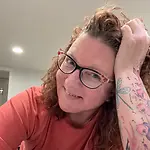
Kimberly J. Lewis, M.Div., is an organizational change and transformation professional, Christian minister, and doctoral student in organizational leadership. She is the founder of God's Diamonds and creator of Understanding Neurodiversity, a free educational initiative. Her work explores ethical leadership, psychological safety, neurodiversity, and the thoughtful use of AI to support people through change.
Explore some of her work and connect through her portfolio at KimberlyJLewis.com. Follow her on Instagram at @KimberlyJ4Change and connect on LinkedIn at https://www.linkedin.com/in/thekimberlyj?utm_source=share_via&utm_content=profile&utm_medium=member_ios.
Visit UnderstandingNeurodiversity.org for free educational resources.