Why Southwest Failed. - An analysis.
How activist investor Elliott Capital transformed the once-beloved airline into a profit-driven carrier, dismantling decades of employee-first culture.

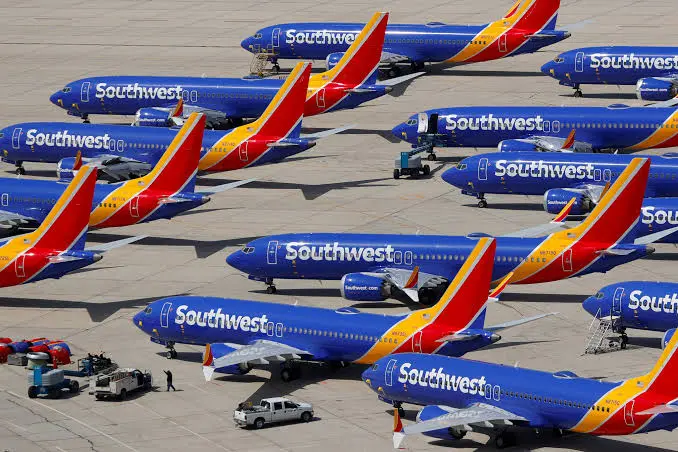
The title of this article is a bit misleading, I admit. After all, Southwest Airlines is very much still in existence and still flying. You can even go onto its website and buy a ticket right now as you read this article. However, it truly is failing, as much as its press releases might try to convince passengers otherwise.
The World's Kindest Airline lasted for at least five and a half decades. To learn even more about this and other topics in travel, visit Brookeintheairtravel.net, Brooke In The Air Travel's official site.
For Decades, Southwest Airlines Was the Most Beloved Carrier in American Aviation
Under the leadership of Herb Kelleher, Southwest was kind (an odd word to use to describe airlines, but in Southwest's case, it fits) to its employees, customers, and even shareholders. When financial backers visited Southwest's headquarters in Dallas and asked Herb Kelleher what made Southwest so successful, he was honest with them: "Kindness. See, we take care of our employees first. Our customers, second. And you, our shareholders, third. In that order." They didn't believe him until they saw the results of this methodology. In fact, one banking CEO even called him "a damned nutjob," if reports of the meeting can be believed.
Herb was right. They had never laid off an employee or cut salaries. They cut routes when they had to in order to reassign employees rather than fire them. For nearly sixty years, Southwest was the envy of most airlines and their customers. Employees loved working for the company, and prospective employees dreamed of working for it. Entire families grew up working for Southwest Airlines for decades, retiring with benefits and pensions and, most of all, as I mentioned, a genuine love for their jobs.
Flight attendants were regular improvisational comics, which made flights especially enjoyable. Even the pilots had a sense of humor. When flying with Southwest, you really forgot you were flying a low-cost carrier. And when you eventually remembered, you didn't care because you were having such an enjoyable flight.
Southwest Airlines was the first airline to be effectively streamlined, using only the Boeing 737 and its subvariants. Southwest became reliable and dependable. People became almost overly positive when they saw a Southwest 737 in its signature "canyon blue" livery pulling up to their gate.
This All Changed in 2022
Two storms, both named "Elliott," hit Southwest around the same time. Winter Storm Elliott blanketed Denver, Colorado, in snow and ice, accompanied by strong gale-force winds. In early 2022 and into the summer, SWAPA, the Southwest Airlines Pilots Association, the pilots' union, stated that the airline's scheduling system needed to be replaced. SWAPA picketed outside airports for months, almost predicting what was to come.
SWAPA said the system was inflexible, often canceling delayed flights when crews did not have enough remaining allowable duty hours rather than locating and dispatching backup crews. Crews on canceled flights often found themselves stranded without lodging, and the airline would lose track of them, according to the union, which predicted that these problems would lead to future mass cancellations. Michael Santoro, the vice president of the Southwest Airlines Pilots Association (SWAPA), said that Southwest had not invested in an updated software system in at least four decades. There had also been complaints for a decade from members of the flight attendants' union that the technology behind Southwest's scheduling system was outdated. These scheduling issues would come to a head in the form of Winter Storm Elliott over the 2022 holiday season.
In a December 21 memo to airport ramp staff at Denver International Airport (DEN), Southwest's vice president for ground operations declared a "state of operational emergency" because of an "unusually high number of absences." The memo implemented mandatory overtime and disallowed telemedicine appointments as an excuse for absences due to sickness. The state of operational emergency was implemented only at DEN, which was subjected to unusually frigid conditions. This was a prelude to the storm.
As the weather continued to worsen, Southwest was operating with a scant skeleton crew at DEN. Even worse, crews were rerouted, effectively lost in other parts of the country, and unable to get to Denver for connecting flights.
Unlike other large U.S. airlines, such as Delta, United, and American, which mostly used hub-and-spoke systems, Southwest used point-to-point operations in 2022. This made it unusually and uniquely vulnerable to scheduling disruptions because its available pilots and flight attendants were not concentrated at its hubs, and it could not easily reroute passengers by sending them through hubs. Experts attributed the crisis largely to the lack of scheduling flexibility inherent in the point-to-point operations model.
While Southwest faced litigation, especially from the U.S. Department of Transportation, and a hefty fine, activist-investor firm Elliott Investment Capital was drawn to Southwest like a moth to a flame. In the immediate aftermath, Southwest spent a year tied up in litigation. In December 2023, Southwest reached a settlement and received a $140 million fine from the U.S. Department of Transportation.
The Fine Is Thirty Times Larger Than Any Other Consumer Protection Penalty, Making It the Largest in History
As part of the settlement, Southwest agreed to establish a $90 million compensation fund for future delays. More pointedly, Elliott, which now had five members of its company on Southwest's board of directors, increased its share to 12.8%, enabling it to call a shareholder meeting. Only 10.2% was required to call a meeting. Elliott's additional shares ensured that it had a say in the direction of Southwest Airlines. Elliott's stated goal for Southwest was a return to profitability, at the expense of everything else.
Because of Elliott's ownership share, the firm managed to transform Southwest's business and operating model into that of a traditional or "average" carrier. The airline discontinued its extremely popular "free bags" policy. It also discontinued its "cattle call" boarding policy and introduced assigned seats and boarding groups for all booked passengers. While disorganized, the system was something passengers tended to love. "Slimline" seats are also replacing its standard "cozy" seats with thin cushions and minimal, if any, pitch or recline.
Southwest has gone so far as to announce its own lounges, coming by 2030, and dedicated international routes, such as Baltimore-Washington (BWI) to Keflavik, Iceland (KEF). It has also, as of 2024, fired 4,000 employees for the first time in its nearly sixty-year history. This kind of travel is not what Southwest was designed for. If there is one airline that suits the U.S.'s "bus" service ideology, it is Southwest Airlines.