Why Supersonic Flight Fails
Why Supersonic Flight Failed and Why History May Repeat Itself

Welcome back, dearest value travelers!
Today, with the second renaissance of supersonic travel, we need to analyze why supersonic flight initially failed and why it will likely continue to fail.
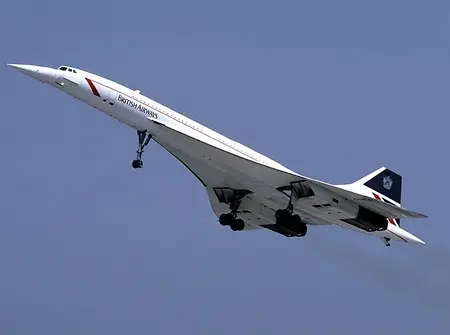
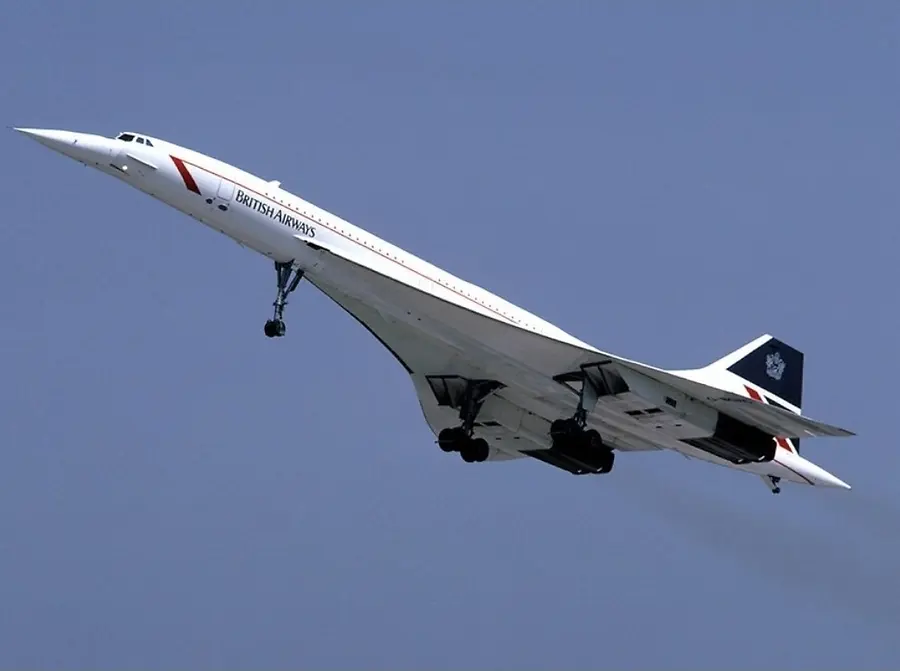
Initially, when the British Aircraft Corporation (B.A.C.) and French corporation Aérospatiale (initially Sud Aviation, with both companies serving as joint predecessors of Airbus) jointly designed and built the Concorde in 1967 (it debuted in 1970, made its first airshow appearance in 1973, and officially took to the skies in 1974), it was supposed to usher in a new age of flight.
The Concorde was explicitly targeted at transatlantic routes, and only a few select routes at that. Notably, these included Paris-Charles de Gaulle to New York-JFK, London-Heathrow to New York-JFK, and Paris-CDG to Washington Dulles. These routes remain immensely popular and are still in operation, but the aircraft used to serve them are no longer the same.
The 123-seat Concorde (its maximum capacity in a single-class configuration) never turned a profit, despite tickets being astronomical in price. To provide context, a round-trip transatlantic ticket on the Concorde typically cost around $12,000 USD (roughly $20,000 USD in 2026 dollars), while one-way fares varied but generally ranged from $6,000 to over $10,000, depending on the year and route. Today, you can fly the exact same routes on a comfortable A330 or A350, or even a 787 Dreamliner, (or 777 depending on the airline) in luxurious business-class accommodations for less than $3,000 USD—or even for free with frequent-flier miles. Air France, Lufthansa, British Airways, Iberia, Aer Lingus, and Icelandair, to name just a few, all operate these or similar routes on the aircraft mentioned.
Following the only fatal accident in Concorde's history, on July 25, 2000, both British Airways and Air France grounded their Concorde sub-fleets while an investigation was carried out. The accident was caused by a metal strip left by an aircraft that had taken off just minutes before Concorde, which led to a burst tire that damaged one of the fuel tanks. The accident resulted in a crash and the loss of 113 lives. While British Airways and Air France, Concorde's two operators, both fully recovered, Concorde's reputation as the "darling of the skies" was irreparably ruined.
By the time the investigation concluded in spring 2001, almost a year after the accident, the two airlines were just beginning to recover. Then September 11, 2001, happened. The towers fell, and, as a result of those terrorist attacks, the global aviation industry plummeted in terms of demand and would not recover until at least 2003. By then, the United States, under George W. Bush, had invaded Afghanistan, followed by Iraq, contributing to rising global oil prices. Concorde had flown its last flight in 2000. By 2008, the global financial crisis and recession were starting to hit (and would continue throughout 2009), making fuel-guzzling aircraft such as Concorde untenable for most airlines.
The 747 was bad enough in terms of fuel consumption and was one of the factors contributing to Pan Am's downfall. The Concorde was even worse. If the 747 drank fuel, Concorde chugged it like a young man during pledge week at a college fraternity party.
Concorde possibly could have maintained its presence if it had been more popular with travelers, but looking back, it never stood a chance as anything more than a novelty. Indeed, one could conceivably take off in Paris and land in New York City before the local clock showed that one had left, thanks to the time difference.
I realize I'm spending an extraordinary amount of time discussing Concorde, but it was the only supersonic aircraft to achieve mass passenger service in the world. The Soviet Union tried in 1968 with its Tupolev Tu-144, nicknamed the "Konkordski," which was almost an exact copycat of the Concorde. Seriously, look it up. It's worth a chuckle. I don't say tat to laugh at Russians, I say that because their efforts to "upstage the West" as the kremlin put it, were hilarious in action. Much like Nikita Khrushchev's infamous speech at the Polish embassy given to Western (U.N.) ambassadors, ending with him hammering his shoe on the podium and screaming into the television cameras, "History is on our side, whether you like it or not. We will bury you!" A quote which has been taken out of context numerous times for comedic effect in Western Europe and the U.S.
The Tu-144 debuted alongside the Concorde at the 1973 Paris–Le Bourget Airshow and subsequently crashed. However, the USSR continued to use the Tu-144 for domestic passenger and cargo service for a few years before retiring the design, considering it a moderate success. In the United States, Boeing had designed the Boeing 2707 SST, or Supersonic Transport program. However, once the Concorde debuted, the 2707 was canceled, with no prototypes ever built. It quite literally never left the drawing board.
Ask any passenger, and they will tell you that flying on Concorde was a mediocre experience at best. "You didn't fly it for the experience; you flew it for the speed," remarked one passenger in the late 1990s who spoke on condition of anonymity.
Passengers ultimately showed airlines that, all things considered, they would rather spend eight hours in luxurious accommodations than three hours in the equivalent of economy class. Their companies agreed, since they were footing the bill for business travelers. Airlines also realized that they could make more of a profit by enhancing business-class cabins on conventional aircraft than by utilizing supersonic flight. British Airways, as a matter of fact, was the first airline to introduce lie-flat business-class seats, something nearly every global airline now offers its passengers.
Severe concerns over noise pollution, both in Europe and North America, also limited supersonic travel to transoceanic voyages only.
Supersonic travel will be making a return in the near future. The likes of Boom Supersonic and its Overture aircraft will take the place Concorde once held, yet the same mistakes stand to be repeated. United Airlines CEO Scott Kirby has said as much in an address he gave at his alma mater, the United States Air Force Academy in Colorado Springs. While United has placed a sizable order for 23 Overture jets, Kirby has reservations. "If they [Boom Supersonic] can make the technology financially feasible, we might be able to work something out," he said optimistically.
Other airline orders for the Overture are less firm, reflecting Kirby's willingness to experiment.
Thank you for reading! We hope this proved enlightening regarding the current path of supersonic travel. Book your conventional itinerary and experience a taste of luxury through Brooke In The Air Travel today at brookeintheairtravel.net!

Brooke is the founder and chief operator of Brooke In The Air Travel LLC, a company she formed shortly after graduate school in 2022. She holds a Bachelor’s degree in history and sociology, plus a Master’s degree in history, and has since dedicated her life to travel and unraveling the complex mysteries of flights, connections, hotel bookings, etiquette, and in general “how to travel” with the least hassle…