Women Are Taking Their Seats at the Table: What the 2026 Elections Tell Us About Representation, Opportunity, and Leadership
Women's Historic Victories in 2026: What Expanding Political Representation Means for Equality and Leadership
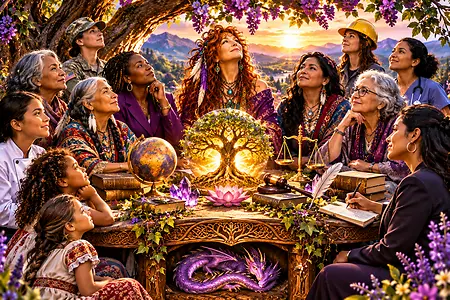
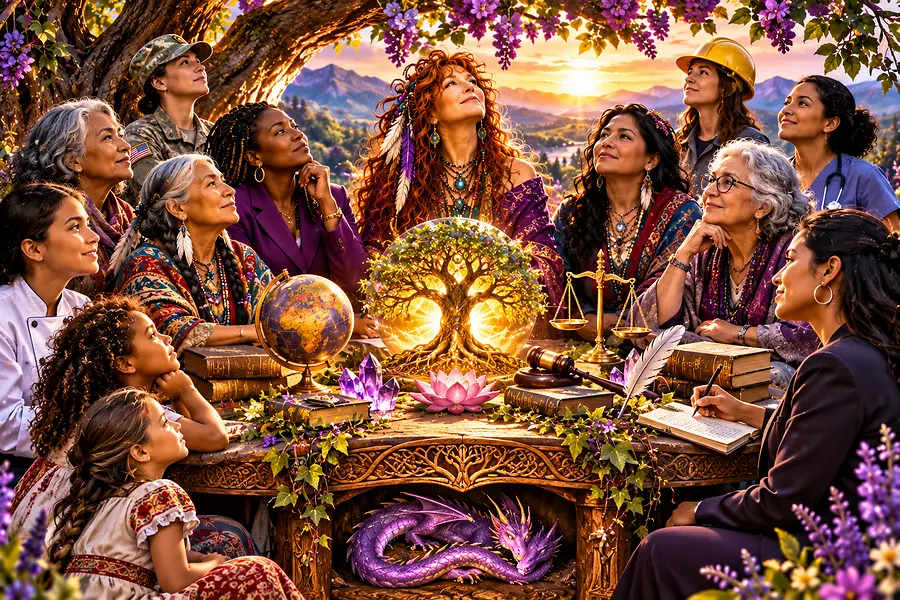
Well, ladies, pull up a chair.
Something remarkable has been happening in American politics, and I believe it deserves our attention.
In the November 2026 midterm elections, women achieved significant milestones in political representation. From congressional races to governorships, the results included historic firsts and the prospect of new records for women serving in elected office.
And I find the timing particularly interesting.
These achievements have occurred during a period when diversity, equity, and inclusion programs have faced substantial political and institutional challenges.
Federal DEI initiatives have been dismantled or significantly restricted under recent executive actions, while employers and organizations across the country continue debating how to approach fairness, opportunity, and inclusion.
Yet women continue pursuing positions of leadership. They are running for office. They are winning elections. And they are participating in decisions that will shape the future of their communities.
I believe this moment invites us to examine something larger than election results.
What does genuine equality of opportunity look like, and what happens when women gain greater influence in institutions that historically excluded them?
A Long Road to the Table
Before we celebrate the present, I think we should remember the journey that brought us here.
For much of American history, women were excluded from voting, holding many positions of authority, controlling certain aspects of their finances, and participating equally in public institutions.
The struggle for women's suffrage extended across generations. Women organized meetings, circulated petitions, published newspapers, marched, protested, and challenged laws that denied them political participation.
When the Nineteenth Amendment was ratified in 1920, it prohibited denying the right to vote on the basis of sex. It was a historic achievement. But it did not immediately remove every barrier to voting.
Many women of color continued to face discriminatory practices, including racial restrictions and voter suppression, that limited their access to the ballot.
The history of women's political participation is therefore not one simple story. It is a collection of struggles, achievements, setbacks, and continued efforts to expand access. And it reminds us that representation has never been handed to women without generations of work.
The women who fought for voting rights did not necessarily live to see the full results of their efforts. But their determination created opportunities for those who followed.
Every woman who enters public office today participates in a history that extends far beyond her own election.
The 2026 Elections: Historic Milestones
The 2026 midterm elections produced several significant milestones.
According to preliminary reporting from the Center for American Women and Politics at Rutgers University, women's representation in Congress and governorships was positioned to reach new highs as results continued to be finalized.
Among the notable victories were Keisha Lance Bottoms in Georgia, becoming the first Black woman elected governor of a U.S. state, and Deb Haaland in New Mexico, becoming the first Native American woman elected governor. Peggy Flanagan became the first Native American woman elected to the United States Senate. And Marsha Blackburn became the first woman elected governor of Tennessee.
These achievements cross different states, backgrounds, and political parties. That is an important part of the story.
Women do not share a single political philosophy simply because they share a gender. They have different priorities, experiences, values, and approaches to governing.
Representation does not mean agreement. It means that more people from historically underrepresented groups have opportunities to participate in the institutions that shape public life. And when we recognize historic firsts, we are acknowledging the barriers that once made those achievements impossible.
Of course, we must also recognize that progress is not always uniform. Women's representation can increase in one institution while declining in another. And the number of women holding office does not, by itself, tell us whether policies affecting women and families will improve. That requires examining what elected officials actually do.
Still, these milestones are worth understanding. They are part of a much longer history of expanding political participation.
The DEI Question: Opportunity, Fairness, and Access
One of the most interesting aspects of this moment is the national conversation surrounding diversity, equity, and inclusion.
DEI has become a politically charged term. For some, it represents efforts to address historical barriers and improve access to opportunities. For others, certain DEI programs raise concerns about fairness, preferential treatment, political ideology, or the use of demographic characteristics in employment and institutional decisions.
These concerns deserve careful examination rather than assumptions about what everyone means by the same three letters.
Federal policy changes have significantly restricted DEI programs within the federal government. But DEI has not disappeared from every workplace, educational institution, or private organization. And the underlying questions remain.
How do we ensure that qualified people have fair access to opportunities? How do we identify and address discriminatory practices? How do we evaluate individuals without unfair assumptions? And how do we create institutions where differences in background do not automatically determine who is heard, promoted, or included?
I believe these are questions worth asking, regardless of how someone feels about a particular DEI policy. Because fairness should not be reduced to a slogan. It should be something we can examine through actual practices, outcomes, and accountability.
The election of more women does not establish that eliminating DEI initiatives improves women's opportunities. Nor does it prove that every DEI program achieves its intended goals. Those are separate questions requiring evidence.
But this political moment does remind us that women continue pursuing leadership through changing institutional and social conditions. And it challenges us to think carefully about what meaningful opportunity requires.
A Seat at the Table Is Only the Beginning
I have heard people talk about wanting a seat at the table for years. And I understand why. When decisions are made without the participation of people affected by them, important perspectives can be overlooked. Representation can broaden the range of experiences brought into public discussions.
But I also believe we must move beyond the idea that simply occupying a position guarantees meaningful leadership. A seat at the table is an opportunity. What happens afterward depends on how that opportunity is used.
Does the person listen? Do they consider the consequences of their decisions? Are they willing to acknowledge mistakes? Do they welcome informed disagreement? Do they recognize the humanity of people whose experiences differ from their own? Do they understand that public responsibility extends beyond those who supported their election?
These questions apply to every leader. Male or female. Republican, Democrat, or independent. Young or old.
Leadership should be evaluated through conduct, decisions, accountability, and the effects of those decisions on the people being served.
I have spent decades working in education, the arts, hospitality, and community development. And one lesson has remained consistent throughout those experiences.
A title may give someone authority, but it does not automatically give them wisdom.
Wisdom requires curiosity, humility, experience, reflection, and the willingness to keep learning. The same is true of leadership.
Women Are Not a Single Voice
There is something else I believe we should remember when discussing women in politics.
Women are not a single political constituency with identical beliefs. We come from different cultures, generations, economic circumstances, educational backgrounds, and life experiences. We disagree about policies. We disagree about priorities. And sometimes, we disagree passionately.
That does not make women's participation any less meaningful. In fact, it demonstrates why representation must include room for differences.
True inclusion does not require everyone to think alike. It requires institutions capable of considering different perspectives without automatically dismissing people because of who they are.
We can acknowledge a historic achievement without endorsing every position held by the person who achieved it. We can recognize the significance of a barrier being broken while continuing to evaluate an elected official's record. And we can celebrate expanded participation without pretending that all women will make the same decisions.
Equality does not mean women must agree with one another. It means women deserve the same opportunity to participate, disagree, lead, and be held accountable as anyone else.
That is a much more meaningful understanding of representation.
What Does This Mean for the Next Generation?
As an educator, I find myself thinking about the children watching these developments.
What does a young girl learn when she sees a woman become governor of her state? What does a Native American child see when someone from their community reaches an office that once seemed inaccessible? What does a young Black girl understand when she witnesses a historic first in political leadership?
Possibility matters. Seeing people with different backgrounds occupy positions of responsibility can expand a child's understanding of what is achievable.
But representation must be accompanied by education. Children also need to learn how democratic institutions function. They need opportunities to practice critical thinking. They need to understand the importance of evidence, respectful disagreement, civic responsibility, and accountability. And they need to recognize that leadership is not simply about personal achievement. It is about accepting responsibility for decisions that affect others.
I want young people to understand that they do not have to imitate someone else's path to develop their own abilities. Some may choose public service. Others may become educators, scientists, artists, entrepreneurs, caregivers, or community organizers. All of these roles can contribute to the well-being of society.
What matters is that children have opportunities to explore their interests without being told that their gender determines the limits of their future.
The Invisible Work Behind Every Milestone
There is another part of this story that deserves recognition.
Behind many historic achievements are years of work that rarely make the headlines.
- Campaign volunteers.
- Community organizers.
- Educators.
- Family members.
- Mentors.
- Women who encouraged other women to apply, participate, speak, and lead.
- People who challenged assumptions about who belonged in positions of authority.
- And generations of advocates who worked for opportunities they might never personally experience.
I understand something about building a vision before the resources or recognition have arrived. As the founder of Mama Star's Healing Circle, I have spent years developing educational programs, writing, creating art, and exploring ways to support human well-being and community development.
Much of that work happens without an audience. It involves planning, research, financial uncertainty, administrative responsibilities, and a great deal of persistence.
Sometimes, the most important contributions are made long before anyone notices the results.
That is why I believe we should be careful not to measure women's achievements solely through public recognition. For every woman elected to office, there are countless others creating meaningful change in classrooms, households, workplaces, and communities. Their contributions deserve attention, too.
Leadership Through the Lens of the Seven C's
In my work developing Unity Grove Cooperative and Mama Star's Healing Circle, I have been building an educational and leadership framework centered on seven principles:
- Customer Service.
- Communication.
- Caring.
- Community.
- Cooperation.
- Creativity.
- Conscious Awareness.
That seventh principle is especially important to me.
Conscious Awareness asks us to consider our internal experiences and the wider effects of our actions. How are our decisions affecting other people? What assumptions are influencing our judgments? Are we considering emotional, social, ethical, and ecological consequences? Are we responding thoughtfully or simply reacting?
I believe these questions are relevant to public leadership. A leader can be intelligent and experienced while still overlooking the human consequences of a decision. A leader can be persuasive without being compassionate. And a leader can achieve professional success without building trust.
That is why I believe leadership education must extend beyond authority and management. It should include self-awareness, communication, ethical responsibility, and an understanding of our interconnectedness.
These qualities are not exclusive to women. They are human capacities that deserve development in everyone.
Progress Is Not a Finish Line
It would be tempting to look at the 2026 election results and declare that the work of equality is complete. But history teaches us to be cautious about treating any single achievement as the end of a larger struggle.
Political representation is one measure of participation. It is not the only one. We must also consider access to education, economic opportunity, personal safety, healthcare, civic participation, and the ability to exercise autonomy. We must examine whether institutions are responsive to the people they serve. And we must recognize that progress can occur alongside continuing inequalities.
The achievements of women in the 2026 elections are part of that larger picture. They deserve thoughtful recognition. But they also invite continued questions about what meaningful representation accomplishes and how opportunities can be sustained.
There Is Room at the Table
I began this article by inviting women to pull up a chair. And I want to return to that image.
For generations, women fought to enter rooms where important decisions were being made. Some were excluded by law. Others by custom, discrimination, financial barriers, or expectations about what women should and should not do. Those barriers did not disappear all at once. And some continue to require attention.
But the women who participated in the 2026 elections remind us that the story of women's leadership is still being written. Not by one political party. Not by one generation. And not by women who all share the same ideas. But by individuals who have chosen to participate in public life and accept the responsibilities that come with it.
I hope we continue to examine leadership with curiosity, fairness, and a willingness to learn. I hope we teach our children that opportunity should not be limited by gender. And I hope we remember that representation becomes most meaningful when it is accompanied by thoughtful action and accountability.
Because the goal should never be simply to replace the people sitting at the table.
The goal should be to create institutions where everyone has a fair opportunity to contribute and where those entrusted with leadership remember whom they are there to serve.
So pull up a chair. Bring your ideas. Bring your questions. Bring your experience, your creativity, and your willingness to listen. There is still a great deal of work to be done.
And as for me?
Well, after decades of working in education, art, and community development, I have learned that when someone tells a woman she doesn't belong at the table, she has several options. She can challenge the exclusion. She can help change the rules. Or, when necessary, she can gather some capable people and build a better table.
And knowing Mama Star, there will probably be a dragon carved into the legs.
Because if we're going to build something new, we might as well make it beautiful.
About the Author
Mylee Star Hawk, MAEd, known as Mama Star, is an award-winning educator, author, artist, guide, and founder of Mama Star's Healing Circle. A doctoral student in Transpersonal Psychology, she brings decades of experience in education, creativity, leadership, and community development to her work. Her writing explores human dignity, equality of opportunity, compassionate leadership, and the importance of creating environments where people can learn, contribute, and thrive.
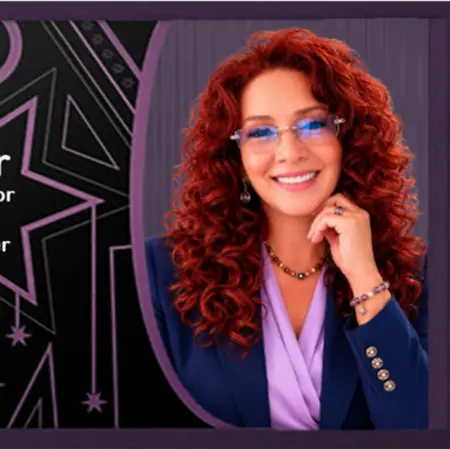
Mylee Star Hawk, MAED, founded Mama Star's Healing Circle to support healing through education, art, and community. With 25+ years in education and community support, Star specializes in addressing generational trauma through creative expression, culinary arts, and spiritual practices. An ordained minister and master chef pursuing a doctorate in Transpersonal Psychology, she integrates education, creativity, and…